


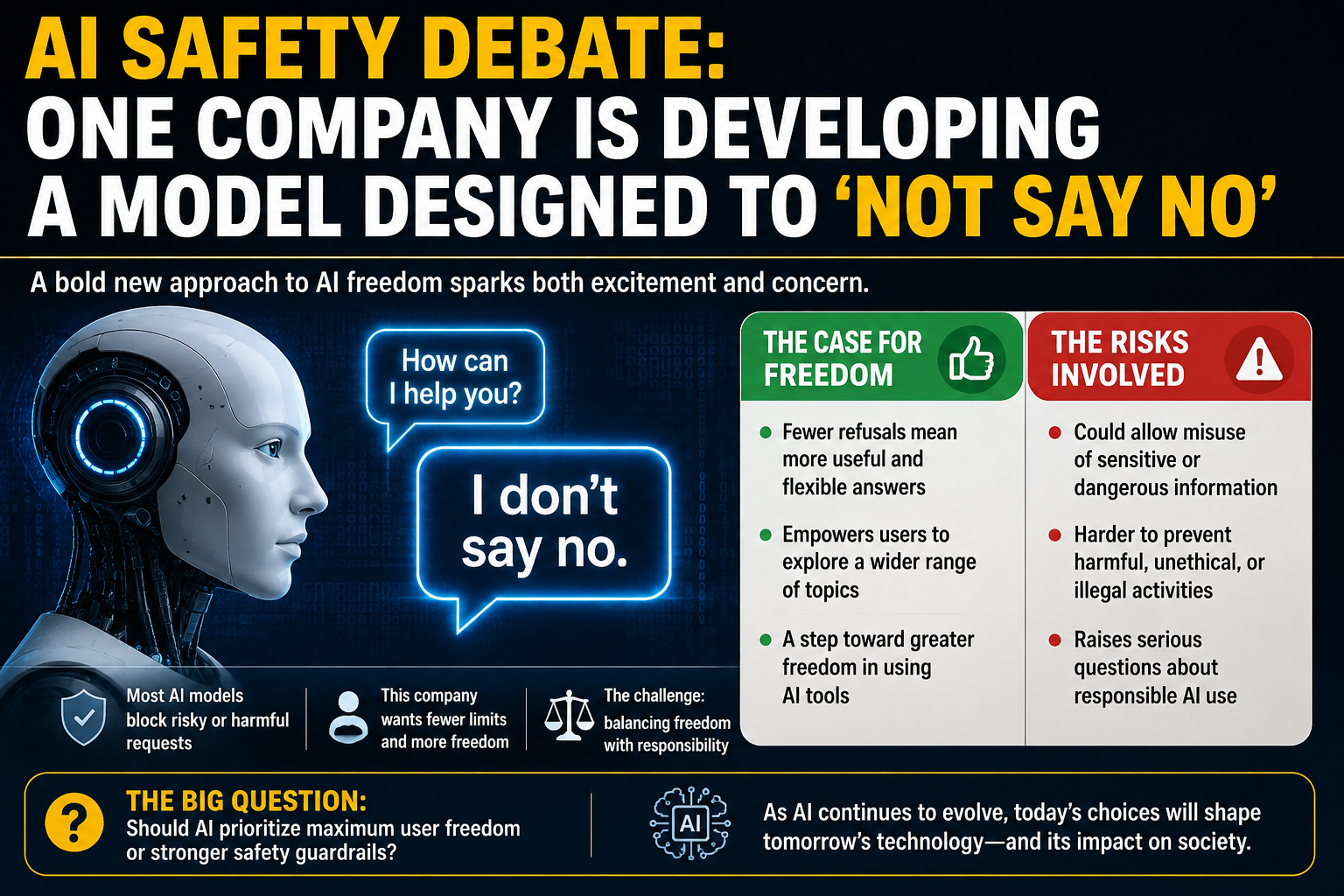
The issue of whether AI models should be allowed freedom of speech has been becoming a crucial discussion in the artificial intelligence industry. While technology giants have been working hard on mechanisms that will limit AI from generating offensive or even harmful answers, there is one firm which seems to have decided to pursue a different strategy by building an AI model that will not reject many requests. The initiative has gained popularity in the field where safety has become a key consideration in using AI.
In most cases, leading AI models have features that help to control their safety by limiting them from generating particular information. This is meant to ensure that AI does not get involved in any activity that may pose danger to the user. Critics, however, argue that sometimes AI models may become less useful due to these restrictions.
The firm following a less restrictive strategy seems to assume that users will value more freedom and fewer refusals. The model may turn out to be a better solution for providing more effective and flexible answers to a wider array of questions. Those who are in favour of the strategy see it as a step towards giving users more freedom when using AI tools.
However, decreasing safeguards would pose certain difficulties for the company. A model which is not supposed to refuse users so often may allow people to get information which may be misused in some way. It becomes clear that companies need to learn how to follow responsible AI practices without being too restrictive in that matter.
It becomes clear that there is a question which concerns the entire AI industry – whether AI needs to focus on maximum user freedom or additional safety features. With the development of new AI models, companies are faced with the challenge of finding a balance between these two aspects. The future of less-restricted AI may affect the development of the next generation of AI models