

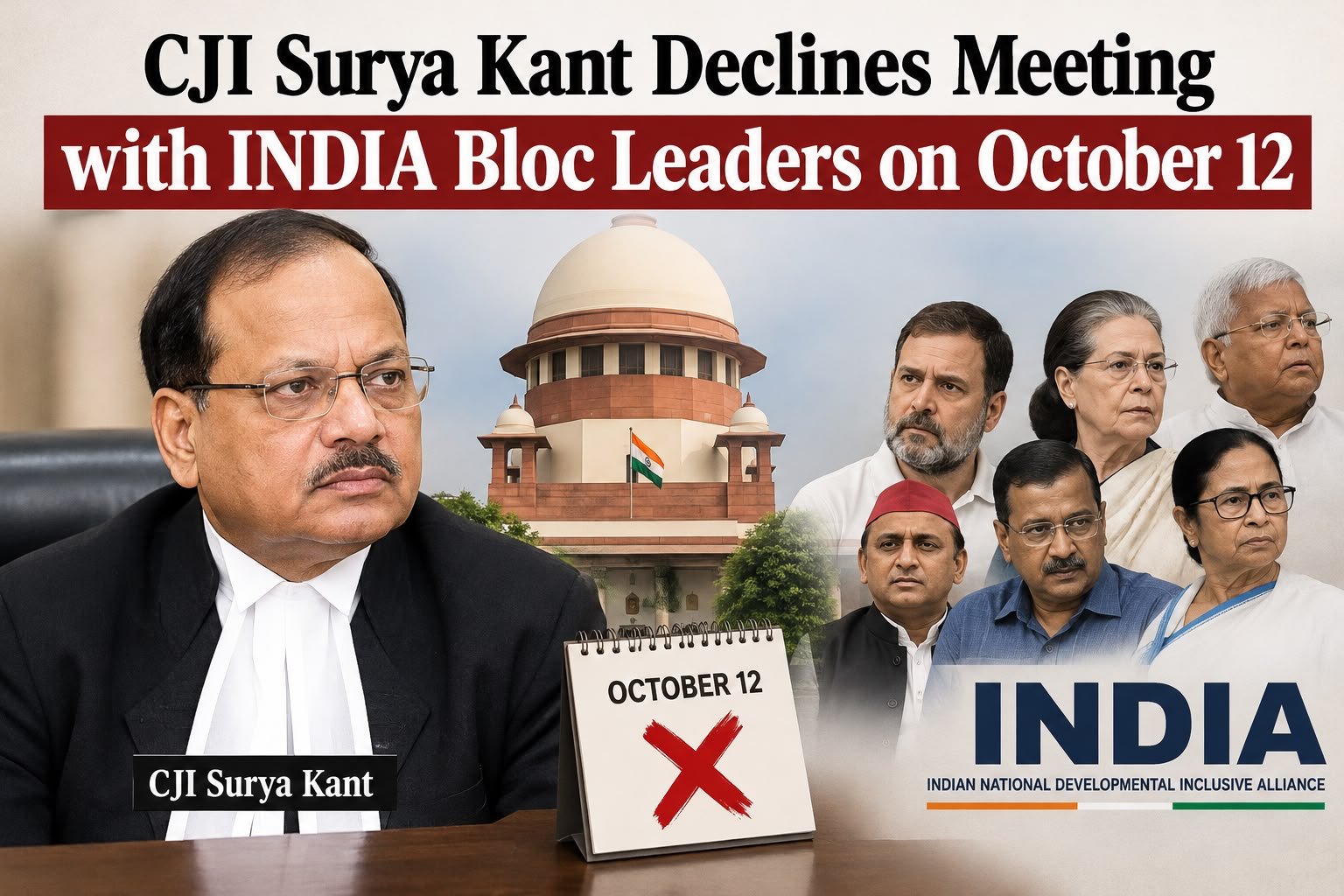
The Chief Justice of India (CJI) Surya Kant has refused a request to meet the leaders of the INDIA bloc on October 12, making the potential meeting between the opposition leaders and the topmost official of Indian judiciary the subject of attention.
In particular, the request has been made by the leaders of the alliance of opposition parties, which unites some political parties operating under one platform. The development takes place against the backdrop of ongoing political deliberations around the matters of national significance and the functioning of the constitutional institutions as regards the resolution of citizens’ problems.
The Chief Justice’s refusal to accept the invitation of the delegates has made the planned interaction the object of discussion. Nevertheless, it should be clarified whether there were any grounds for the decision and what the context was through the information obtained from official sources or reliable news.
The Chief Justice of India presides at the Supreme Court of India, the highest judicial institution of the country. The judiciary is independent of the executive and legislative powers and its constitutional functions include the interpretation of laws, the protection of fundamental rights, and dispute settlement.
The INDIA group, on the other hand, is an opposition coalition composed of several political groups that join forces to facilitate their political engagements. Their leaders have held conversations about matters pertaining to governance, democracy and the constitution in the past.
The decision made has also underlined the necessity of distinguishing between political activism and judicial processes. The conversations held with constitutional figures may draw some interest, especially in cases where political groups’ representatives participate in them. But, the relevance of such events is determined by the context in which they take place and by the explanation offered by the involved parties, if any.
More details about the meeting invitation, its rejection and possible reaction of the INDIA group would provide additional information regarding the situation. In the absence of official information, the decision should be interpreted in light of confirmed facts only.