

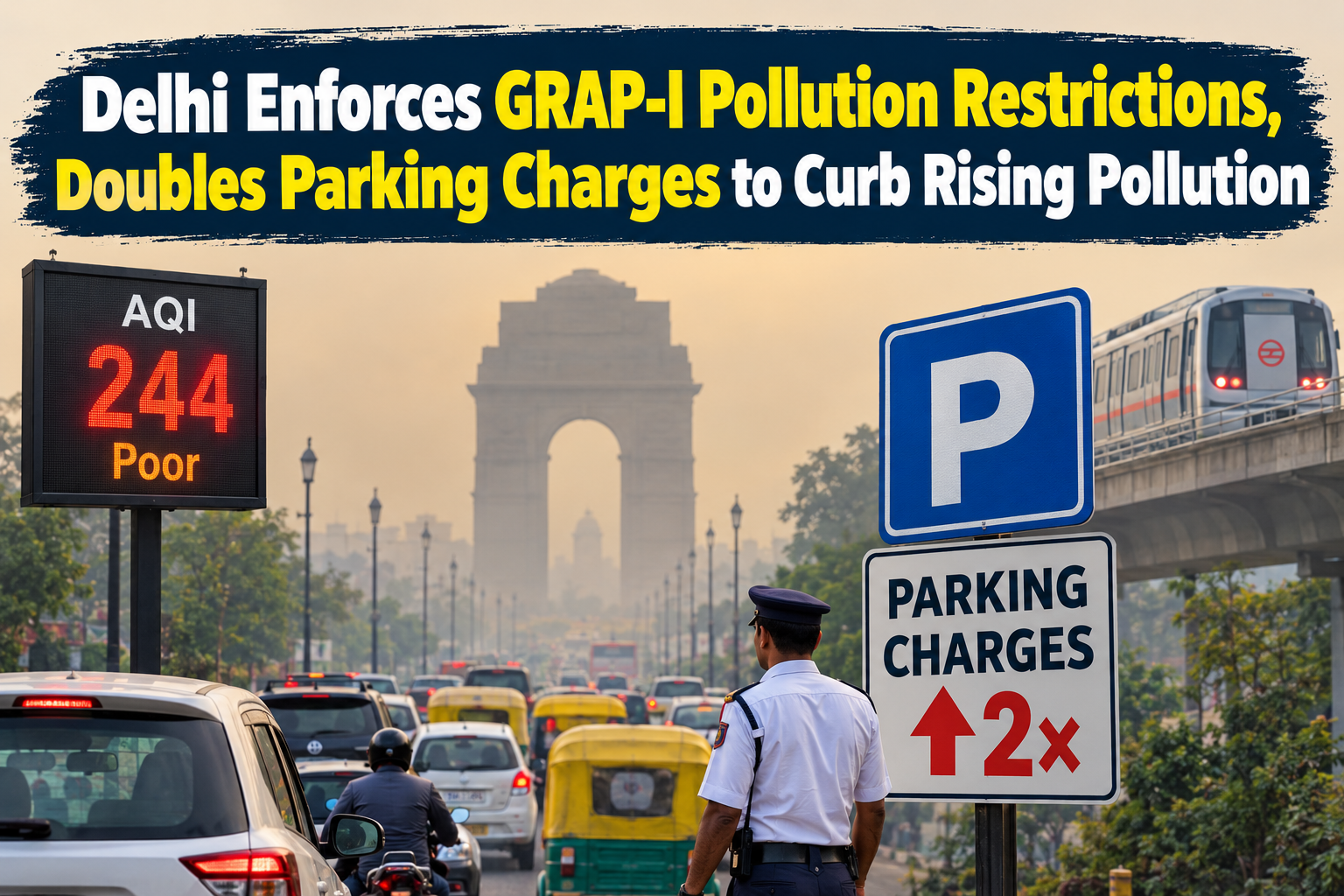
Delhi has rolled out GRAP Stage I due to poor air quality in the national capital region, which has compelled authorities to initiate steps to curb pollution. The restrictions came into force from October 21, 2026, with an AQI crossing 244. The AQI is classified as ‘poor’. Along with the measures announced under GRAP, it has been decided to double parking fees in Delhi except in Delhi Metro parking lots.
The CAQM has initiated GRAP-I after the AQI of Delhi escalated from 179 on October 20 to 244 the next day. Moreover, weather reports suggested that the AQI could stay poor in the coming days.
GRAP-I includes measures for curbing dust pollution, vehicular pollution, and monitoring of pollution sources. Such measures involve mechanised road sweeping, water sprinkling, proper waste management, strict implementation of dust control regulations at construction sites, and prohibition of burning waste and other materials.
The Delhi Environment Minister Manjinder Singh Sirsa stated that the government was following an 11-point action plan based on dust control, electric vehicles, vehicular emissions, and detection of pollution sources in the locality. The DMRC (Delhi Metro Rail Corporation) too has announced extra train journeys on weekdays to persuade commuters to opt for public transport.
Apart from the above-mentioned measures, restrictions on construction and demolition work outside, working at staggered hours, and a work-from-home option have been suggested for government departments and agencies. It has further been decided that no fuel would be sold to those vehicles that do not possess valid Pollution Under Control (PUC) certificates after November 1.
The GRAP has been devised keeping in mind the four stages, whereby, depending on the extent of pollution levels, stringent measures are put into effect. Stage one starts when the AQI level lies between 201 and 300.
Since the winter season is approaching, the government administration is now engaged in preventive actions to avoid the build-up of pollution. People have been advised to adhere to pollution control regulations, have valid vehicle emission certificates and consider public transport to cut down emissions.