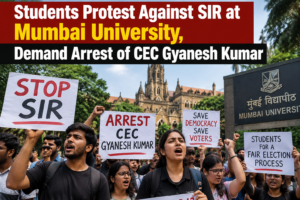


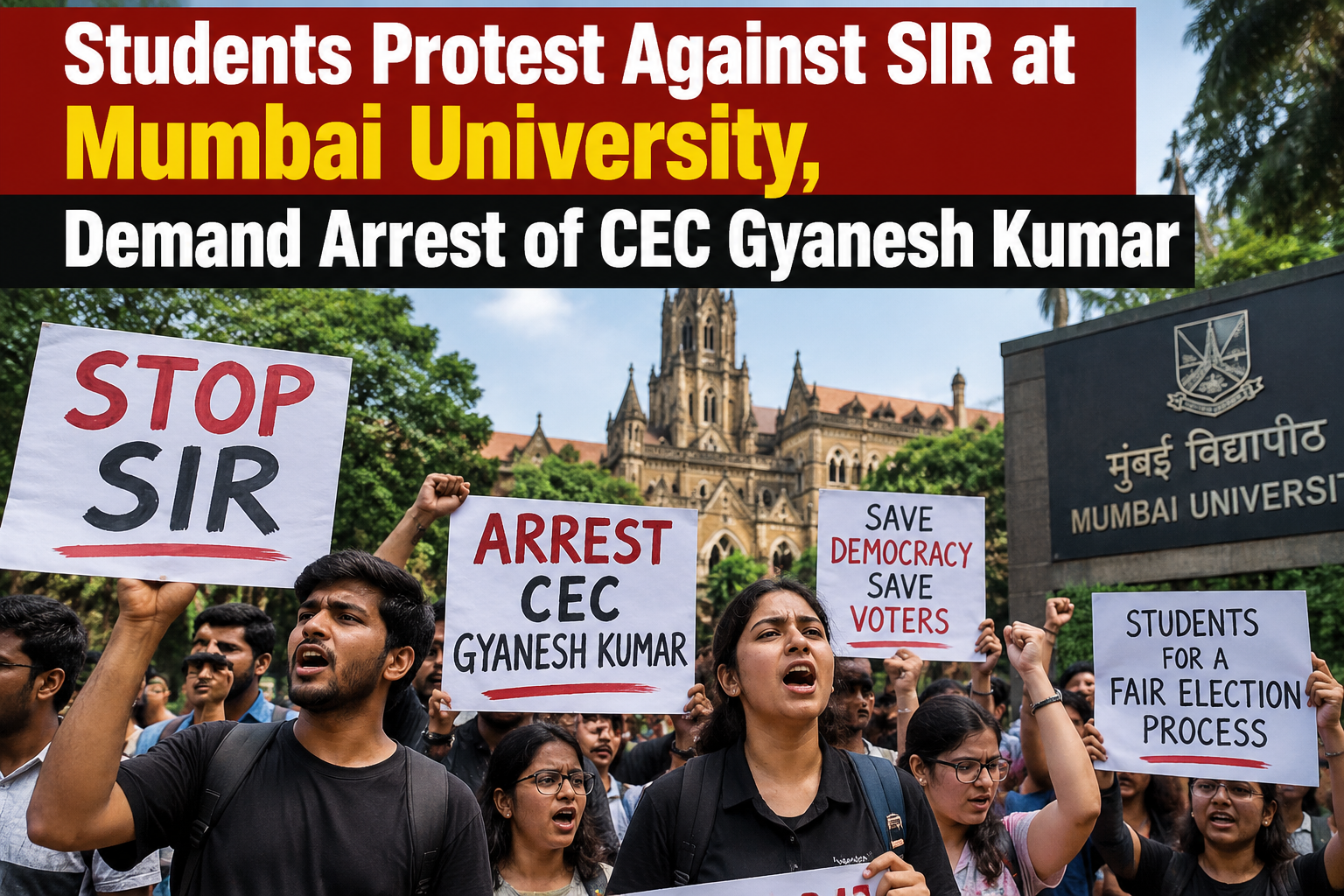
Students at Mumbai University organised a protest against the Special Intensive Revision of electoral rolls. The issue of the electoral rolls revision was under discussion, and the students demanded the arrest of the Chief Election Commissioner Gyanesh Kumar.
The demonstrators protested against the SIR exercise, which is aimed at updating the electoral rolls. They were worried that the process might affect the rights of eligible voters. Their call to arrest the Chief Election Commissioner demonstrated their dissatisfaction with how the issue was dealt with. The protest also drew attention to the fact that the role of students in posing the question of election procedures is important.
The Special Intensive Revision of electoral rolls has become an object of political discussion, where supporters speak about the importance of having correct voter lists while critics are concerned about the possibility of excluding eligible voters from the lists. Electoral roll revisions play an important role in the democratic process since the accuracy and accessibility of voter lists influence citizens’ right to vote.
This protest that occurred at the University of Mumbai contributed to the ongoing debate on electoral reforms, the need for accountability and the duties of the electoral bodies. This form of protest allows students to air their opinions on certain topics and seek clarifications from the concerned authorities.
The role of the Election Commission of India is to oversee the electoral process and ensure that the integrity of the process is not compromised. As the discussion on the SIR goes on, the two main factors to consider are the transparency of the revision process and ensuring that all eligible voters are protected and that there is a redress mechanism.
This form of protest highlights the necessity of public participation in the democratic process. However, the particular allegations made by protesters and how the concerned authorities reacted must be independently verified.