

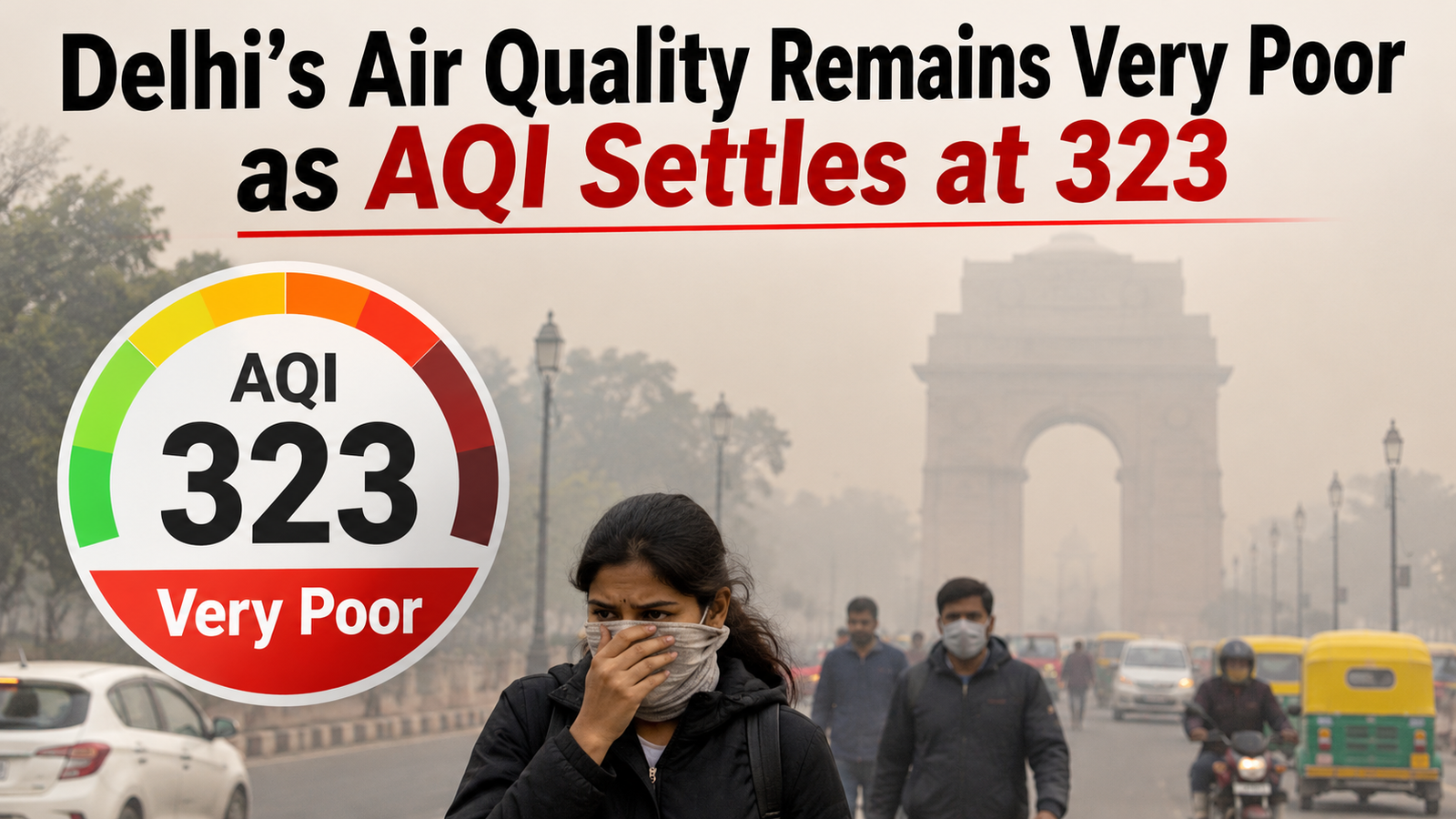
Delhi still remains in the grip of bad air as pollution increased in the city with the AQI settling at 323, which is in the ‘very poor’ category. The increasing pollution has become a matter of concern among denizens especially for children, senior citizens and persons suffering from breathing problems. Thick smog and low visibility was reported from several areas in the city as the pollution worsens with winter setting in.
The AQI 323 level shows there are significant numbers of pollutants in the air, like small particles, including PM10 and PM2.5. These tiny particles enter into the lungs and cause discomfort, especially when individuals are exposed to the bad air for multiple days. The signs and symptoms that individuals will notice are coughing, irritate sore throat, and trouble breathing, itchy eyes etc. People who have asthma and other lung disease face an increased risk of problems caused by bad air when pollution levels are high.
Delhi’s numerous sources of pollution- such as traffic, construction dust, industrial pollution, road dust, seasonal stubble burning in neighbouring states – and weather- which impacts wind speed and temperature and can trap pollutants near the surface, is responsible for this spurt in levels. The variety of pollution sources makes it very difficult to control pollution, more so in winter.
All the governments in Delhi-NCR are under continuous strain to step up pollution control measures and take measures to control air pollution. Measures to address construction dust pollution, control of sources of industrial emissions, control of vehicular pollution and discouragement of private vehicular traffic, and promotion of public transport. People are advised not to stay outdoor for long hours, not to indulge in physical outdoor activities, and follow government advisories. In view of the AQI reaching the very poor category, it is of utmost importance for the civic authorities, corporates, and people to work in concert.