

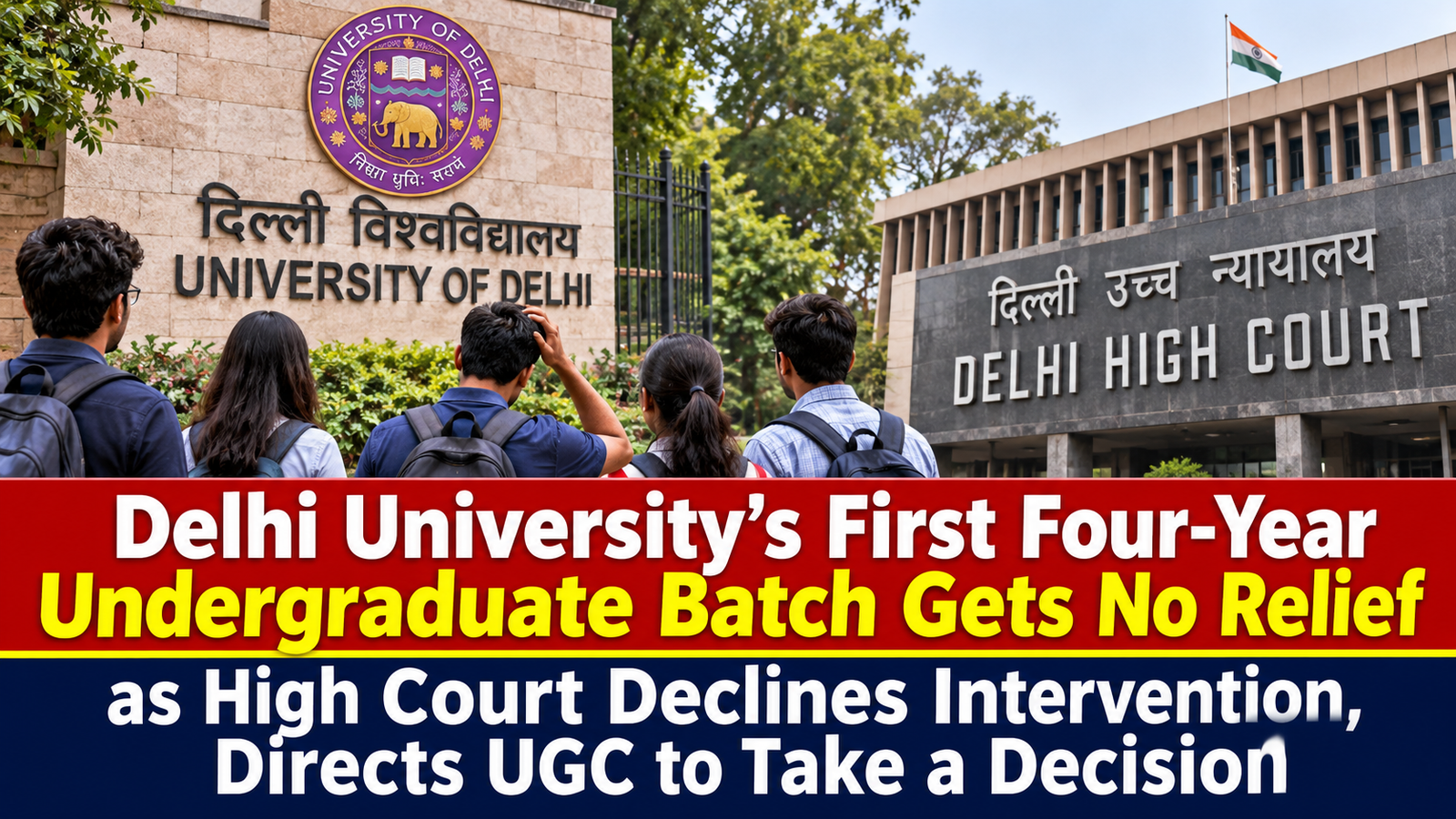
The Delhi High Court has refused to step into the shoes of students belonging to Delhi University’s first four-year UG batch, and instead decided not to grant the students any interim relief while directing the University Grants Commission to take a decision in accordance with law. The students are now left to wonder about the future of their academic years and the 4-year UG system.
The issue was filed in the High Court after there were criticisms of the academic structure as well as difficulties encountered by students being part of the inaugural batch under the new undergraduate system. The four-year course was part of the National Education Policy (NEP) 2020 to give increased flexibility to higher education, providing several exit points, multi-disciplinary and innovative courses and scope for further research.
First-batch students have raised issues and points for clarification related to the implementation of the programme, as well as the study programme rules that already consider them. This highlights the challenges of implementing a new schooling model, and of being amongst the first students to go through it.
The High Court has stopped short of a direct intervention by ordering the UGC to look into the matter and arrive at a decision. The regulatory agency is likely to take into account the concerns of the students as it looks at the academic framework and guidelines.
The delay is a setback for Delhi University students as the decision is bound to impact their course structure and subsequent educational prospects. The absence of any relief in sight would mean that students would have to wait for the regulatory authority to provide clarity.
The issue has once again underscored the necessity of transparent academic regulations and smooth cooperation between the university and regulators in the process of implementing the reforms.