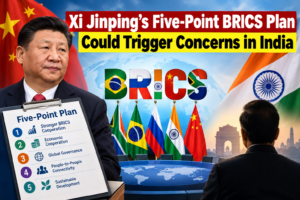


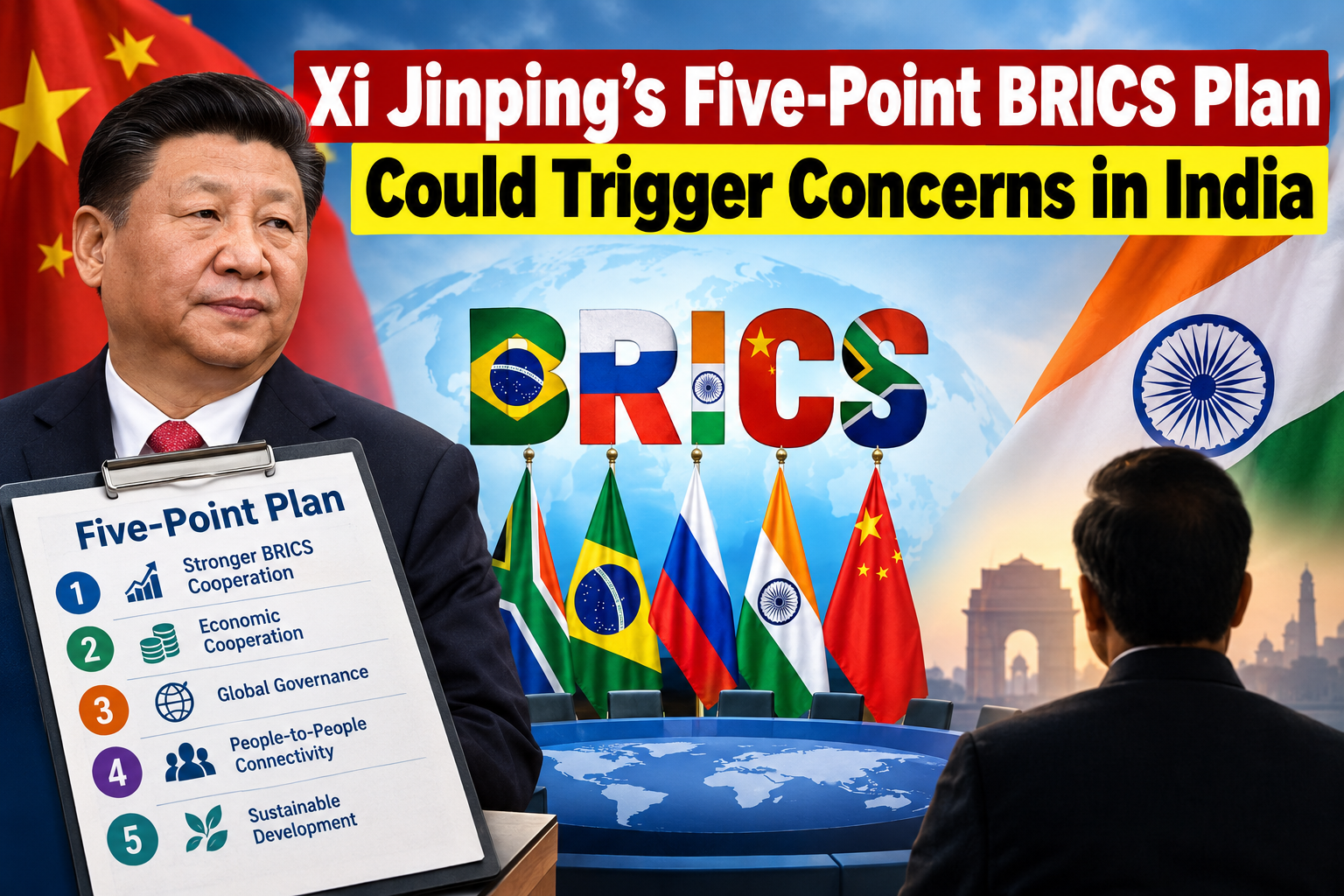
China’s President Xi Jinping’s five-point action plan for BRICS is expected to attract significant focus from India, given the challenges that New Delhi faces in navigating its relationship with Beijing while taking into account its own strategic considerations as well as regional and economic interests.
This comes amid the increasing importance being attached to BRICS as an institution discussing global governance issues, economic cooperation and the interests of emerging economies. China has increasingly tried to promote the bloc as a vital forum to boost cooperation among developing nations and cut dependence on existing global institutions.
Aspects of Xi’s action plan revolve around enhancing cooperation within the BRICS group as well as collaboration in areas including economic cooperation, global governance and people-to-people connectivity. Despite several points that might coincide with India’s desire to give voice to developing economies, differences may arise in terms of the way forward for the bloc.
One of the main issues for India is to ensure the inclusivity of BRICS rather than having it dominated by the strategic interests of one of the members. Traditionally, India has been in favour of greater participation of developing countries in international organisations while preserving its strategic autonomy.
Another issue may be the economic cooperation between the countries. India has sought more market access and balanced economic cooperation with China while overcoming the problem of import dependency, supply chain vulnerabilities and domestic manufacturing.
Finally, the geopolitical aspect may be equally important. India and China are the main regional powers whose cooperation is hampered by issues on the border and strategic rivalry.
In view of the expansion of BRICS’ role and activities in global politics, India will most probably assess various proposals to shape the future of the organisation in a way that will be favourable to its economic and strategic interests.