






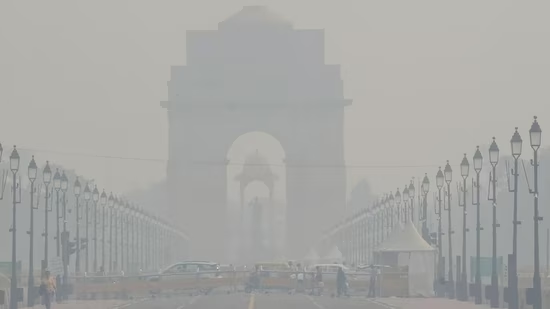
Delhi experienced a thick blanket of hazardous smog as the air quality dropped further on Monday morning, pushing pollution back into the ‘very poor’ and ‘severe’ categories. According to the Central Pollution Control Board (CPCB) data, the air quality index (AQI) across the city was 359 around 7 am, with no substantial change despite the Graded Response Action Plan (GRAP) Stage III restrictions and warnings across Delhi and the National Capital Region (NCR).
Parts of the capital were still seen enveloped in smog that morning, with pollution almost unchanged from Sunday’s average AQI of 385. The most polluted area was Bawana, with a staggering AQI of 427, indicating a ‘severe’ status. In comparison, NSIT Dwarka had the lowest reading at 225; however, it was still classified as ‘poor.’ India’s iconic landmarks, such as India Gate and Kartavya Path, were engulfed in hazy air, where their AQI hovered around 341.
Other major districts and towns also reported numerous alarming numbers, including recorded AQI in Chandni Chowk: 383, RK Puram: 366, ITO: 394, Punjabi Bagh: 384, Patparganj: 369, Pusa: 365 and Dwarka Sector-8: 356. Anand Vihar, one of the worst regions in the city for pollution, was still showing signs of trouble with an AQI of 384, as it remained in the ‘very poor’ range.
As if that wasn’t enough, the cold wave persisted, with morning temperatures back around 9 degrees Celsius, a factor that contributed to intensifying the smog and trapping pollutants not far above the ground. According to the CPCB classification, an AQI of 401-500 is considered ‘severe,’ while an AQI of 301-400 is viewed as ‘very poor.’
The GRAP-III measures, which took effect on November 11, were implemented in response to air quality conditions. The measures that remain in effect include a ban on most non-essential construction activity, restricting the use of BS-III petrol and BS-IV diesel four-wheelers, switching to online or hybrid classes for students up to Class 5, restrictions on some industries using non-clean fuels, and prohibiting diesel generator sets except for emergencies. The intent is to sharply reduce emissions and avoid the need to invoke GRAP-IV measures, which is considered the highest stage for an air pollution emergency.
Meanwhile, the Supreme Court has directed the Punjab and Haryana governments to file comprehensive reports on progress made to address stubble burning, a significant contributor to winter pollution in Delhi-NCR. A bench led by Chief Justice BR Gavai noted that strict preventive orders were required quickly.
Air quality in Delhi and NCR has regularly deteriorated into the ‘very poor’ and ‘severe’ categories since Diwali, leading to public health concerns as pollution levels worsen during the winter and there is little visible relief in pollution control.





More Stories
Common Skincare Myths That Keep Men Away from Healthy Skin
Reproductive Health Starts with Everyday Habits: Why Sleep, Stress Management, and Nutrition Matter
Healthy Hair, Glowing Skin, and Steady Energy: Nutrition Expert Highlights Foods that Support Overall Wellness