






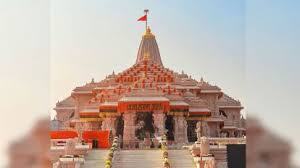
Today is considered to be a historic day in Ayodhya because Modi will raise the ceremonial saffron flag atop the spire of the Shri Ram Janmabhoomi Temple in a process called “Dhwajarohan.” This marks the formal completion of the structure of the temple and is spiritually and culturally significant.
Following are the top 10 things you need to know about today’s ceremony:
1. Flag Details and Ceremony
PM Modi will raise a 22-foot, or about 10 m, triangular saffron flag to mark the beginning of the rituals together with sadhus (holy men), dignitaries, and members of the Ram Janmabhoomi Trust.
2. Flag Symbolism
The flag bears a radiant sun, symbolizing Lord Ram’s energy, virtue, and courage.
It also contains the sacred “Om” and the Kovidara tree, symbolizing spiritual depth and continuity.
According to the PMO, it epitomizes the values of dignity, unity, and cultural continuity and fulfills the ideals of Ram Rajya.
3. Architectural Setting
The flag will be hoisted on the shikhar built in the Nagara style of North Indian architecture.
The main temple is surrounded by an 800-meter Parkota, or circumambulatory enclosure, designed in the South Indian architectural tradition and symbolizing cultural synthesis.
This temple complex consists of 87 stone-relief scenes depicting the Valmiki Ramayana and 79 bronze-cast episodes illustrating cultural and mythological stories.
4. Timing & Auspicious Significance
The ceremony is scheduled around noon, selected because of its spiritual significance.
It coincides with Vivah Panchami, the day when Lord Ram and Goddess Sita got married, enhancing its religious importance.
The day also marks the martyrdom anniversary of Guru Tegh Bahadur, the ninth Sikh Guru, who is believed to have meditated in Ayodhya in the 17th century.
5. Ritual Leadership and Participation
The rituals will be performed by 108 Acharyas from Ayodhya, Kashi, and Southern India under the guiding role of Ganeshwar Shastri, a highly respected scholar.
The presence of prominent sadhus and religious leaders underlines the spiritual depth of the event.
6. Guest Access & Invitations
Entry is strictly limited to invited guests carrying QR-coded passes, which are valid until approximately 2:30 pm.
According to the temple trust, around 6,000 dignitaries and devotees are expected.
7. Previous Role of PM in Temple Milestones
PM Modi laid the foundation stone for the Ram Temple in August 2020.
He also led the Pran Pratishtha (idol consecration) ceremony of Ram Lalla in January 2024.
8. Security Arrangements
Security is extremely tight: almost 6,970 personnel are deployed, including ATS commandos, NSG snipers, cyber-monitoring teams, bomb squads, dog units, and rapid-response teams.
Anti-drone systems and 24/7 surveillance have been deployed to ensure the safe passage of the flag-hoisting event.
9. PM’s Temple Visit Plan
During his visit, PM Modi will tour Saptmandir – a cluster of seven temples dedicated to sages like Vashishtha, Vishwamitra, Valmiki, and others.
He will also visit Sheshavtar Mandir and Mata Annapurna Temple and perform darshan at the Ram Darbar Garbh Griha and Ram Lalla Garbh Griha.
10. Spiritual & Cultural Significance
The flag-hoisting is being called a “second pran pratishtha”, symbolising the spiritual activation and completion of the temple complex.
It is designed to reflect Ram’s eternal legacy, reinforcing Ram Rajya ideals—justice, unity, and devotion—in the modern era. Bottom Line: Today’s Dhwajarohan ceremony in Ayodhya is not a political or religious event alone; it is deeply symbolic and historic. With the hoisting of the saffron flag, PM Modi signals the formal completion of the Ram Temple – a moment of spiritual unity and a beacon to cultural continuity linked with the legacy of Lord Ram.






More Stories
Gold Prices Remain Steady Amid Middle East Tensions, US Jobs Data Awaited
LUXIORA COSMETICS INTRODUCES FIVE NEW NUDE SHADES FOR THE ULTIMATE MUTED MONSOON LOOK
Gold Price Today: Delhi Markets Witness Stable Rates on August 3, 2026