




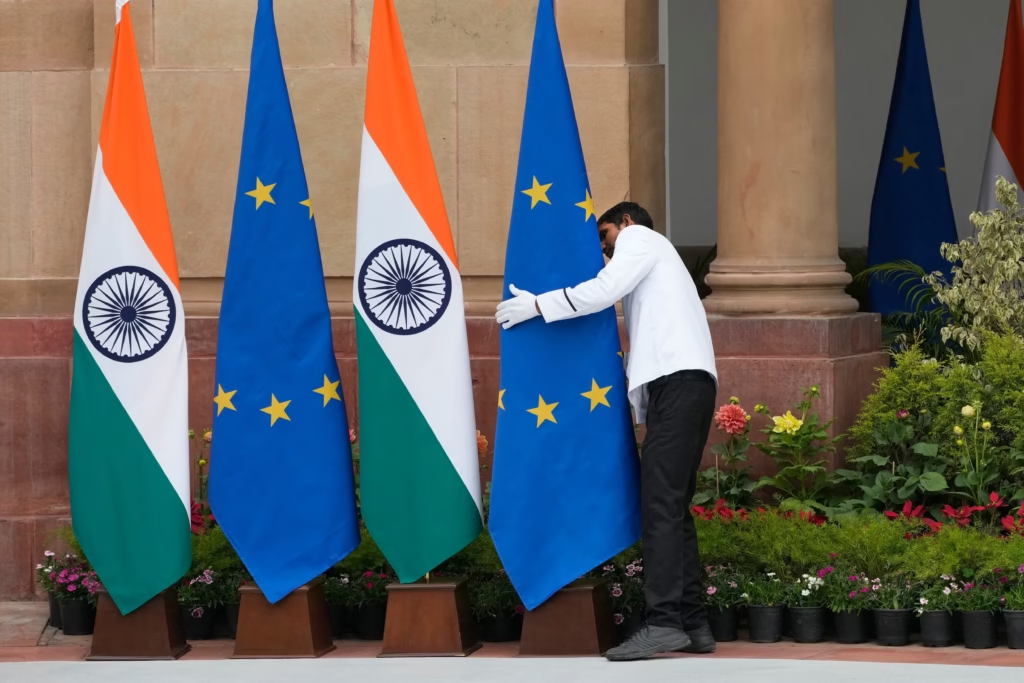
After years of slow progress, India and the European Union have revived negotiations for a long-pending Free Trade Agreement, or FTA. This time, both sides are pushing to finalise the deal by the end of 2025, making it one of the most significant trade pacts India has ever pursued.
Yet, with shifting global supply chains and a search by nations for stronger economic alliances, the India-EU FTA has now acquired renewed urgency and strategic importance.
What’s Being Negotiated?
The FTA will be a modern and comprehensive partnership in various sectors of key importance for both economies. The most important topics under discussion are:
- Trade in goods – tariff reduction, streamlining of customs procedures
- Services and digital trade – Smoother rules for IT, financial, and cross-border digital services
- Investment protection – protection of investors, creation of favorable business climate Market access – especially for automobiles, steel, textiles, chemicals, and pharmaceuticals
- Regulatory standards – harmonisation of certifications and safety requirements to facilitate trade
Negotiators have already closed more than 11 chapters out of 23, showing more progress in the negotiations than ever before and strong political impetus from both sides.
Why This Deal Matters for India
A successful FTA with one of the world’s largest economic blocs—the European Union—could unlock several major long-term gains:
- Increased access to Europe’s high-income consumer market**, resulting in higher exports
- Higher foreign investment, especially in clean energy, manufacturing, and technology
- Boost to export-oriented sectors** such as textiles, pharmaceuticals, and IT services
- Opportunities for Indian startups and digital firms in the regulated digital market of Europe
It could also heighten India’s global trade influence at a time when the country is making a move away from dependence on a few big markets.
For the European Union
The EU would also benefit hugely:
- A Gateway to the fast-growing Indian economy, one of the most powerful globally
- Expanded opportunities for European carmakers, luxury goods companies, machinery manufacturers, and green tech firms.
- More stable and diversified supply chains
- A stronger geopolitical partnership with India amid changing global alignments
What’s Still Pending?
Despite substantial progress, several sensitive issues remain to be resolved:
- Tariffs on European cars – India wants to protect domestic auto manufacturers
- Market access for Indian steel and engineering products – the EU is pushing for more stringent quality checks
- Regulatory harmonisation – alignment of safety and environmental standards
- Digital data rules: Data flows, privacy concerns, and compliance with the EU’s strict GDPR norms
These are areas that will need political decisions, not just technical negotiation.
Once finalised, the India–EU Free Trade Agreement will be among India’s largest and most influential trade pacts that would reshape economic ties between the two regions for decades to come. It could increase trade, investment, innovation, and strategic cooperation several-fold. With both sides racing to complete the remaining chapters, the next few months will be crucial in ironing out complex issues and pushing the negotiations across the finish line.


More Stories
Kashmir, spying, demolitions: How Modi’s India embraced ‘Israel model’
World Current Affairs This Week: 22-Nation Coalition Over Strait of Hormuz, Antibiotic-Resistant Cave Bacteria, and US-Iran Oil Sanctions Relief
Elon Musk is the world’s richest person with $850 billion in wealth, but how much cash does he have? He reveals