






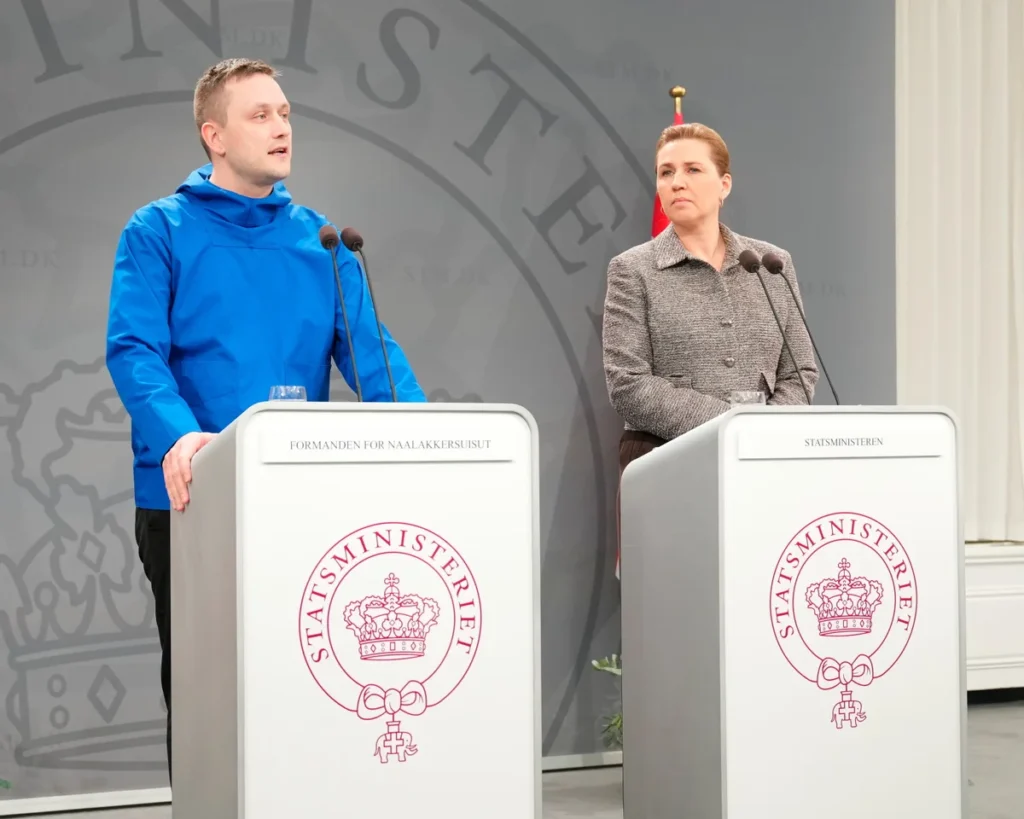
Greenland’s rejection of a proposal to annex the island into the U.S. has now brought to an end any continued speculation concerning the political status of Greenland, which emphasizes Greenland’s sovereignty and self-determined future.
Greenland is a semi-autonomous territory within the Kingdom of Denmark. Due to its strategic location in the Arctic, valuable mineral resources, and contributions to the research of world security and climate change, it has attracted world interest and attention over time. Interest in Greenland will only increase as challenges for dominance increase worldwide, particularly in relation to competing with the U.S. and other countries in the region.
Greenland’s Location Matters to the World
Greenland’s location is uniquely situated between North America and Europe via North Atlantic and Arctic shipping lanes, which makes it strategically important for military operations, commercial shipping and environmental research. Greenland has large reserves of rare earth minerals, oil, gas, and other natural resources that are critical to the growing demand of modern technology industries such as electric vehicles and renewable energy. As a result, global powers have increasingly focused on developing relationships with Greenland, including at times establishing political partnerships.
What Greenland Has Made Clear About Relationship with the U.S.
The Prime Minister’s comments have made it clear that Greenland is not a territory available for sale or annexation. It has maintained friendships with the U.S. and cooperation on defence and research, but the leadership has indicated that cultural and national self-determination will not be compromised.
Greenland has decided to remain under the sovereignty of the Kingdom of Denmark, which grants Greenland extensive autonomy from the Danish Government while maintaining a limited relationship in matters of foreign affairs and defence.
Denmark supports Greenland’s declaration on territorial integrity through the Copenhagen Agreement. Copenhagen has elevated the profile of Nuuk by clearly showing the numerous existing cultural, historical, and political ties between the two nations. As part of their continued support for Greenland’s growth, independence, and future development, Denmark has publicly committed to respecting Greenland’s identity and democratic rights and supporting Greenland’s future growth as well as sustainable development goals.
Greenland’s declaration has implications for global Arctic politics. Climate change has opened new shipping lanes and created new resources for Greenland and the High North. Greenland’s declaration of independence from the USA will serve to strengthen Denmark’s status in Arctic diplomacy as well as to reinforce international law, which prohibits any expansion of a nation’s territory in the current global political order.
The USA is predicted to maintain defence and scientific research relationships and work together with Greenland on cooperative economic development agreements. Greenland’s continued relationship with Denmark through the Copenhagen Agreement serves to strengthen Greenland’s ability to retain sovereignty, democracy, and identity and to engage in future development on its own terms.





More Stories
India – Latin America Relations: Emerging Partnerships and the Global South Imperative
Iran Protests Intensify Amid Internet Blackout and Rising Iran Tensions with US and Israeli Governments
India’s “Boycott Thailand” Movement Trends Online Over Demolition of Vishnu Statue at Thailand-Cambodia Border