






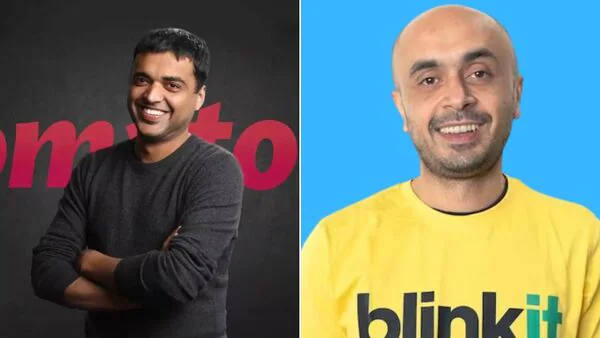
New Delhi: In a major change in the leadership of Blinkit, Deepinder Goyal, its co-founder and former long-serving CEO, resigned from the position of CEO, with the company’s present Chief Operating Officer, Albinder Dhindsa, succeeding him. This is the most strategic change in the leadership of the biggest quick-commerce company in terms of enhancing its functionality and competitiveness.
Blinkit—a rapidly growing online grocery ordering and delivery app that is also among the fastest-growing players in the quick grocery delivery space in India—is also experiencing rapid growth, which is also resulting in increasing competitive pressures and operational costs for the company.
Leadership Change: Why It Matters
Deepinder Goyal, known as one of India’s most successful tech entrepreneurs, co-founded Blinkit (formerly Grofers) in 2013 and guided it through major growth milestones, including the pivot to ultra-fast delivery and deepening partnerships with local vendors. His decision to step down reflects both personal priorities and evolving business strategy.
Albinder Dhindsa—who joined Blinkit in 2019 and served as Chief Operating Officer (COO)—is set to take over as CEO. Dhindsa has played a central role in building Blinkit’s logistics, supply chain capabilities, and delivery fleet—critical elements in the company’s attempt to compete with rivals such as Swiggy Instamart and Zepto.
In an internal message to employees, Dhindsa emphasized continuity, promising to drive execution excellence, improve efficiency, and build customer-centric innovation without losing sight of Blinkit’s core mission.
“What This Means For Blinkit’s Strategy”
1. Emphasis on Operating Efficiency
Sustainability is becoming a greater focus:
Blinkit is sure to stress cost control efforts, delivery optimization, and more optimized unit economics—considering that the segment boasts about ultra-fast delivery when spending has indeed been aggressive.
2. Improving Delivery Infrastructure
With his experience in the operations side, the company is also likely to see more investment in the dark stores, micro-warehousing, and last-mile delivery solutions under the leadership of Dhindsa.
3. Competitive Positioning
Given that others in its industry, such as Swiggy Instamart, Zepto, and Dunzo, press for market share, Blinkit may need to reposition their perks and pricing structures to retain customer loyalty and profitability.
4. Broader Market Focus
Apart from metro cities, Blinkit can also foray into tier-II and tier-III cities since demand for quick commerce is rising in those areas and competition is not very dense compared to metro cities.
Industry Reaction
Market analysts view the leadership change as an expected evolution rather than a sign of distress. Goyal’s move has been interpreted as a transition to a more execution-focused leadership model, with Dhindsa well-positioned to handle operational complexities.
Some experts note that in quick commerce, unit economics and logistics mastery are now as important as marketing and customer acquisition, making Dhindsa’s leadership background particularly relevant.
Deepinder Goyal’s Legacy
Deepinder Goyal will remain associated with Blinkit in a strategic or advisory role, according to sources. His tenure saw:
- A major rebrand from Grofers to Blinkit
- Rapid rollouts in urban delivery markets
- Strategic partnerships and investor confidence
- A massive expansion of delivery infrastructure throughout India
Founders transitioning to non-operational roles is common in tech startups scaling into mature businesses; Goyal’s legacy continues to shape Blinkit’s identity and culture.
Beginning a New Chapter for Blinkit
The transition in Blinkit’s leadership with the step-down of Deepinder Goyal, a founder, creates a fresh leadership chapter in Albinder Dhindsa, whose operational know-how is anticipated to steer the firm in the appropriate direction through the upcoming stage of expansion and maximisation. The competitive marketplace in quick commerce is quite cutthroat and ever-changing, making a huge impact on Blinkit’s future performance in terms of efficiency in last-mile delivery and unit economics scalability.
With Dhindsa at the helm, Blinkit plans to do a better balancing act of speed and sustainability, a new definition of success for a quick commerce market in a developing nation like India. When Blinkit readjusts its strategy to focus on the changing needs of the market, the result and its implications on the market will be eagerly anticipated.






More Stories
Top 10 sustainable companies in India 2026: IT firm at no. 2 sets benchmark in gender equality with the largest female tech workforce
India vs New Zealand, T20 World Cup 2026 Final: IND defeat NZ by 96 runs, wins third title
Samir Soni reacts as the internet calls Amitabh Bachchan the real villain of Baghban: finally, some redemption