

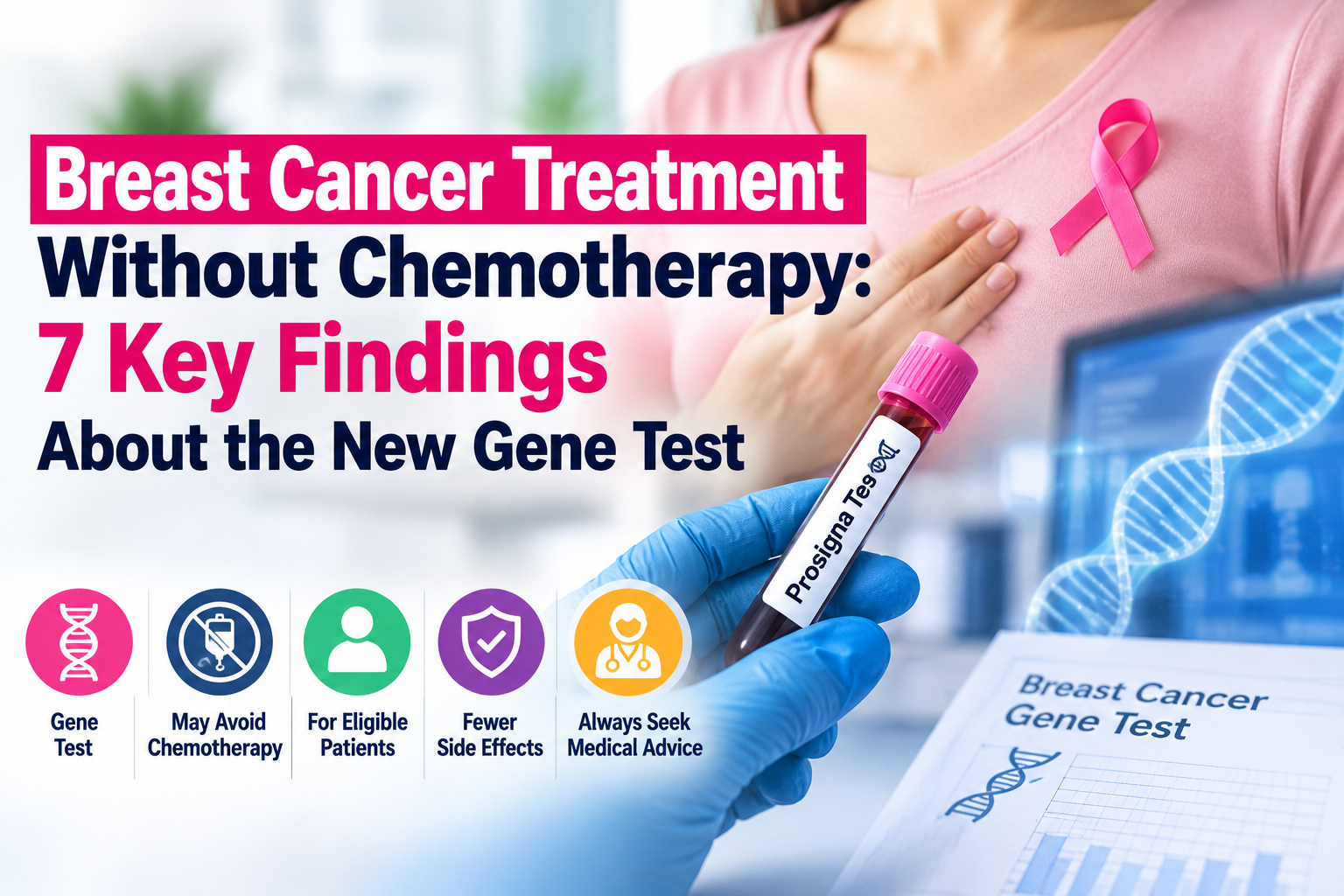
An innovative clinical trial involving international experts has generated optimism about the chances of breast cancer patients being free from chemotherapy owing to a gene-expression test. According to the OPTIMA study carried out by researchers affiliated with University College London (UCL), it was discovered that the Prosigna test would help in identifying those patients whose recovery from breast cancer could match hormone treatments without the use of chemotherapy.
1. The trial was conducted on 4,400 patients
The OPTIMA study involved 4,429 individuals who were over 40 years old. The study aimed to see how genetic testing can assist in deciding whether or not chemotherapy should be used in cases of breast cancer.
2. The Prosigna test uses 50 genes
The test takes a look at the activity of 50 genes within breast tumour samples to predict the nature of cancer.
3. Around 68% were low-risk scorers
More than two-thirds of patients participating in the study have been categorised as being low risk according to their Prosigna test.
4. Outcomes after five years were similar
For patients who have a low score, the five-year survival rate without recurrence of breast cancer while under hormone therapy only was 93.6%, whereas it was 94.8% for those on chemotherapy with hormone therapy.
5. Some patients can skip chemotherapy
This information is especially useful for women who are more than 40 years of age with early-stage hormone-positive breast cancer and HER2-negative breast cancer.
6. Test may minimise risks from treatment
By avoiding unneeded chemotherapy, it is possible to minimise side effects, such as fatigue, nausea, and hair loss in patients eligible for this test. However, there may be situations when other treatments, including hormone therapy, are needed.
7. Medical advice is always required
The test does not provide any guarantees that cancer would not recur in the future. In addition, it is only useful for some kinds of breast cancer.
This discovery is a great move in the direction of personalised breast cancer treatment. However, patients should not skip or reject chemotherapy without speaking to their oncologist. In addition, the availability of the Prosigna test may depend on the country.