






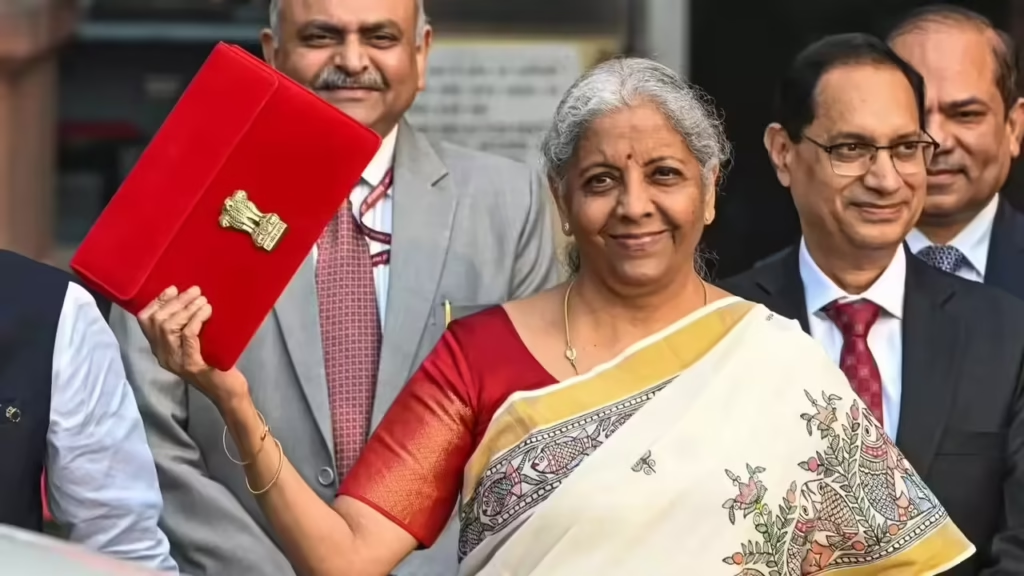
On behalf of the Government of India, the official announcement of the schedule for the Parliament session for Budget 2026 has now been published. This session will occur from January 28 through April 2, 2026, split into two parts. The session is essential to accomplish important legislative work, develop policy and deliver the Union Budget for 2026-27 to the Lok Sabha. The Union Budget marks an important milestone for the Government, as it forms the basis for outlining its plan of action and priorities for Fiscal Year (FY) 2026-27.
The extended time frame indicates that the Government of India intends to create an opportunity for individuals to engage in extensive discussion with respect to financial and economic issues and to address various governance issues such as tax proposals, spending priorities and reforms in various industries.
Two Phases of Parliament’s Budget Session
The Parliament budget session will be divided into two phases; details are as follows:
Phase One:
January 28th through March 7th, 2026
Parliament’s Phase One of the Budget Session will include the presentation of the Union Budget for FY2026-27 and a general discussion on the budget estimates and tax proposal.
Parliament will conduct introductory debates on all legislative bills presented in Phase One.
In addition to discussing the Union Budget for FY2026-27, Parliament will also discuss the agriculture, industry, infrastructure, education, healthcare, and military sectors.
Phase Two
March 23rd through April 2nd, 2026
Parliament’s Phase Two of the Budget Session will be focused on discussing the Demand for Grants in department standing committees, as well as the Appropriation and Finance Bills.
Parliament will also work through the process of passing any government legislative proposals and responding to the opposition’s demands.
The time between the two phases will give each ministry an opportunity to gather the results of their detailed feedback from committee meetings and to be prepared to have in-depth discussions when Parliament reconvenes after the first phase.
2026 Budget expectations
Finance Minister Nirmala Sitharaman will likely give a Union Budget speech for 2026–2027 near the start of the 2026 Parliament session that will describe the new government’s expected spending plan, revenue estimates, and tax policies for the new fiscal year (April 1). Also, analysts expect:
Revised estimates for GDP growth and fiscal deficit targets.
Policies aimed at increasing manufacturing and exports.
Emphasis on green energy, digital infrastructure, and rural development.
The possibility of revisions to current personal income tax rates, as well as incentives for startups and small and medium-sized businesses.
Funding for healthcare, education, and the modernisation of defence.
Due to the current global economic environment and increasing uncertainty regarding rising energy prices and geopolitical events, all eyes will be on how the Budget achieves an appropriate balance between growth, stability, and welfare priorities.
In addition to budget issues, there will be many other significant legislative changes and bills going through Parliament, which may include:
– Financial Sector Reform
– Labour/Employment Policy Updates
– Climate Action and Environmental Regulations Bills
– Amendments to Industry-Specific Laws
Additionally, it is anticipated that opposition parties will raise concerns related to:
– Public Expenditure
– Subsidy Management
– Inflation/Job Creation Measurements
This will lead to vigorous debate and questioning from the opposition.
Public Engagement for Committee Work
Parliamentary standing committees shall review the allocation of funds and the proposed budget in depth during the periods between sessions and will receive expert opinions and input from stakeholders. This process will assist ministries in deciding how to allocate resources and in determining the importance of reform by obtaining input from experts and stakeholders.
It is expected that civil society organisations, industry groups, and think tanks will develop a set of recommendations that will shape the parameters of legislative debate regarding taxation policy, investment policy, public service delivery, and economic growth.
Budget Session Economic Context
India’s budget session is characterised by:
A moderate-inflation environment and stable monetary policy
An emphasis on job creation and diversification of the economy
Increased use of digitisation, financial inclusion and excitement about infrastructure spending
International stresses on trade issues with foreign countries, including global economic headwinds from rising fuel prices.
All of these will likely play a prominent role in determining the relative merits of various policies and legislative actions throughout the budget session.
Final Remarks: An Opportunity to Influence Budget 2026
The budget session of the Indian Parliament is between Jan 28, 2026, and Apr 2, 2026, with two separate phases for review by the Parliament. This will be one of the most important times of the year for legislators, as the budget is being presented and debated at considerable length on economic and social policy and reform issues.
During this time frame, legislators will be making decisions regarding taxation, administering budgets, establishing industry reform policies and creating welfare programmes, while consumers, businesses and investors will be looking to their elected representatives for direction on where the economy is headed.
In addition, the timing and structure of the budget process will allow all of India’s citizens to actively participate in the debate around their values and preferences, thus demonstrating once again that Parliament represents the centre of India’s legislative and fiscal decision-making processes.




More Stories
Samir Soni reacts as the internet calls Amitabh Bachchan the real villain of Baghban: finally, some redemption
Blinkit CEO Deepinder Goyal Steps Down; Albinder Dhindsa Appointed to Replace Him—What It Means to Blinkit
ICC Dismisses Bangladesh’s Request for T20 World Cup Venue Change: Here’s What Went Down