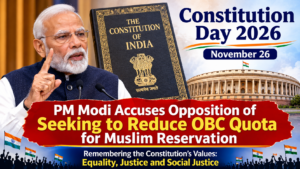


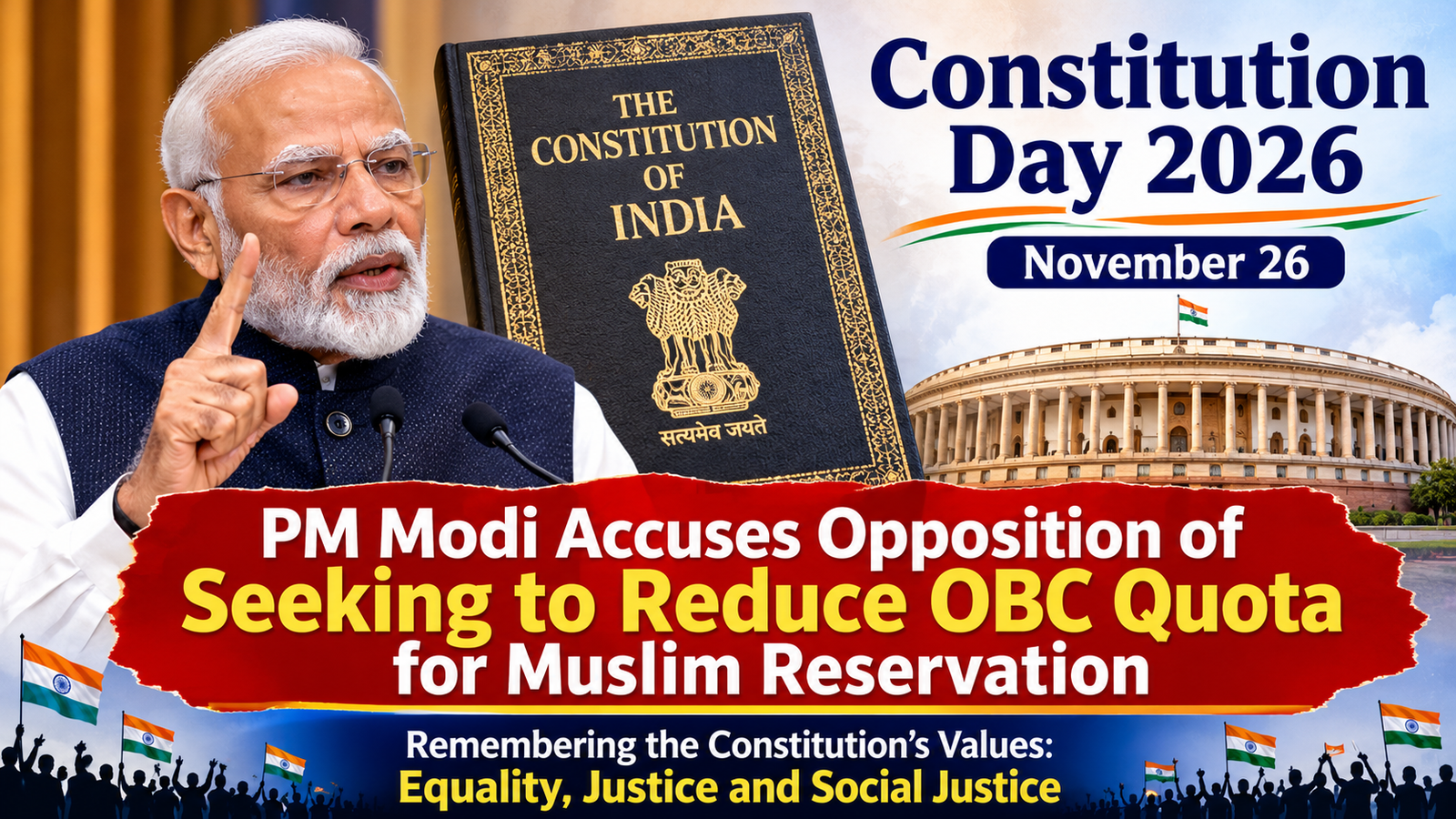
Prime Minister Narendra Modi struck a serious note against the Opposition on Constitution Day on November 26. On the occasion, Modi published a feature on his site in which he says that the “biggest Opposition party of the country is now trying to do away with the reservation benefits that are given to the OBCs so that Muslim reservation can be accommodated. Modi does not take the name of Congress directly but describes the position as “very painful” and remembers Dr Ambedkar and other members of the Constituent Assembly on how the Constitution was viewed in an excerpt from the PMO website.
The Prime Minister attacked the Opposition over its role in the defeat of the Constitution Amendment Bill on women reservation earlier in this year. The bill had sought to bring in 33 per cent reservation for women in Lok Sabha and state assemblies through the process of delimitation. It fell short of the two-thirds majority in the Lok Sabha in April 2026. Modi accused the Opposition of stopping it from coming through in order to ensure lesser political empowerment for women and reiterated his government’s commitment to increase their representation.
When it came to targeting the Opposition’s behaviour in the houses, Modi said the Opposition seems to have become an ‘Avrodh Paksh’ (obstructionist) instead of a ‘Virodh Paksh’ (opposition). He contended that parliamentary disruptions should not take the place of playing a constructive role in a democracy.
The Prime Minister also touched upon the significance of the Indian Constitution, its role in promoting equality, justice and opportunities for people. He remembered the contribution of former President Dr B. R. Ambedkar, Dr Rajendra Prasad and other members of the Constituent Assembly.
Constitution Day is annually observed on 26 November to mark the adoption of the Indian Constitution by the Constituent Assembly in 1949. This year’s celebration once again returned the spotlight on constitutional values, social justice, reservation policies and women’s political representation in the national political discourse.