






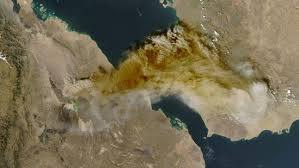
A large cloud of volcanic ash from Ethiopia’s Hayli Gubbi eruption travelled several thousand kilometres and entered Indian airspace late on Tuesday, which has disrupted flight operations and led to multiple aviation advisories. The plume reached Delhi around 11 pm, having drifted steadily across Gujarat, Rajasthan, Maharashtra, Punjab, and Haryana, and continued its movement northeastward.
According to the India Meteorological Department (IMD), the cloud is expected to completely move out of India’s airspace by 14:00 GMT (7:30 pm IST) and continue towards China.
How Did the Ethiopia Volcano Eruption Affect India?
The Hayli Gubbi volcano in northern Ethiopia, dormant for several thousand years, suddenly erupted on Sunday and sent huge ash plumes across the Red Sea, traversing Yemen and Oman before finally reaching India.
High-level volcanic clouds contain fine ash, sulphur dioxide, glass particles, and tiny rock fragments, all harmful to aircraft engines and sensitive aviation sensors.
DGCA Issues Strict Safety Advisory
The DGCA has thus issued a detailed advisory to direct all Indian airlines to:
* Avoid routes and flight levels designated as volcanic ash–affected
* Modify flight plans, routing, and fuel load based on updated warnings
* Report all ash encounters immediately, including unusual engine behaviour or any smoke/odour in the cabin
* Inspect runways, taxiways and aprons at airports if ashfall is suspected
The advisory highlights that volcanic ash can cause engine flameouts, scratched windscreens, blocked sensors, and significant mid-air risks.
Flights Cancelled, Routes Altered Across India
The ash cloud has affected night operations across several states and compelled major carriers like Air India and Akasa Air to either cancel flights or reroute their flight paths.
A Mumbai Airport official said airlines were seeking to reroute flights through Pakistani airspace, but Indian carriers currently do not have access to Pakistani airspace, adding to operational problems.
“We have started logging all the diverted flights and are keeping a close watch on the situation,” the official said.
What Weather Agencies Reported
Cloud entered through Gujarat
According to IndiaMetSky Weather, the plume first entered **Gujarat** late Tuesday before spreading over:
- Rajasthan
- Northwest Maharashtra
- Punjab
- Haryana
- Delhi-NCR
2. Speed and Altitude
- The volcanic cloud is travelling:
- At 100–120 km/h over North India
- In the altitudes of 15,000–25,000 feet
- With possible peaks as high as 45,000 feet, creating high-altitude hazards for aircraft
3. Composition of the Cloud
Experts say the plume contains:
Available data includes but is not limited to the following:
- Volcanic ash
- SO₂ – Sulphur dioxide
- Microscopic glass particles
- Fine rock dust
This composition can make the sky appear darker and hazier and is very dangerous for aircraft engines.
4. No Major Impact on India’s Air Quality
While the cloud contains pollutants, agencies reported:
- Limited impact, in general, on the Air Quality Index (AQI) in Indian cities.
- Possible increase in sulphur dioxide levels in the Himalayan hills, Nepal, and Uttar Pradesh’s Terai region.
This is because the ash travels at very high altitudes and therefore cannot settle at ground level.
5. Low Chance of Ashfall Over Indian Cities
Despite its massive size—currently stretching from the **Oman–Arabian Sea corridor** into the plains of North and Central India—meteorologists say:
- The probability of ashfall in Indian regions is very low.
- The plume will largely remain suspended in the upper atmosphere and drift away
What’s Next?
With the ash cloud drifting toward the Himalayas and onwards to China, Indian officials remain aware of wind patterns at high altitude. Airlines will resume normal operations once the cloud exits Indian airspace by Tuesday evening.
It is recommended that travellers:
- Check flight status regularly
- Keep yourself abreast of airline notifications
- Expect delays or cancellations on international and domestic routes.
The rare eruption in Ethiopia — from a once-quiet volcano — is a good example of how natural disasters across continents can affect aviation safety and travel operations in India directly.






More Stories
Deep-Sea Jellyfish Study Reveals Mysterious Bio-Geographic Barrier in the North Atlantic Ocean
GSLV-F16 Successfully Launches NISAR Satellite into Orbit: Key Highlights of the Mission
Can Modern Technology Effectively Control Sulphur Emissions from Coal Plants?