






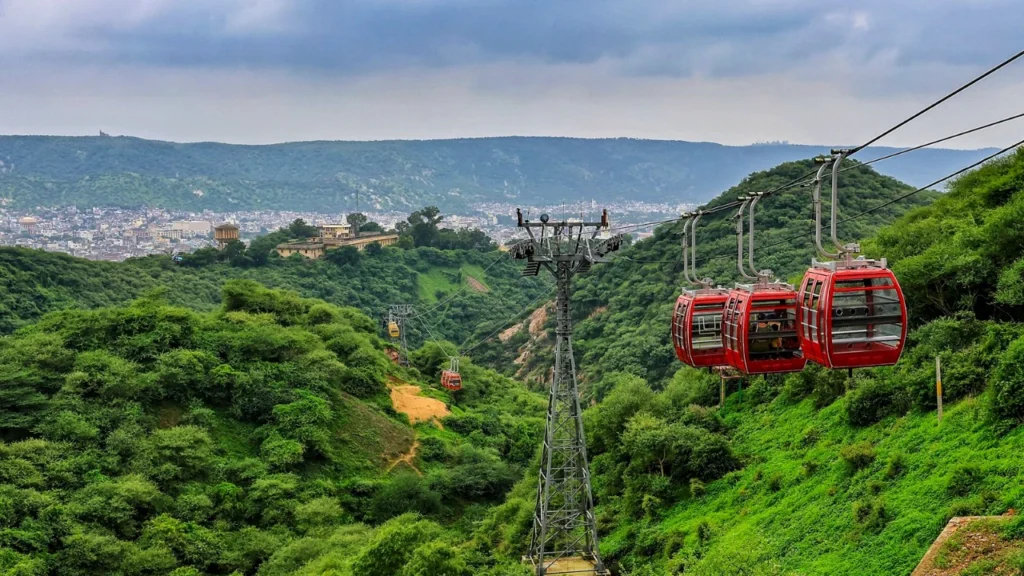
Conservationists, locals, and tribals are sounding an alarm over the future of the Aravalli Hills, which represent some of the oldest mountain ranges in India, following a recent definition by the Indian Supreme Court, which has sparked fears over the preservation of this ecologically prime mountain range being undermined. Why Aravallis Matter—More Than Just Hills
This Aravalli Range extends over the states of Rajasthan, Haryana, Delhi, and Gujarat, serving as a natural barrier against desertification, as well as a green lung for the entire northern part of the Indian subcontinent itself. Environmental groups have appealed, however, that even small ranges and undulating areas, long protected because of their environmental significance, play a crucial role in biodiversity, runoff, and oxygen production.
What’s Causing the Controversy?
An expert panel formed by the Environment Ministry and endorsed by the Supreme Court has identified a common definition of the Aravalli hills, which refers only to landforms when the topographic elevation is 100 metres or more above the surrounding relief. A common definition of the hills has been applied uniformly across all the states.
Nevertheless, it is alleged that this criterion of height leaves more than 90% of the present Aravali range area, including low-lying ridges, knolls, and areas that have been long recognised as part of this protected area, outside legal protection. These areas, though smaller in extent, have been deemed to be of ecological importance in maintaining groundwater and soil and protecting against dust and desert windstorm conditions.
Environmentalists & Locals Sound the Alarm
The re-notation of what constitutes ‘Aravalli’ may upset mining, real estate, and infrastructure development in certain areas, which are currently barred from these activities, thus leading to desertification,” Environment experts
The local tribes, particularly in the southern part of Rajasthan in the Banswara and Dungarpur regions, have committed to defending the hill areas and have stressed their CULTURE, SPIRITUALITY, AND LIVELIHOOD LINKS to the forests and hill slopes. Tribals are afraid of being driven out of their lands and the destruction of natural water sources. ([The Times of India][4])
Activists and lawyers alike have also criticised the new definition because they state that many smaller ‘ecologically crucial’ hill formations, such as those found in the Mewar and Udaipur areas, ‘are excluded from protection because they do not meet this definition’.
Government & Court Response
The Centre has already dismissed suggestions that the new formula reduces environmental protection** and has instead made it clear that more than 90% of the area in the Aravalli hills will remain protected and that there is no relaxation in the conservation rules either. Union Minister of Environment Bhupender Yadav has clarified that “The Supreme Court’s structure still guards the vast majority of this ecosystem. A moratorium on new mining leases has not been lifted pending the finalisation of a Comprehensive Management Plan.”
They also point out that the above definition was brought into effect to end any confusion that may have resulted between the states and to avoid any inconsistencies that may have led to the encroachment and illegal activities occurring around the hill bases.
Larger Ecological Implications
“The area is prone to quarries opening up, illegal stone crushing units being established, or other environmental degradation that could adversely affect its ecological integrity. Environmental scientists have pointed
* The air quality can turn worse in the neighbouring urban areas, such as the Delhi NCR, because hills act as wind barriers to confine dust particles in those regions.
* Recharging groundwater may be affected, which would undermine water security in the water-dependent areas using the water from the Aravalli groundwater system .
* Loss of habitat: This would impact the habitat corridors and the biodiversity in the semiarid belt.
The Path Forward
“The debate regarding Aravalli conservation has stepped up from being a ‘judicial’ issue to become a ‘larger environmental and socio-political issue’, allowing it to be supported by activists, tribal representatives, scientists, and policymakers. Demands for:
There needs to be:
- An enhanced framework of ecological safeguards that takes into consideration the whole range of geology
- Community-led conservation plans that acknowledge *traditional ecological knowledge.
- Improved enforcement against illegal mining, construction, and encroachment on the land.”
The controversy that is rising concerning the protection of Aravalli Hills raises many issues concerning legal definitions, nature conservation, and sustainable development in a rapidly changing India. Even as the Centre maintains that most parts of this area are protected by a legal framework approved by a court, environmental activists, local residents, and tribes argue that a broader legal definition may endanger this area. What this debate will mean in terms of legal battles, legislative change, and broader social interaction will have much to say about the future of one of India’s oldest and most ecologically significant mountain ranges. This remains a high-stakes issue not only in terms of regional ecology but also in terms of air and water security, biodiversity conservation, and the sustenance of communities that depend on these ‘Green Lungs’ of North India.






More Stories
Samir Soni reacts as the internet calls Amitabh Bachchan the real villain of Baghban: finally, some redemption
Blinkit CEO Deepinder Goyal Steps Down; Albinder Dhindsa Appointed to Replace Him—What It Means to Blinkit
ICC Dismisses Bangladesh’s Request for T20 World Cup Venue Change: Here’s What Went Down