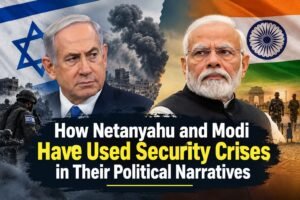


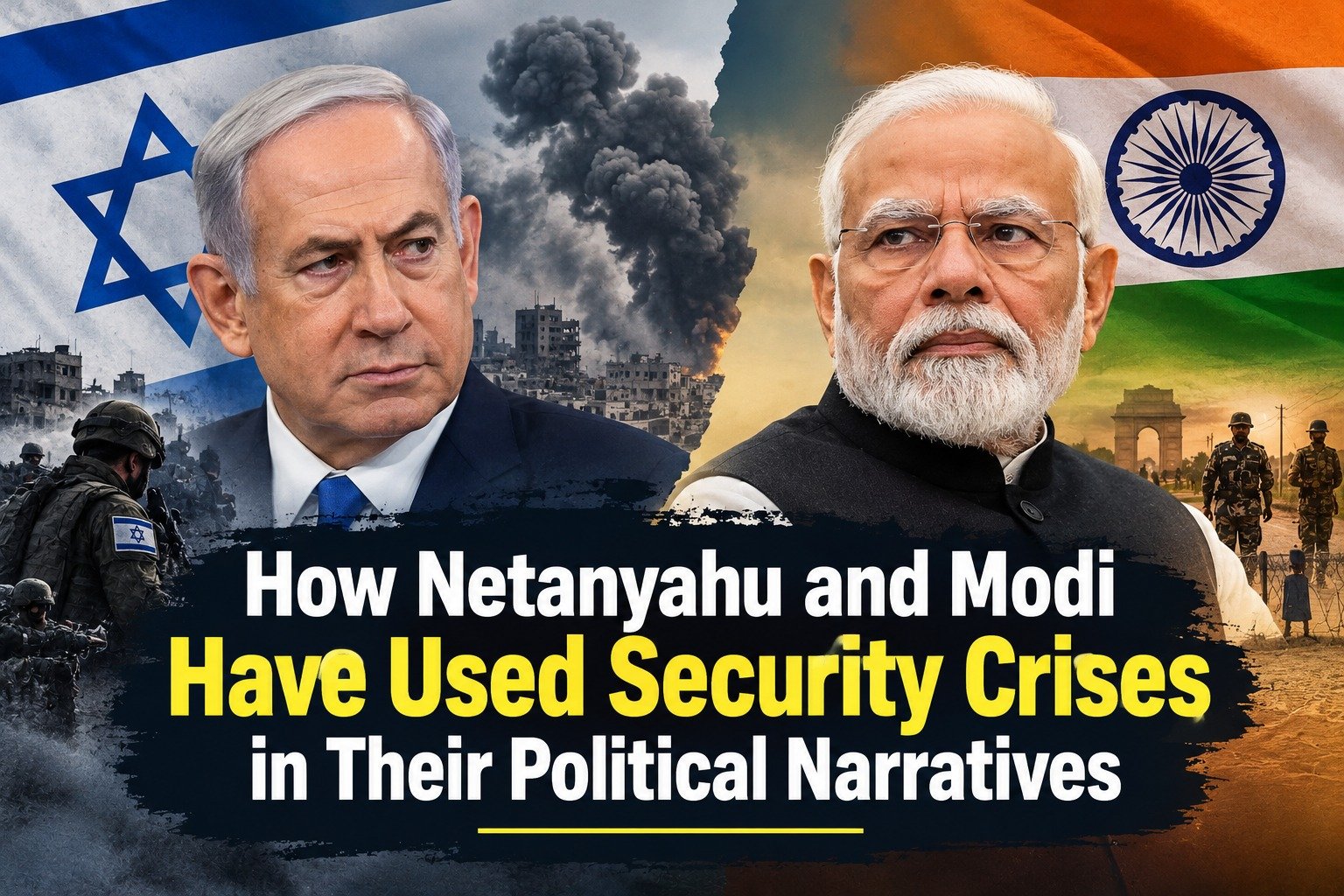
Security crises have been one of the critical themes in the political discourse surrounding Israeli Prime Minister Benjamin Netanyahu and Indian Prime Minister Narendra Modi. In both states, terrorist strikes and counter-military operations have formed an integral part of political discussion and discourse about issues of national security and politics and accountability of the leadership.
The October 7, 2023 Hamas attack on Israel has revealed serious weaknesses of the state’s security and intelligence agencies. There were 1,200 deaths and 251 hostages were captured. Netanyahu is under intense criticism regarding the preparedness of the government and its reaction to the warnings before the terrorist attack. With the upcoming elections in Israel, the responsibility of Netanyahu for October 7 is one of the key themes in political discussion.
Netanyahu has drawn attention to his government’s response through military operations and confrontation with Hamas and other regional players. At the same time, his critics argue that the achievements of the military do not compensate for the lack of accountability for the failures in October 7. There is no state commission of inquiry to resolve the issue.
India has also gone through a similar kind of political debate after attacks in its territory. The Pulwama attack that left 40 CRPF soldiers dead has been met with India’s Balakot airstrikes operation. The military action has become an important aspect of the country’s security discourse during the 2019 election campaign.
Recently, the 2025 Pahalgam attack, which resulted in the killing of 26 people, has been followed by the ‘Operation Sindoor.’ Modi highlighted the operation as an indication of the Indian government’s resolve to face down the terrorists. In his speech in the Parliament, he said the Pahalgam attack is meant to bring about violence and the government’s response has been made as the national resolve against terrorism.
There are thus two related questions that come up in the political debate of both countries: How effective was the government’s response to the attacks? And what kind of responsibility does the government bear for the failures before the attacks?
The supporters of Netanyahu and Modi highlight the military actions taken by their governments along with the national-security policies.
In any case, security crises can affect political discourses because they introduce elements of fear, leadership, and national identity into the public sphere. The issue is whether the voters will consider these events in terms of the government’s inefficiency or military actions. In the case of Israel and India, it is a political question to be answered.