






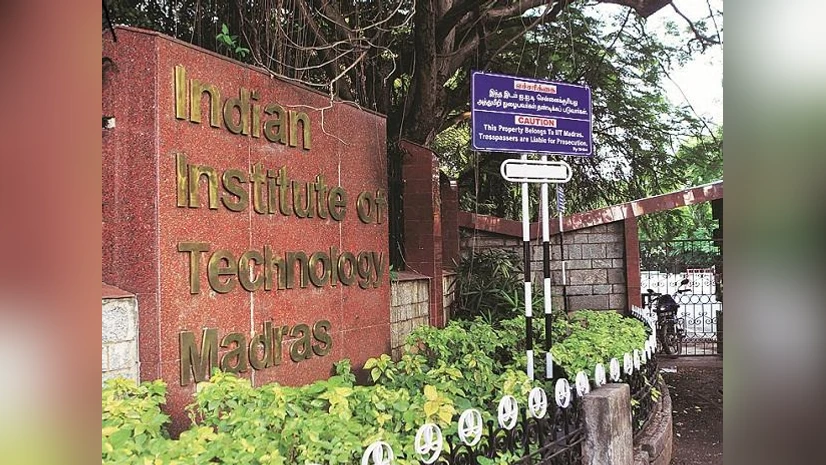
New Delhi: IIT Madras has once again established its status as India’s top university for higher education with the NIRF 2025 ranking. Based in Chennai, IIT Madras scored first in engineering for the 10th consecutive year and held on to its overall category of being ranked 1st for the 7th year in a row.
Furthermore, IIT Madras achieved 1st place in just the innovations category, having jumped up from 2nd place from last year. IIT Madras also ranked 1st in the newly formed Sustainable Development Goals (SDG) category.
In this exclusive conversation with IIT Madras director Prof V. Kamakoti, he spoke about their sustainable success and his future focus.
Collaborative Strategy Behind NIRF Rankings
When asked about the underlying reasons behind the continuous outcome in NIRF ranking, Prof V. Kamakoti explained that party to his strategy on a five-year plan and a collaborative effort from faculty, students, alumni, industry, and funding agencies.
“Our consistent results come from working together in a collaborative, coordinated, and focused manner. Strong graduation rates, innovation, research with impact, start-ups too, and how people perceive the Educational Institution makes a difference too when sustaining the outcome we see in NIRF ranking,” the IIT Madras director said.
Playing a leadership role in Sustainable Development Goals(SDG)
For the first time ever in the NIRF SDG category ranking, IIT Madras came first. Prof Kamakoti noted that institution has about 25 initiatives running at present concerned with the global SDGs covering many topics (healthcare – clean energy).
For example, the institution has the ‘Hyundai Hope for Cancer’ program for children with cancer, as well has a robust energy consortium tackling carbon challenges, hydrogen, and green hydrogen. The School of Sustainability launched in October 2023 would also create more focus in this space.
Research Integrity and Ethics
Addressing the question of negative marking, for retracted papers in the NIRF rankings, Prof V. Kamakoti made it clear that IIT Madras clearly has research integrity at the forefront of its efforts.
He elaborated on quality research integrity through plagiarism checks via Turnitin, compulsory ethics courses, and an Institute Ethics Committee as unique attributes of how research integrity is achieved. “With these checks we are confident these issues will not be present at IIT Madras,” he illustrated.
Inclusive Education and Diversity
Focusing on inclusivity further, the ///Director highlighted that IIT Madras has made significant progress supporting physically challenged students, so now the emphasis is instances of gender inclusivity and diversity. • Almost 50% of staff members are women, as the hiring of women faculty and women students continues to grow. • Thus, about 20-24%, students and around 15% of faculty are also from various states and linguistic backgrounds. • The only sports quota or sponsorship or financial quota we are also seeing metrics to recognize diversity in NIRF rankings.
“We want to create an inclusive and hospitable environment where inclusion and equal opportunity is part of education,” Prof. V. Kamakoti assuaged.
IIT Madras – Celebrating Excellence
IIT Madras has demonstrated once again its stronghold as a leader in engineering, innovation, sustainability, and equitable education. By being placed first in multiple categories in the NIRF ranking for 2025, it has reinforced its legacy in the current landscape of engineering education and the Indian higher educational ecosystem. Led by Prof. V. Kamakoti, IIT Madras continues to innovate, conduct cutting-edge research, commit to ethical conduct and collaborations, and develop talented individuals, all of which are contributing to the growth of the country’s economy.





More Stories
Budget 2026: Parliament Session From January 28 to April 2 to Be Held in Two Phases — Dates, Agenda & What to Expect
DRDO’s Hypersonic Missile Program is Advancing With the Scramjet Engine
Public Holiday Declared in Maharashtra on January 15 for Civic Body Elections