

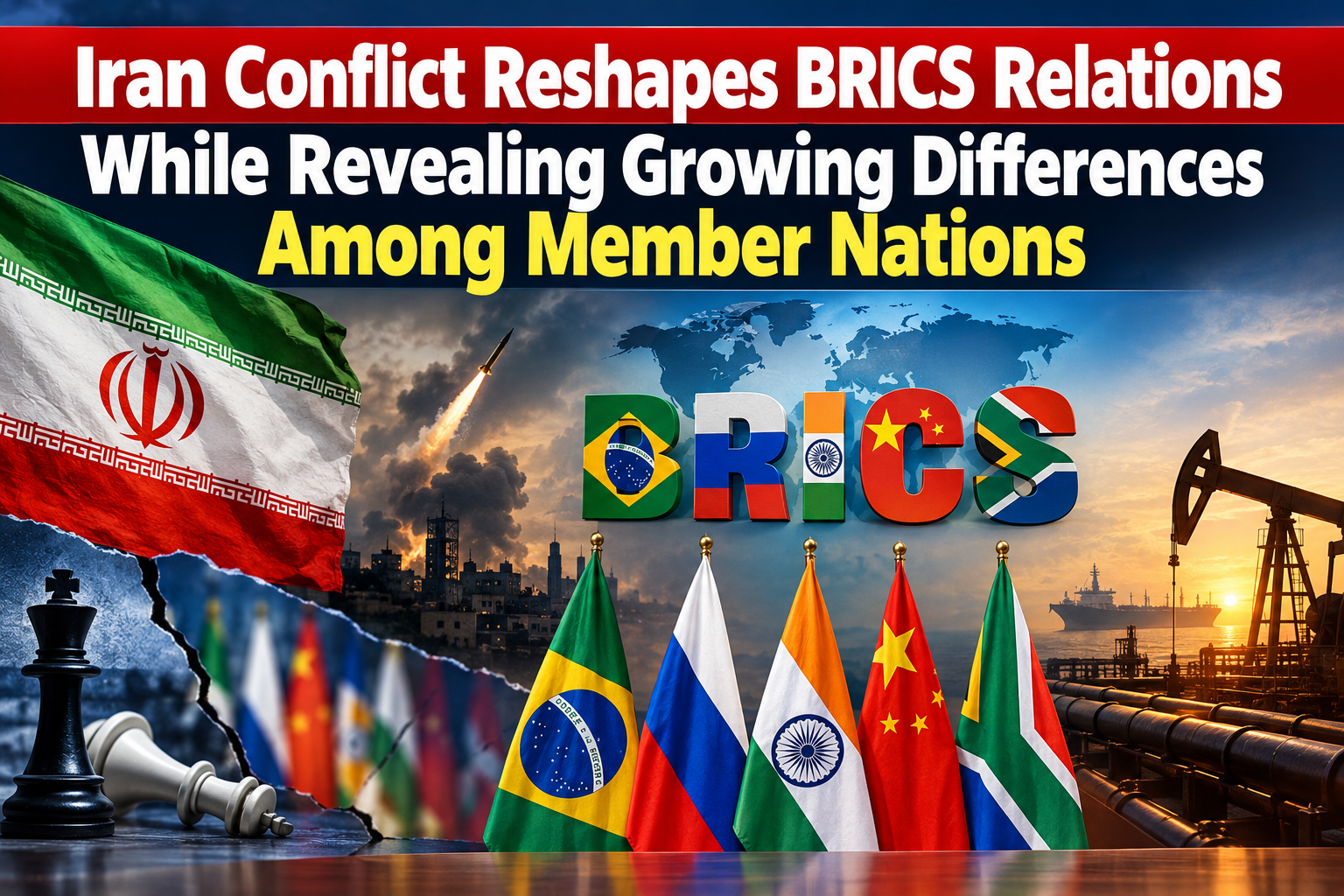
The Iran conflict continues to affect the dynamics in BRICS, thus emphasizing the growing geopolitical importance of the organization and the contradictions between the members of the group. The crisis forces the countries to balance their national interests, diplomatic priorities, and cooperation in BRICS.
Iran has built strong economic and strategic relations with some BRICS countries in sectors like energy, trade, and regional connectivity. As a result, the crisis has created a problem for the countries that try to build relations economically and respond to regional security issues.
Moreover, the situation has emphasized the diversity of the interests of BRICS countries. Although some members have adopted a certain position with respect to the crisis, others have adopted a more careful and diplomatic approach to the matter. This emphasizes the fact that BRICS is not an alliance in terms of politics or militarization, but a forum for countries with different foreign policies to cooperate in certain spheres.
Another crucial aspect of the problem under discussion is energy security. Although Iran is still considered one of the energy producers, several of the BRICS countries are among the leading oil and gas consumers and importers in the world, and any threat to the security of energy supply in the region would undoubtedly affect the markets in the world.
It is interesting to mention that the conflict will test the BRICS’ ambitions to cooperate more actively in different spheres such as international economic and financial relations, international economic policy, and global governance since its member states have always been in favor of increased participation of emerging nations in the decision-making process.
On the other hand, the current situation may provide the BRICS member states with an opportunity to develop mechanisms of dialogue and cooperation in the economic sphere, especially in terms of energy security, transportation corridors, and diplomacy, as it will enable them to reduce the negative economic consequences of regional conflicts.
Thus, as long as the Iran conflict remains one of the crucial factors of global politics, BRICS will have to strike a balance between its positive and negative aspects.