

Since Lake Powell is among the biggest reservoirs in the United States, it is experiencing one of its lowest levels of water ever recorded since its establishment. This implies that there might be even more difficulties in the water supply in the future in this region. As per the information given by the US Bureau of Reclamation and NASA Earth Observatory, Lake Powell holds its lowest level of water since the creation of Lake Powell, and this period is September 2026.
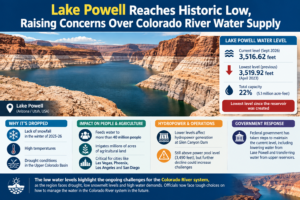
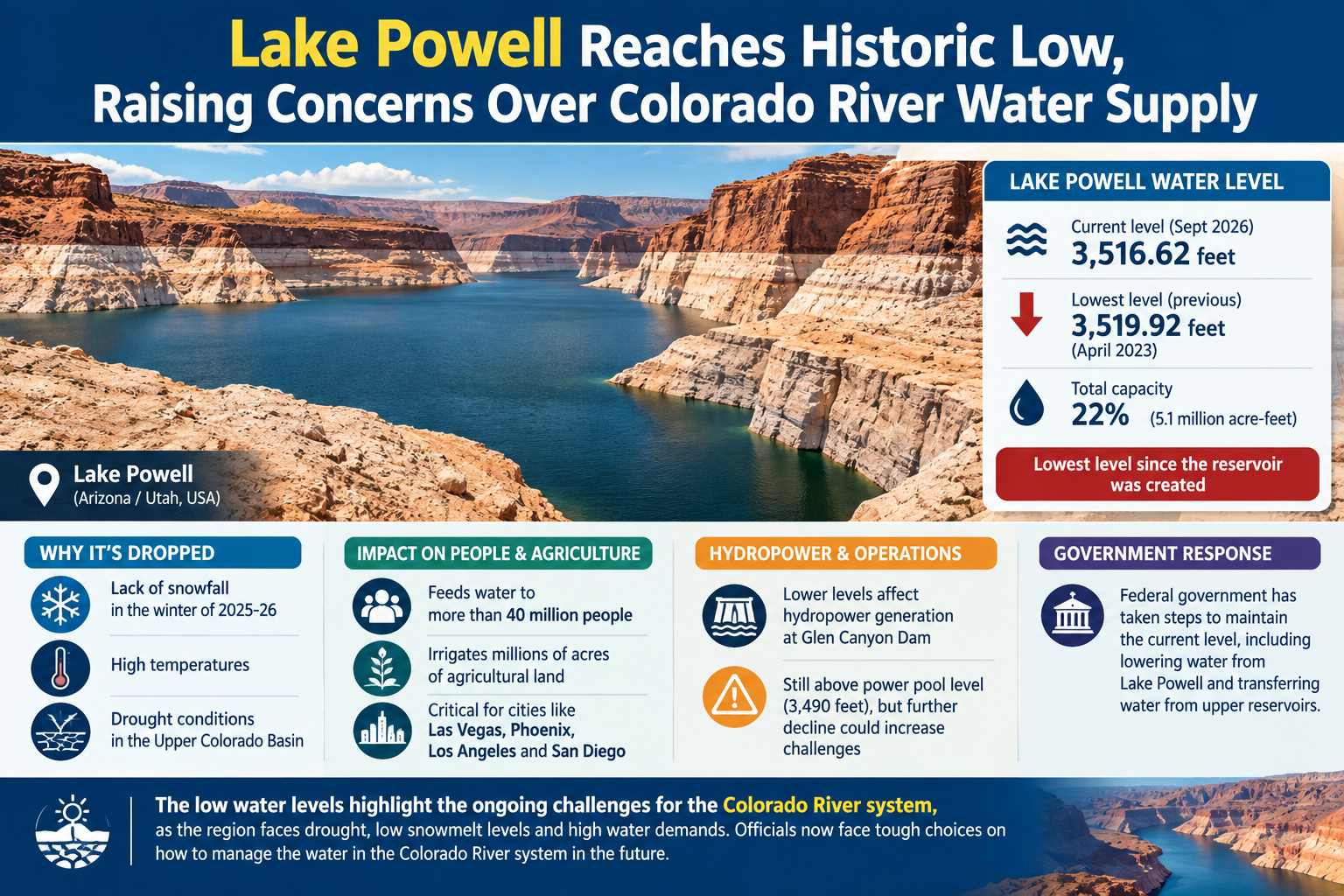
During September 2026, the water level of Lake Powell has dropped down to 3,516.62 feet. The water level in Lake Powell has dropped down as compared to the last lowest water level of 3,519.92 feet during the month of April 2023. It is expected that the water level of Lake Powell is 5.1 million acre-feet of water, which is just 22 percent of total Lake Powell’s capacity.
According to reports, this drop in Lake Powell’s water level was due to a lack of snowfall, high temperatures, and drought conditions experienced in the Upper Colorado Basin. A large part of the river’s flow is dependent on the melted snow from the surrounding mountainous areas. This area faced snow drought in the winter season of 2025-26, as per NASA figures.
A general conclusion from this scenario is that the Colorado River is an important source of water for more than 40 million people who use it to irrigate millions of acres of agricultural lands in the American southwest. Such cities as Las Vegas, Phoenix, Los Angeles and San Diego need this river system for their water needs.
With lower reservoirs, there is also the issue of hydropower generation through Glen Canyon Dam. While Lake Powell is still above the power pool level of 3,490 feet, further lowering could increase the challenge for generating electricity. The federal government has taken some steps in order to keep the reservoir at its current level, by lowering water levels from Lake Powell and transferring water from upper reservoirs.
The low water levels clearly demonstrate the ongoing problem for the Colorado River system, as the area continues to experience drought, low snowmelt levels and high water demands. Thus, the officials are now faced with tough choices as to how to manage the water in the Colorado River system in the future.