


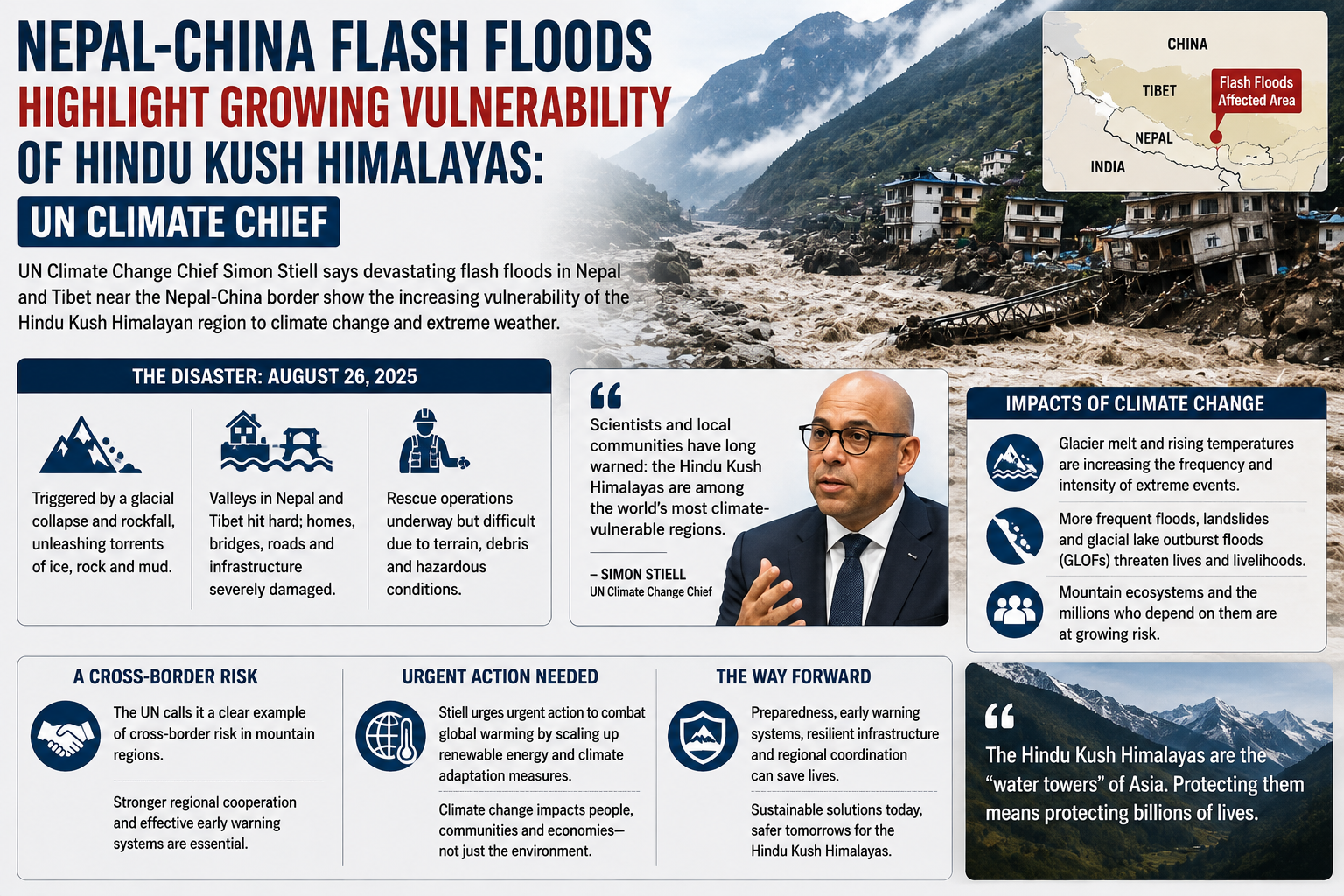
Once again, the catastrophic flash floods in the area of Nepal and Tibet near the border of Nepal and China show the increasing vulnerability of the Hindu Kush Himalayan region regarding the negative impacts of climate change and weather extremes. UN Climate Change Chief Simon Stiell stressed that the tragedy is a clear illustration of the vulnerability of the mountain ecosystems and the threats that the people from this region face.
The flash floods occurred due to the collapsing of the glacier with rocks on August 26 and led to the flooding of the Himalayan valleys with ice, rocks, and mud. The whole areas of Nepal and Tibet suffered from the disaster, and the infrastructure (houses, bridges, roads, etc.) has been severely damaged. The nature of the disaster creates a lot of difficulties for the rescue teams.
According to Stiell, scientists and people from this region have warned about the extreme vulnerability of the Hindu Kush Himalayan region to climate changes for many years already. The warming of the glaciers and increasing temperatures make the mountain regions very vulnerable and likely to experience dangerous events such as floods, landslides, and glacier collapses.
As per the UN, it can be considered as an example of cross-border risk in mountain regions. Coordination between countries and effective warning systems are essential to make sure that people who live down the glaciers and mountains are safe.
According to Stiell, it is important to take urgent steps to fight against global warming by increasing the use of renewable energy and climate change adaptation actions. It is another perfect example of the fact that climate change does not only affect the environment but humans and their properties as well.
As far as the Hindu Kush Himalayas are concerned, it just reinforces the fact that there is a need for preparedness and coordination at the regional level.