





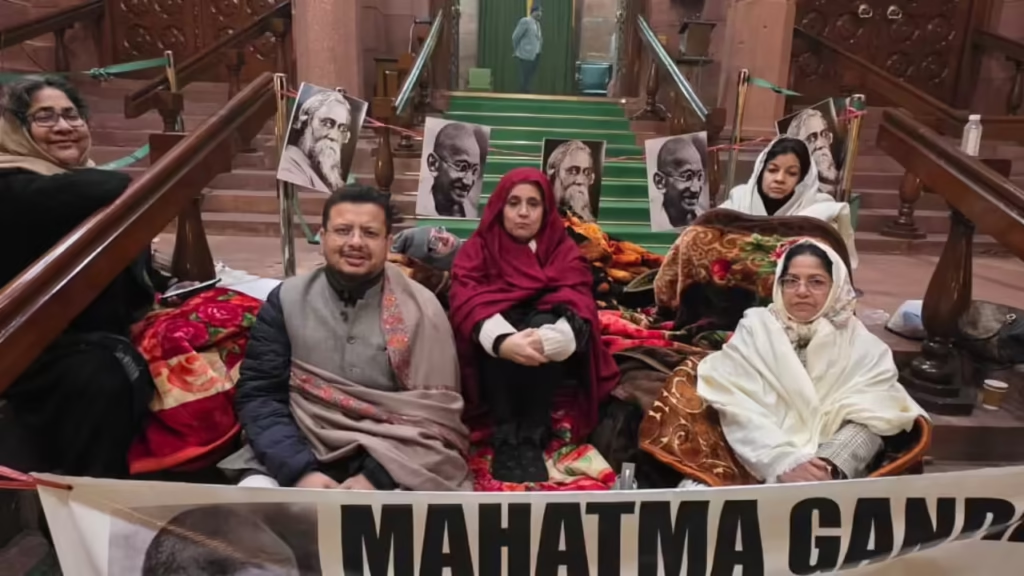
The opposition parties were engaged in an overnight protest at Parliament, as they are opposing the Centre’s passage of the Viksit Bharat – Guarantee for Rozgar and Ajeevika Mission (Gramin) Bill, 2025, or VB-G RAM G, which will soon replace the Mahatma Gandhi National Rural Employment Guarantee Act or MGNREGA. The protesters have demanded that a parliamentary standing committee referral be made before the new bill is finally passed.
The Triggering Incident for the Overnight Protest
Members of opposition parties – Congress, DMK, CPI(M), RSP, Samajwadi Party, and more – staged a sit-in protest outside the Lok Sabha, refusing to move, protesting the “hasty” and “undemocratic” passage of the bill relating to providing jobs in rural areas, saying that:
- The Bill affects the legal employment guarantees** that MGNREGA supplied
- Its inception took place without **proper consultation with workers’ unions and social organisations.
- The name change is a symbol for the erasure of the legacy linked to the employment guarantee law passed by Mahatma Gandhi.
- Financial implications: This may transfer the expenditure burden to state governments, which may further reduce workers’ rights.
The opposition leaders have repeatedly insisted that the bill should go to the parliamentary standing committee for scrutiny, which has been rejected by the government. —
How Parliament Responded
The Rajya Sabha was disrupted significantly. Efforts by leadership in the treasury benches to continue with business in both houses failed as constant objections led to adjournments.
Some opposition MPs also spoke to the media inside Parliament:
“We are not protesting an ordinary bill; we are defending constitutional rights, as well as the means of living in rural India,” said an opposition leader.
The government officials claimed that the proposed bill is going to “modernise rural employment”, guarantee more workdays, and adopt the concept of development for job guarantees. The proposed amendments were also found insufficient to override the need for the “rights-based law, since the affected population has benefited from it for the last two decades.
Core Differences Between MGNREGA and VB-G RAM G Bill
Although the MGNREGA provides a statutory assurance of 100 days of employment to every family, some concerns related to this new bill are:
- Transition from rights-based guarantees to discretionary provisions
- Greater budget caps and administration controls
- Changes in Execution and Monitoring Frameworks
- Application of biometric and digital compliance tools which might discriminate against marginalized workers
Before the bill, activists felt it would lead to better implementation and the growth of infrastructure in the rural areas, but any cutback on the entitlements may affect the vulnerable groups.
Nationwide Response & Response by Civil Society
The VB-G RAM G Bill has, however, also triggered protests by farm workers’ unions, activists, and civil society groups’ in the states of Karnataka, Bihar, and Tamil Nadu, who insist that it erodes the workers’ rights and defies the mandate of the MGNREGA.
Some units of opposition political parties within states have even passed resolutions calling on their governments to oppose the bill and refer it to a committee for further scrutiny.
Politics: What Comes Next
“The nighttime vigil represents a sharp escalation in the political struggle over rural jobs legislation. It’s been suggested that:”
- The debate may influence rural voting opinions before upcoming state elections
- The controversy brings out sharp sociopolitical splits regarding social welfare programs and Centre-state financial relations
- Public opinion regarding the protest, particularly those people in rural areas affected by MGNREGA, may well affect political discussions well after the bill becomes a law
This is “The overnight protest in Parliament by opposition MPs in response to the VB-G RAM G Bill indicates that there is apprehension that curtailing the veteran MGNREGA in favour of the new legislation may potentially reduce rural employment safeguards.” Although it is being argued that modernisation of rural employment in India will be achieved and that more chances of rural employment will be generated, this bill poses some serious threats to people’s livelihoods by replacing a ‘rights-based approach’ with what could be seen as an “exercise of discretion”.
As discussions rage on in Parliament and demonstrations escalate across provinces, it appears that the VB-G RAM G RAM G Bill has emerged as a site of intense politics within India, representing, among other things, a struggle over civic welfare, legislative procedure, and inclusive development. The eventual resolution of this debate, therefore, will be keenly observed.





More Stories
Samir Soni reacts as the internet calls Amitabh Bachchan the real villain of Baghban: finally, some redemption
Blinkit CEO Deepinder Goyal Steps Down; Albinder Dhindsa Appointed to Replace Him—What It Means to Blinkit
ICC Dismisses Bangladesh’s Request for T20 World Cup Venue Change: Here’s What Went Down