





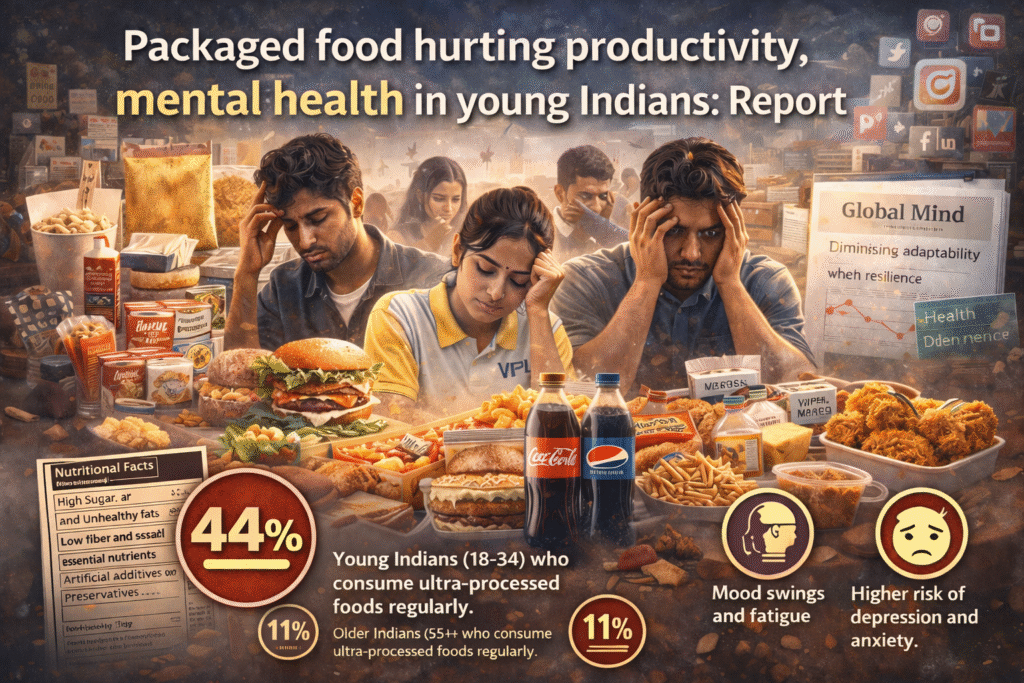
Did you know that in India, 44 percent of youth aged 18–34 consume ultra-processed foods (UPFs) regularly, defined as eating these products most days of the week or more. This rate is nearly four times higher than the 11 percent reported among Indians aged 55 and above. As we all know, in India, the rapid surge in ultra-processed foods is linked to declining emotional resilience and productivity among young adults, according to the Global Mind Project.
It is also sometimes harmful to your mental health, the USP products and the packaged food items. We never consume harmful products, but as much as we can consume a healthy diet. It is necessary for each and every single human being if they want to stay healthy and live long.
Experts say social media use specifically erodes children’s ability to focus and is linked to a rise in ADHD-like symptoms. Furthermore, the Sapiens Labs Global Mind Health 2025 report indicates that 41 per cent of internet-enabled young adults globally face clinically significant mental health challenges. These issues are often exacerbated by cyberbullying, which affects one in two urban parents’ children in India and can lead to severe psychological trauma.
A recent global report has identified the rising consumption of ultra-processed foods as a major contributor to falling productivity and weakening emotional resilience among young adults. The findings have sparked concern for nations like India, which are relying on their youthful population to drive future economic growth. The body nature is different between children body and in the adult body structure. It could be helpful when every person consumes a sufficient amount of diet according to a normal person diet. Everyone has different body structure.
One research study found that about this are they say, according to the Global Mind Health 2025 report, published by the Washington-based Sapiens Labs under its Global Mind Project, provides emerging empirical evidence indicating that ultra-processed foods (UPFs) are associated not only with increased obesity risk but also with broader adverse outcomes for cognitive function and mental well-being. If we study in depth about the packaging of food and issues related to health issues, we understand clearly how much we consume bad food items nowadays, and the freshness of everything which is in past is not real these days.
but are also associated with diminished emotional and cognitive functioning, particularly in the 18-34 age group. In the study, we found intrusting fact that UPFs are industrially made food with low nutritional value. In the end, we find so many unwanted things in the tasty and delicious fast food, too. The question is that what we have to eat now? Is there any clean and clear food we have or not?
Some foods are typically high in fat, sugar and salt (HFSS) and contain additives not usually used in the kitchen, such as flavour enhancers, artificial preservatives, food colours and stabilisers. Sometimes in the study, we found. The report highlights that around 41% of internet-connected young adults between the ages of 18 and 34 worldwide are facing mental health issues serious enough to be considered clinically significant. Even more concerning, this age group is nearly four times more likely than individuals over 55 to report severe difficulties in maintaining productivity and functioning effectively in their everyday lives.
Every age group wants to have a proper diet according to their health and age. The proper meal in a day keeps you active and fresh all the time. Clinically proven that there are scientific reasons behind the proper meal consumption in a day for everyone. The health issues are attacking you less while you take a proper diet. The study, conducted across 85 countries in 2024 and 2025, examined patterns of UPF consumption by asking respondents to select from five frequency categories, ranging from “several times a day” to “rarely/never.” Some internal connections are different from the external health.
Across the internet-enabled world, 54 per cent of those aged 18–34 reported consuming ultra-processed foods regularly, defined as most days of the week or more, compared to just 26% of those aged 55 and above. The only thing that keeps your body and mind fit is to take proper meal everyday and consume a healthy diet.
For a long time, ultra-processed foods were mainly linked to growing cases of obesity, diabetes, and heart-related illnesses. However, the latest report marks a turning point in the public health conversation, expanding the focus beyond physical diseases to highlight their deeper impact on overall well-being. The report highlights a combination of modern lifestyle shifts that are shaping the mental well-being of young adults, ranging from early and prolonged exposure to smartphones to the gradual erosion of close family connections, a decline in spiritual engagement, and a growing dependence on ultra-processed foods, each quietly contributing to a noticeable dip in emotional health and resilience.
In Multiple previous studies across populations have similarly found that diets high in ultra-processed foods correlate with a greater risk of depressive symptoms. The food inspectors are doing all the time searching for clean and fresh items for us, and more and more time is given for our safety and providing healthy, nutritious food. The quality that we consume is playing an important role in our lives. Conversely, reduced UPF intake and healthier dietary patterns have been linked to improved mental health outcomes. Researchers also note that the number and complexity of chemical additives in processed foods have grown significantly over the past decades, potentially compounding their biological impact.
Dr Arun Gupta, public nutrition expert and convenor of Nutrition Advocacy in Public Interest (NAPi), said the findings demand urgent rethinking. Everyone is preparing good quality food and taking good care of providing quality food to everyone. Taking care of health. “When dietary patterns begin to erode attention, emotional control and mental well-being, the issue is no longer individual choice; it becomes a matter of national human capital.”
Take care of your health; everything is after that. Heathy mind makes so many achievements in life. Be safe and healthy all the time. Take precautions to neutralise dite. You achieve everything if your body and mind fit. The findings reinforce calls for stronger statutory warning labels on pre-packaged HFSS foods. Public health advocates argue that reforms must extend beyond labelling to include restrictions on marketing to minors, improvements in school food environments, and fiscal measures such as higher GST rates on HFSS products.
Every age group needs a healthy, proper and nutritious diet every day, keeping your body and mind fit and healthy. Experts also emphasise that regulatory action should not be framed as anti-industry, but as a preventive investment. By strengthening the food environment today, policymakers could avert long-term mental, social and economic costs.
A global study by Sapiens Labs under the Global Mind Project shows that higher intake of ultra-processed foods (UPFs) is strongly linked to poorer mental well-being. People who consume UPFs several times daily are up to three times more likely to face serious mental health struggles than those who rarely consume them. Did it become important to question yourselves?
The Younger adults consume UPFs more frequently and show greater declines in adaptability, emotional control, and resilience. India mirrors the global trend, with rising mental health issues linked to changing diets and lifestyle patterns. India’s Economic Survey has warned that rising consumption of ultra-processed food and obesity can reduce workforce productivity and harm economic growth. Ultra-processed foods often contain High sugar, salt, and unhealthy fats. Low fibre and essential nutrients, as well as artificial additives and preservatives. These factors can lead to so many changes in your body, like Mood swings and fatigue, Reduced focus and mental clarity, Higher risk of depression and anxiety and many more.
That’s why improving dietary habits is now being seen as essential for protecting both mental well-being and the country’s future workforce.





More Stories
Do only vegetarians suffer from vitamin B12 deficiency? Doctor busts 5 myths and explains how supplements work
Amul, Country Delight & Mother Dairy milk ‘Fail Quality test’, coliform bacteria levels exceed FSSAI limits.
Fitness Trends Of 2026: What Changed the Way India Exercises This Year