






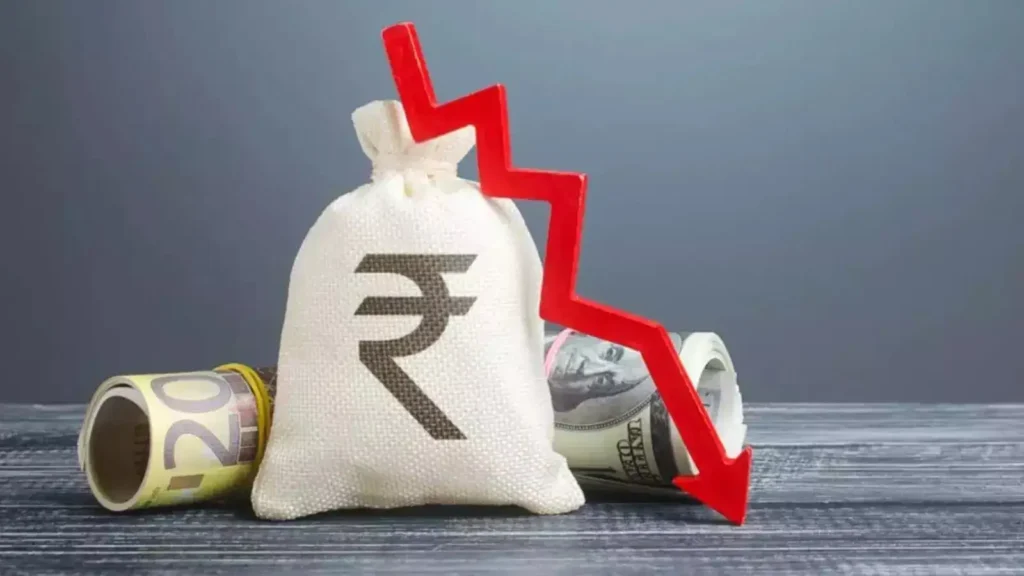
The Indian rupee plunged sharply in early deals on Monday, hitting a new all-time low against the US dollar, reflecting persisting pessimism in the global markets and persistent economic headwinds.
The rupee fell to a record low of around ₹90.64 against the US dollar, according to market data, with traders and investors continuing to act on continued external pressures and uncertainty over the outcome of key international trade negotiations.
Why the Rupee Is Weakening
Many reasons are contributing to the rupee’s continued depreciation:
- Uncertainty over a potential India-US trade deal weighing heavily on investor sentiment and limiting foreign capital inflows.
- Continued foreign portfolio outflows as international investors pull funds from Indian equities and bonds, putting more downward pressure on the currency.
- The trade deficit is set to widen, increasing dollar demand at a time when import costs remain high relative to export earnings, pushing more demand toward the US dollar.
Putting all factors together, the rupee has become one of the weaker-performing Asian currencies in 2025, sliding notably year-to-date.
Market Reactions and Impact
The rupee slide has also pervaded into stock markets; domestic indices are cautiously trading as investors monitor currency volatility and trade developments. Analysts point out that a prolonged weak rupee could impact inflation, import costs, and corporate earnings in sectors dependent on foreign currency.
Despite these, some say a weak rupee has its short-term benefits for the Indian exporters since that makes their products more competitive globally – a benefit possibly cancelled by general economic pressures.
Role of Central Bank and Future Outlook
Conventionally, the Reserve Bank of India moves in to soothe excessive volatility in the foreign exchange markets; sustained depreciation, however, is indicative of a structural pressure at play. The future course of the rupee will depend on the outcome of global trade negotiations, investor confidence, and international capital flows.
Economists said that clarity on the India-US trade front, aided by stable foreign investment trends, should help offset some downside pressures on the rupee and shore it up in the near term.






More Stories
All 7 On Board Air Ambulance Flying To Delhi Die In Crash In Jharkhand
IDFC First Bank discloses Rs 590 crore fraud at Chandigarh branch involving Haryana government accounts
Elon Musk is the world’s richest person with $850 billion in wealth, but how much cash does he have? He reveals