






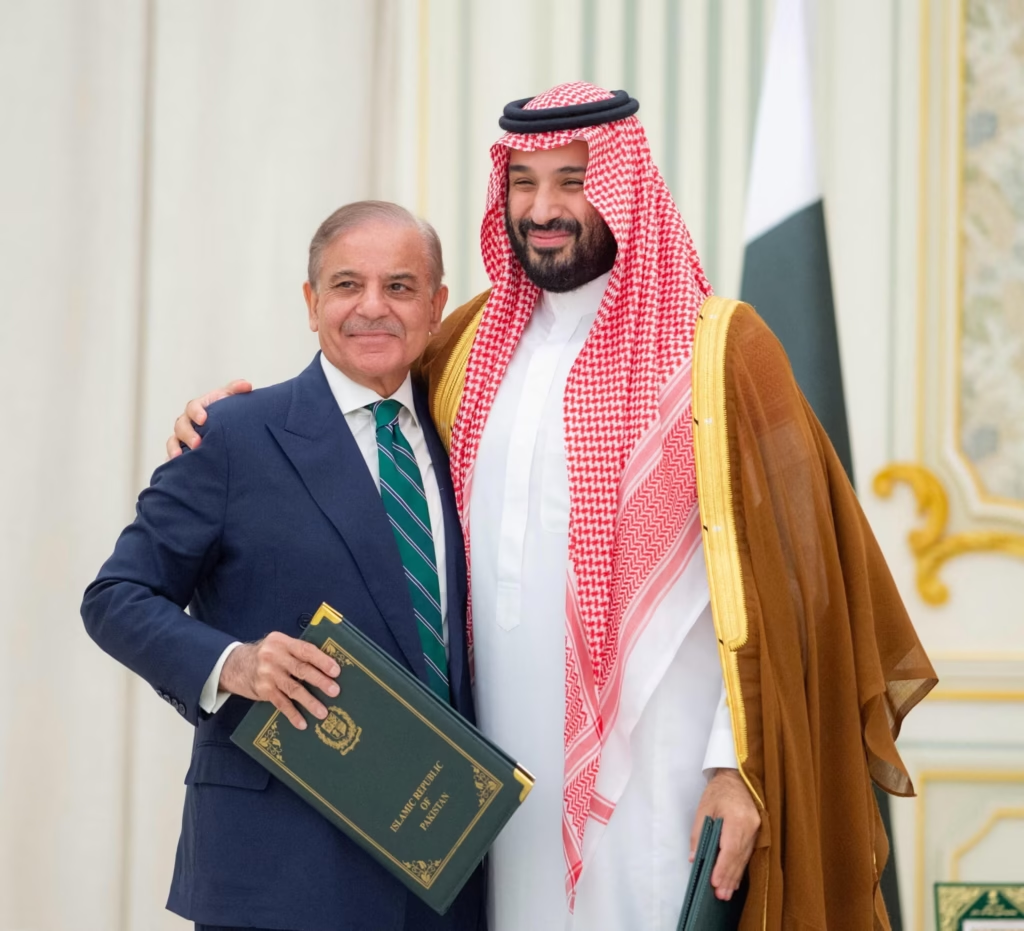
ISLAMABAD– Saudi Arabia and Pakistan have signed a mutual defense agreement, promising a response aligned to counter any attack to either state. This agreement was established a short time after Israel’s latest military operation in Qatar.
The two countries have had a longstanding history of military and economic cooperation; Saudi Arabia has supported Pakistan’s nuclear program in the past and some analysts have suggested that Riyadh could find itself under Pakistan’s nuclear umbrella given the increasing tensions with Iran’s nuclear program in a potential conflict.
It appears that the intent of the pact is to signal to Israel, which is identified as the only nuclear state in the Middle East, is in the process of beginning its military operations following the Hamas attacks starting on October 7, 2023, that have involved multiple countries in the wake of the attacks.
Main Features of the Commitment
The agreement was finalized in Riyadh between Crown Prince Mohammed bin Salman and Prime Minister Shehbaz Sharif of Pakistan. Both countries released stipulations indicating the agreement “invests in the expansion of defense cooperation and the enhancement of mutual deterrence against potential aggressions.”
A senior Saudi official, who spoke off the record to The Financial Times, said that Pakistan’s nuclear capabilities are factored in, and could be used “using any and all defensive and military measures deemed necessary, depending on the threat.”
Former U.S. diplomat Zalmay Khalilzad voiced concerns about the agreement, noting that Pakistan’s nuclear capabilities and delivery systems can reach targets through much of the Middle East, and have the abilities to extended range heading to Israel.
Historical Defense Ties
Military ties between Pakistan and Saudi Arabia were established decades ago when Pakistan first sent troops to the Kingdom in the late 1960s to support four regional conflicts including the war in Yemen. Military ties were bolstered after the Islamic Revolution in Iran in 1979 when Saudi Arabia began building a counterbalance against Tehran.
The historical development of nuclear weapons by Pakistan was based on countering India which Pakistan had fought multiple wars since 1947. India’s nuclear arsenal is now estimated at 172 nuclear warheads and Pakistan has approximately 170 nuclear warheads, according to the Bulletin of Atomic Scientists.
India’s Foreign Ministry has acknowledged the agreement, noting that it would assess the agreement’s implications for national and regional security. Saudi Arabia retains strategic defense ties with both Pakistan and India.






More Stories
All 7 On Board Air Ambulance Flying To Delhi Die In Crash In Jharkhand
IDFC First Bank discloses Rs 590 crore fraud at Chandigarh branch involving Haryana government accounts
Elon Musk is the world’s richest person with $850 billion in wealth, but how much cash does he have? He reveals