






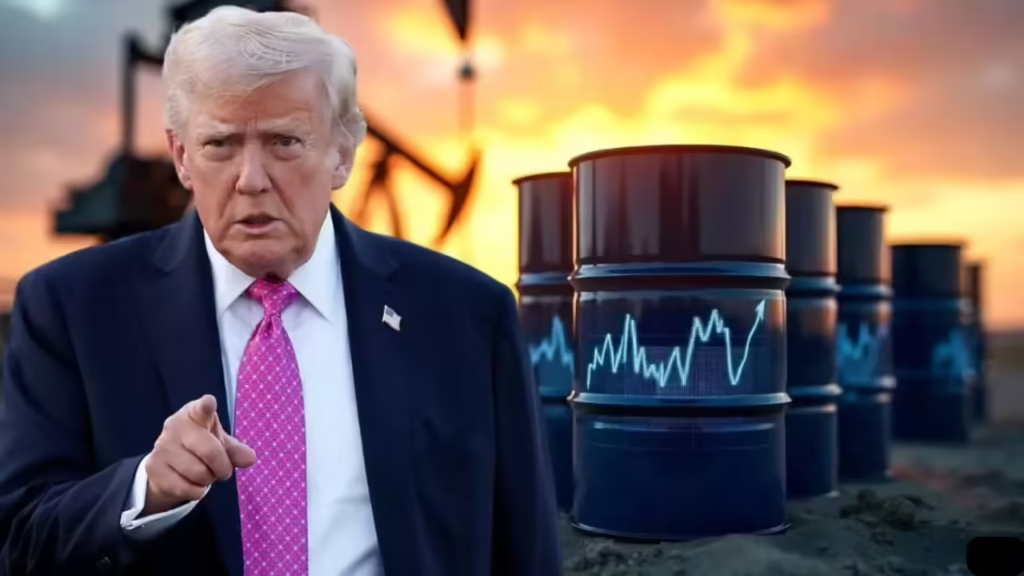
In a surprise energy and geopolitical development, U.S. President Donald Trump said interim authorities in Venezuela would ship between 30 million and 50 million barrels of sanctioned crude to the United States, in a dramatic about-face for U.S.–Venezuelan relations after recent political tumult in Caracas.
Trump announced the development on his social media platform, adding that the oil—described as “high quality, sanctioned” crude—will sell at market prices, while the proceeds will be controlled, under his direction as president, to benefit both countries.
Terms of the Oil Transfer Agreement
Volume: Venezuela is set to deliver 30 million–50 million barrels of oil to the U.S., a significant amount, though small relative to Venezuela’s total reserves, which are in the hundreds of billions of barrels.
The Week’s Proceeds: The oil will be sold at a prevailing market price here in the United States, and Trump said the money derived from it will be overseen by the U.S. government to make sure it serves the interests of both Venezuelan citizens and Americans. Moneycontrol Trump promptly ordered the immediate
The transfer comes after U.S. military intervention in Caracas led to the overthrow and capture of the longtime Venezuelan leader Nicolás Maduro, paving the way for a transitional government in control.
The Week
Earthwatch By the Numbers: Why This Move Matters
Strategic & Economic Impact
The volume of oil transferred represents billions of dollars in potential revenues, a significant infusion for both the U.S. and Venezuela in times of sensitivity over the global energy market.
U.S. crude benchmarks fell after the announcement on expectations of increased supply.
An already-arrested physician, exposed in unethical dishonesty with his partners over his use of Reddit by both state and federal investigators to distribute controlled substances, has pleaded guilty. Trump has said he wants to speak to big U.S. energy companies, including Exxon, Chevron, and ConocoPhillips, about investing in infrastructure in Venezuela’s oil sector. The Week Geopolitical Leverage The accord underlines the strengthened influence of the United States in Venezuela following the political transition and firm positions energy as a critical tool of geopolitical strategy in Latin America and beyond.
Criticisms and Challenges
This move has caused discussion and alarm among commentators and green groups regarding:
Sovereignty Issues: Certain analysts suggest that Venezuelan oil resources under the control of another country’s administration might create an international relations precedent.
Scepticism in the Energy Sector: According to oil experts, the problem of reviving Venezuela’s oil sector is quite expensive and time-consuming, as Venezuela’s oil facilities are in disrepair, requiring billions of dollars to fix.
Climate Concerns: Increasing oil production and export contradicts efforts by the international community in diminishing the use of fossil fuels, possibly contributing to overall greenhouse gas emissions.
They also bring into question the legal and ethical implications of a transaction negotiated on the back of military intervention and changes to a regime.
Context: Venezuela’s Oil Sector & U.S. Relations
Venezuela holds the world’s biggest proven oil reserves, but because of years of sanctions, underinvestment, and political instability, the country’s production capacity, from over 3 million barrels per day in the early 2000s, is now much lower. The National Prior to this change, there was limited importation of oil from Venezuela to the U.S. due to sanctions.
What Happens Next
According to reports:
- U.S. officials are preparing to meet with oil industry executives to discuss potential roles in reviving Venezuela’s energy infrastructure and exploring further exports.
- The transfer of oil barrels is expected to be carried out immediately using storage ships headed to American ports under U.S. supervision.
- How and when the proceeds will be distributed or put to use—especially in Venezuela—remains a topic of close scrutiny and negotiation.
Conclusion: A Landmark Energy and Geopolitical Shift
President Donald Trump’s announcement that Venezuela will turn over 30–50 million barrels of oil to the United States marks a major geopolitical and energy development in early 2026. By arranging the sale of sanctioned Venezuelan crude at market prices, with proceeds under U.S. control, the move reflects Washington’s enhanced influence in Caracas and a strategic recalibration of energy diplomacy following recent political changes.
Economically, the transfer could influence global oil markets and add substantial revenue, while strategically it signals a new chapter in U.S.–Venezuela relations. However, the plan faces practical and ethical challenges—from rebuilding Venezuela’s fractured oil infrastructure to addressing concerns about resource sovereignty and environmental impacts.
As the situation evolves, observers will be watching how this oil deal shapes energy policy, regional geopolitics, and long-term U.S. engagement in Latin America, including whether global markets respond with broader supply shifts or price volatility.





More Stories
Samir Soni reacts as the internet calls Amitabh Bachchan the real villain of Baghban: finally, some redemption
Blinkit CEO Deepinder Goyal Steps Down; Albinder Dhindsa Appointed to Replace Him—What It Means to Blinkit
ICC Dismisses Bangladesh’s Request for T20 World Cup Venue Change: Here’s What Went Down