






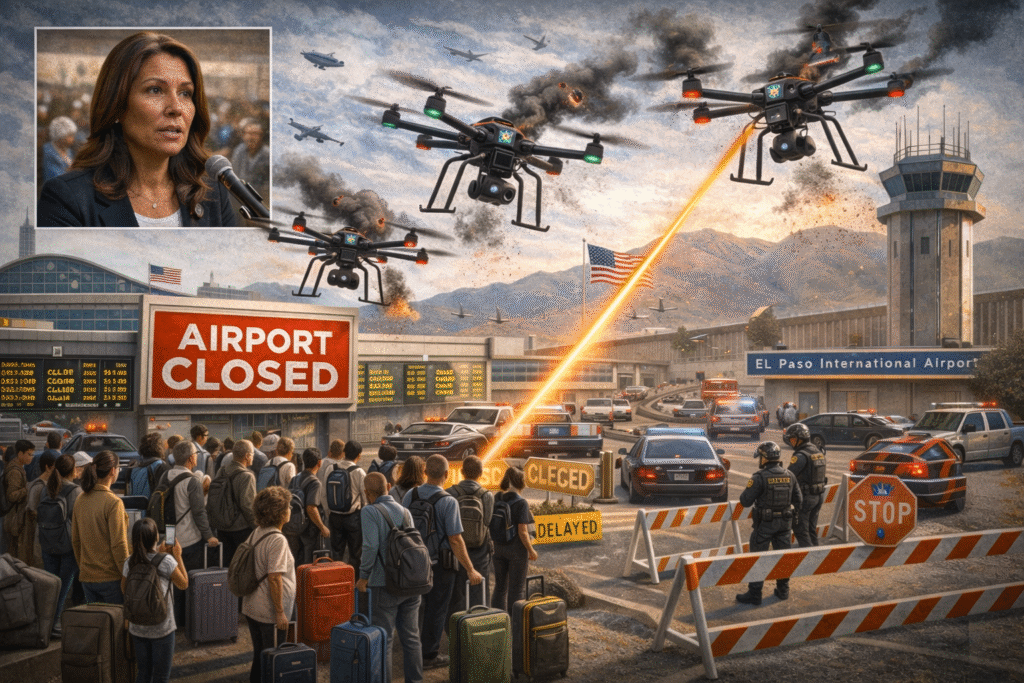
Earlier, the Federal Aviation Administration halted all flights at the El Paso airport for 10 days, citing security-related concerns, which were later lifted by the US aviation regulator.
One Congresswoman shares what she feels, she said, from what my office and I have been able to gather overnight and early this morning. There is no immediate threat to the community and the surrounding areas. She represents the Texas city on the US-Mexico border on Twitter. Now the US also said that, FAAN and DOW acted swiftly to address a cartel drone incursion. The restriction has been lifted, and the fights are resuming normally.
The shutdown there started on February 11 at 1:30 am, and was scheduled this is based on an official notice to airmen (NOTAM). They give stress on order effects for the commercial, cargo and private flights. The passengers of that flight are so advanced that to contact their airlines for the most up-to-date flight schedules.
But Mexico also said it had no information on drones in a boarder, and a trump administration version of events questioned to lawmakers, also sources that cited US military drone and country drone activity.
On this behalf US says the Mexican drug cartel drones breached the airspace. They targeted a temporary closure at El Paso airport.
The airspace shutdown originally planned for up to 10 days was lifted within hours and flights resumed normally, but it caused confusion and disruption, including flight cancellations and delays. U.S. officials, including Transportation Secretary Sean Duffy, later said the closure was triggered after drones reportedly operated by Mexican drug cartels breached U.S. airspace near El Paso. The Department of Defence acted to disable the drones, and authorities determined there was no ongoing threat to commercial aviation before reopening the airspace.
The temporary closure of El Paso International Airport highlights growing security concerns along the U.S.–Mexico border, particularly the emerging use of drones by criminal organisations. While authorities acted quickly to neutralise the reported threat and restore normal flight operations, the incident underscores the need for stronger coordination, clearer communication, and improved counter-drone measures to safeguard airspace and public safety. It also reflects the evolving tactics of drug cartels and the increasing challenges faced by law enforcement and aviation authorities in protecting critical infrastructure.






More Stories
Top 5 Current Affairs in India in March 2026: Latest News, Key Events & Exam Updates
World Current Affairs This Week: 22-Nation Coalition Over Strait of Hormuz, Antibiotic-Resistant Cave Bacteria, and US-Iran Oil Sanctions Relief
Stock Market Live: Sensex Crashes 1,600 Points, Rupee Hits Fresh Low Amid Hormuz Uncertainty