






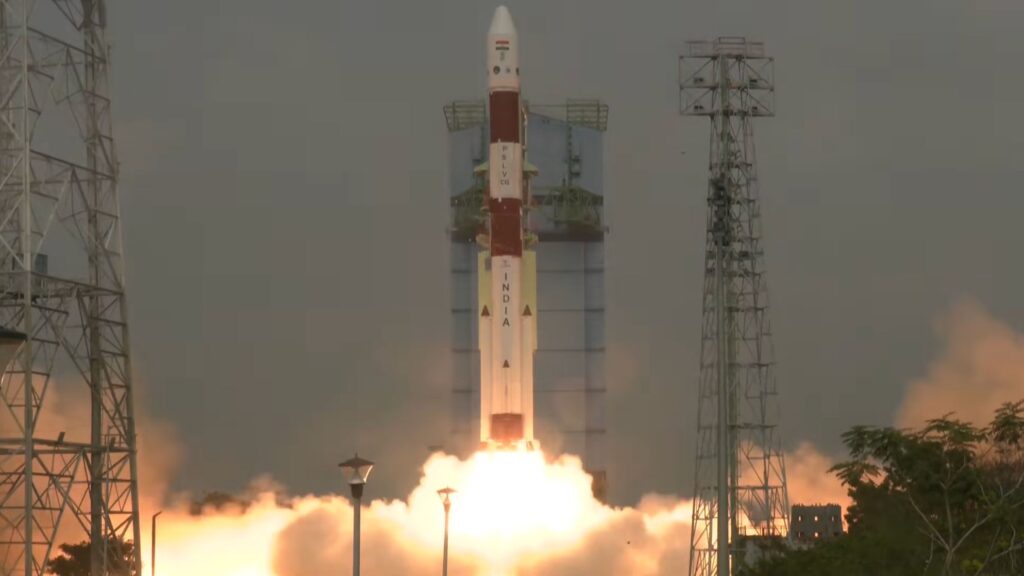
The Indian Space Research Organisation (ISRO)’s space programme is now faced with an unexpected setback, given the fact that the Polar Satellite Launch Vehicle (PSLV), the workhorse of the satellite launch programme at ISRO, has just seen its second consecutive failure in its history. The latest development in this regard came when the PSLV-C62 mission, which occurred on January 12, 2026, failed to achieve orbital insertions for its various satellites because of a third-stage anomaly, resulting in the loss of its 16 satellites.
This is in the wake of a previous incident that occurred in May 2025, where yet another launch of the PSLV did not reach orbit level owing to telemetric observations of anomalies in the same phase of the trajectory.
Technological Problem: Residual Anomalies During the Third
The common trait that stood out in these two failures is that the third stage of the PSLV (PS3) had problems retaining the stable flight path necessary for an orbital insertion.
During the January 2026 mission, ISRO noted an “anomaly during the end of PS3,” which became the cause for further investigation.
Roll disturbances and pressure changes may also be factors, as noted by analysts, though the official factors for this are still under analysis, as stated by analysts.
This indicates that there might be some problem with design integration, quality control processes, or possibly automation processes per stage, as the PSLV has been known for their success over the past several decades through numerous flights.
Effects on Reputation and Space Policy of ISRO
For many years, the PSLV has been an essential part of the list of achievements in the field of space research and launch activities in the country, including the launch of Chandrayaan-1 and Aditya L1 and the launch of communication and other satellites in the country and abroad. Additionally, it has enabled the role of ISRO in the commercial launch of satellites through the
However, two failures in quick succession carry reputation implications:
Global Launch Confidence: Satellite launch customers and insurers worldwide could re-evaluate risk, which may lead to higher launch insurance costs or postponement of manifesting satellite payloads on the PSLV.
Commercial Competitiveness: The commercial space sector is very competitive, as companies like Launcher, LauncherOne, Stratosexo, Arianespace, Vega, Antrix, etc. are coming up. Often Anomalies
Technical Morale and Oversight : Recognition of the effects of back-to-back failures is acknowledged by the technical team. There is a need for an in-depth quality assurance review.
Although the PSLV has an excellent track record, the current trend highlights the cutthroat world of rocket development, where even established designs need regular tests due to increasing complexity.
The Larger Implications for the Indian Space Environment
Additionally, the loss of the payloads of the PSLV-C62 satellite, consisting of earth observation satellites and rideshare satellites from academic and private organisations, also carries some strategic implications:
Gaps in Science & Strategies: The main satellite intended for Earth observation and maritime surveillance would not deliver anticipated scientific data, thereby impacting defence and strategic planning.
Start-Ups & Innovation: Some Indian start-up companies lost their technology demonstration satellites that were scheduled to be launched into orbit, which impacted innovation projects, and demands rose for new launch opportunities.
This illustrates the ways in which failures to launch satellites might have an effect well beyond the agency, extending to the home space industry that ISRO has been instrumental in building.
The Way Forward for ISRO: Inquiry and Recovery
In response to the successive failures, ISRO has set up a Failure Analysis Committee for the PSLV-C62 mission, which needs to find out the cause and corrective action. In particular, experts investigate:
Third-stage structural and propulsion system behavior
Manufacturing and integration quality control processes
Operational protocols pre-launch and in-flight transition
ISRO officials also underline a long history of rocket successes to point out that setbacks, while serious, are part of the process in refining complex aerospace systems.
Lessons from Failures: Helping the Indian Space Program Soar
Two successive failures for the PSLV missions can be considered a challenge for the Indian Space Research Organisation that is rare in nature. The immediate effect of these failures is loss of satellite launch services; however, this is also an effective opportunity for improvement in the system that can make it more robust in the long run.
For a space programme like that of India, which has ambitions of launching a large number of satellites and strengthening their navigation systems such as NavIC, as well as carrying out human space flight missions, being able to adapt swiftly to these lessons would be the key. Through open analysis of the root causes of such challenges, ISRO would not only be able to regain community confidence in their trusted workhorse, but their position in the international space community as well would be strengthened.
The ongoing phase is a test of its endurance capabilities, skills, and engineering prowess that would give shape to the future of its leadership in the space arena.






More Stories
Samir Soni reacts as the internet calls Amitabh Bachchan the real villain of Baghban: finally, some redemption
Blinkit CEO Deepinder Goyal Steps Down; Albinder Dhindsa Appointed to Replace Him—What It Means to Blinkit
ICC Dismisses Bangladesh’s Request for T20 World Cup Venue Change: Here’s What Went Down