





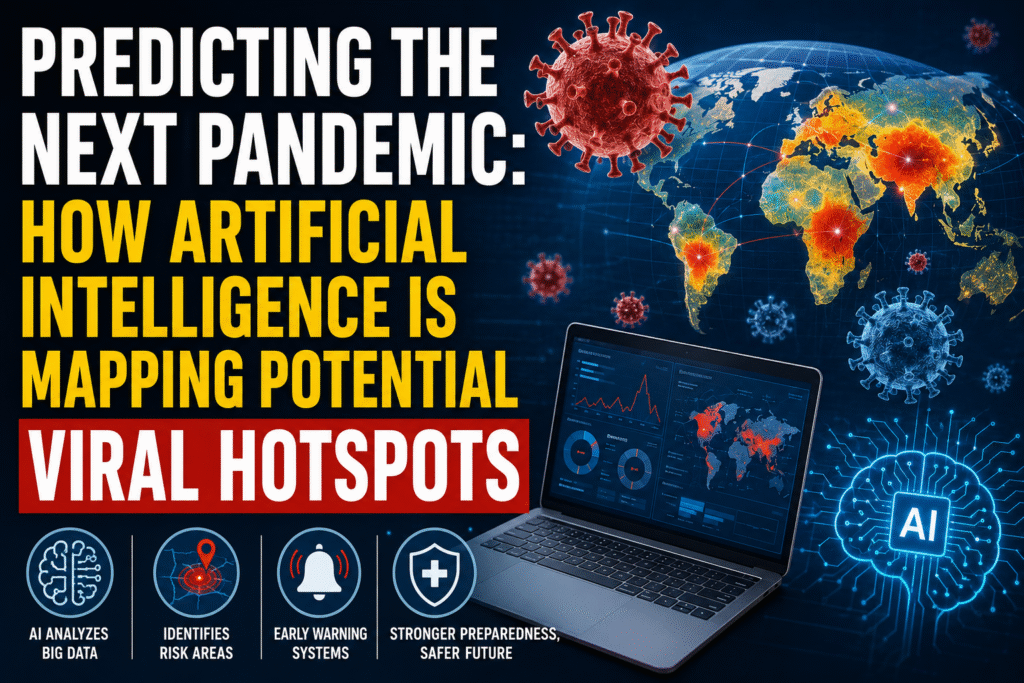
Viral Hotspots
The global community keeps on learning lessons about the coronavirus outbreak and, accordingly,
resorts to using artificial intelligence in order to detect future pandemics at an early stage. The
application of advanced AI algorithms and digital mapping technologies allow for tracing the patterns
of spread of infections and predicting the territories, where new threats may emerge in the future.
With the help of machine learning systems, researchers get an opportunity to process huge amounts
of data obtained from different sources like climate conditions, populations of animals, human mobility,
medical records, and previous cases of outbreaks. By finding connections between those factors, AI
tools can facilitate the process of predicting territories with high risks of emergence of new infections
and their rapid spread.
One of the most important domains where machine learning proves to be useful is the issue of
predicting zoonotic diseases since many viruses have started their spread among people from
animals. In light of the above, researchers use ML models to examine the interactions of wildlife and
the environmental conditions in the area.
AI-driven digital maps are revolutionizing disease surveillance as well. These systems will be able to
identify any oddities in the current situation by analyzing live information provided by hospitals,
transportation systems, and environment. Time gained due to early detection of any changes can be
utilized for increasing readiness levels for the coming epidemic.
Nevertheless, specialists state that AI will never become an ideal predictor. Viruses themselves,
constantly changing environment, and unpredictable human behavior make forecasting very difficult.
AI should be regarded as a system helping specialists to make quick and better decisions.
If technology develops further, the synergy between AI, big data, and global health tracking might
become the key to avoiding future pandemics. Identifying possible risks and dealing with outbreaks in
an effective way can ensure that artificial intelligence will play an important role in saving lives.





More Stories
‘This Isn’t About AI’: Microsoft HR Chief Addresses 4,800 Workforce
AI-Led Digital Transformation Deal Worth $1.14 Billion Awarded to
OpenAI and US Government Reportedly Discuss 5% Equity Stake as