




Trump Weighs AI Ownership Model
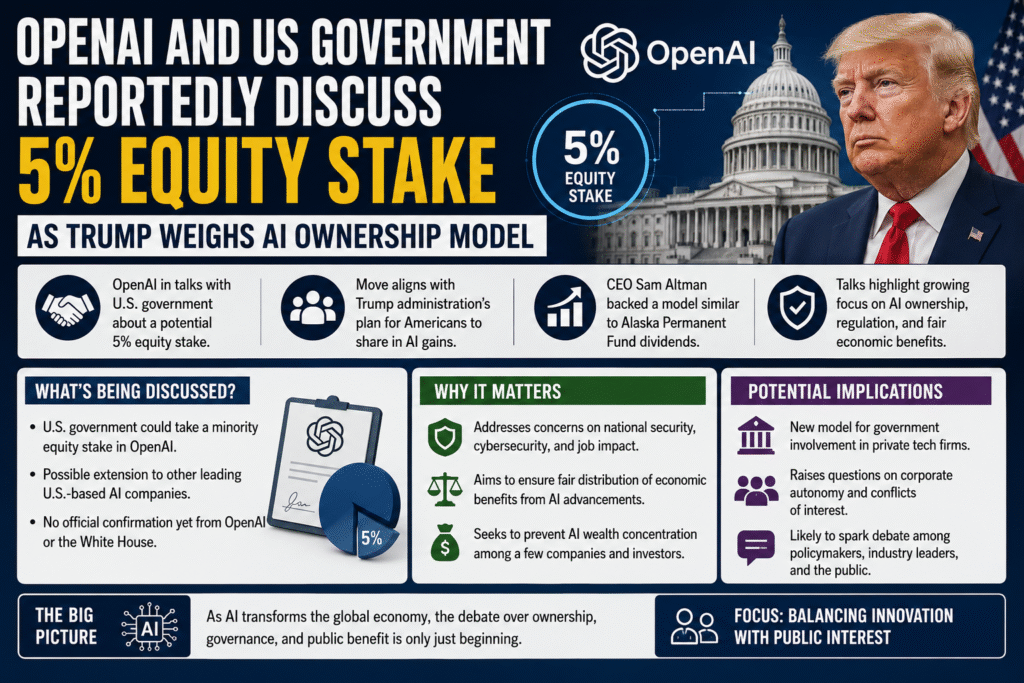
OpenAI is believed to be in talks with the US government concerning the provision of a 5%
equity share in the artificial intelligence firm, a move that could lead to a unique approach in
terms of the interaction of the government and the private technology company. It is believed
that this move will come at a time when the Donald Trump administration is looking for a way
in which Americans can have direct access to the economic gains made by the booming AI
sector.
The rumored talks are taking place in the midst of a heated discussion concerning the issue
of ownership, regulation, and gains of advanced artificial intelligence technologies. It has
been rumored that the CEO of OpenAI, Sam Altman, has supported a model where the
public can get involved in the revenues created by the creation of AI technologies. The
model is reportedly going to be similar to the one seen in the Alaska Permanent Fund, where
the money generated from natural resources goes back to people in form of dividends.
Under the purported deal, the US administration will be able to take a minority equity share
in OpenAI and perhaps in other leading US-based artificial intelligence companies as well.
Although there is no clear information about it yet, nor any official statement from either
OpenAI or the White House, the negotiation process reveals the rising level of attention from
both the politicians and the public to the accumulation of money and influence in the artificial
intelligence industry.
Indeed, the initiative emerges against the background of the growing government regulation
of advanced artificial intelligence technology. The government in Washington became
particularly concerned lately about the questions of national security, cybersecurity, job
losses, and the fair distribution of economic dividends resulting from the revolution in the
artificial intelligence industry. The policymakers worried about the fact that the gains from the
AI revolution might stay in the hands of just a few firms and investors.
In case of its adoption, the suggested equity-sharing arrangement would set a new
precedence in terms of how government authorities interact with transformational
technologies and nascent sectors of the industry. Nevertheless, the concept will certainly
trigger disputes regarding corporate autonomy, conflicts of interest between regulators and
companies, and the extent of involvement of governments into private business. With the
continuous evolution of the artificial intelligence revolution worldwide, debates about
ownership, management, and the public good will persist.





More Stories
AI-Only Hiring Faces a Reality Check as Major Companies Turn Their
Anand Tandon Highlights Stability in Auto Sector, Warns of Restricted
The Semiconductor Surge Is Transforming Student Preferences in