





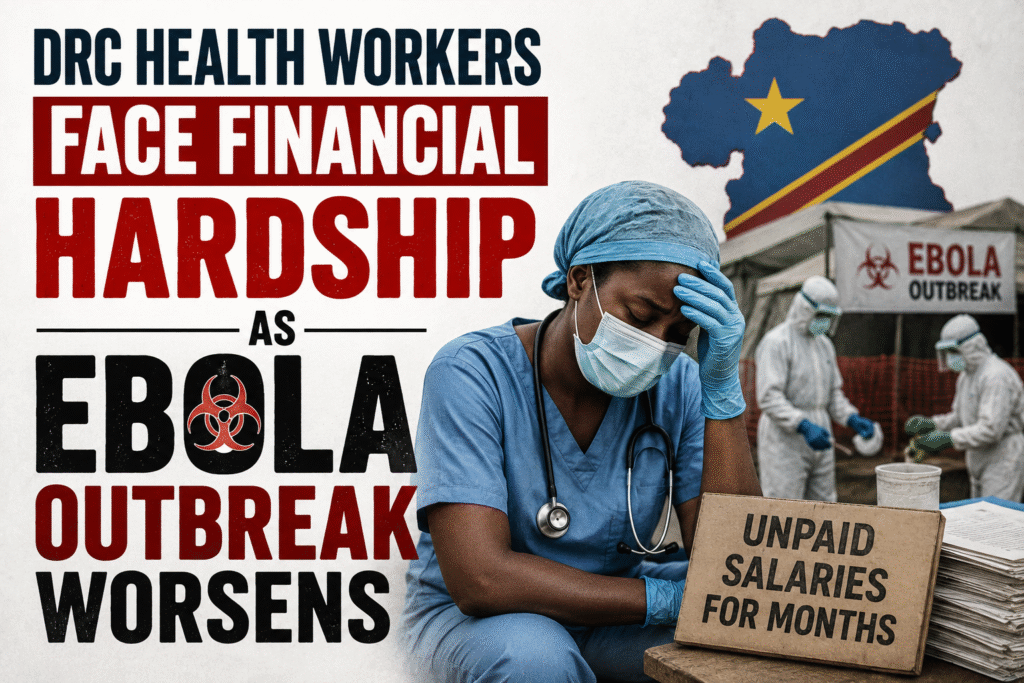
The Ebola outbreak in the Democratic Republic of the Congo (DRC) is not the only problem that medical personnel is facing because many are having difficulty with financial issues due to non-payment of salaries for several months. Thus, the two crises have caused much stress among medical personnel and raised doubts about the country’s readiness to deal with one of the newest public health emergencies.
The Ebola outbreak has prompted health officials to increase surveillance, testing, contact tracing, and treatment activities in affected areas. But medical personnel reports that their dedication is under question as they have to deal with delayed payment of salaries and lack of means to continue their work in such conditions. Health workers have reported difficulties in satisfying their basic household needs while providing assistance to people at risk of infection.
The Democratic Republic of Congo has recorded several cases of Ebola in the past ten years and has amassed enough experience in dealing with the deadly virus. In spite of these successes, the country continues to be bedeviled by recurring lack of funds for its Ebola control programs. Medical practitioners claim that regular salary payments and sufficient funding are very necessary to ensure that their morale is high enough to sustain health activities.
Ebola causes severe illness that is sometimes fatal and symptoms include fever, tiredness, nausea, diarrhea, and in severe cases, internal and external bleeding. The disease is transmitted through contact with bodily fluids or infected materials from patients. It has been advised that early detection, isolation, patient tracking and vaccination campaigns can be the most useful strategies in stopping outbreaks.
Global health agencies such as the World Health Organization (WHO) have been cooperating with the Congolese government in boosting their outbreak response. There has been an appeal made to the people to cooperate with the health teams to identify potential victims.
The health care professionals have made appeals to the government and other nations regarding delays in salaries as well as poor working conditions as it could result in a failure in tackling the problem at a crucial point in time. Experts suggest that ensuring the protection of front-line professionals is crucial not only for overcoming the present Ebola problem but also for securing the health care system from future dangers.
As the process of containing the virus progresses, the safety of the health care professionals becomes vital in order to overcome the situation of Ebola in the DRC.



More Stories
Long Covid May Damage Dopamine-Producing Brain Cells, New Study
US Health Watchdog Projects $5.56 Billion in Recoveries and
Zari Enters Luxury Hospitality with the Launch of Bijapur Lodge in Jawai,