





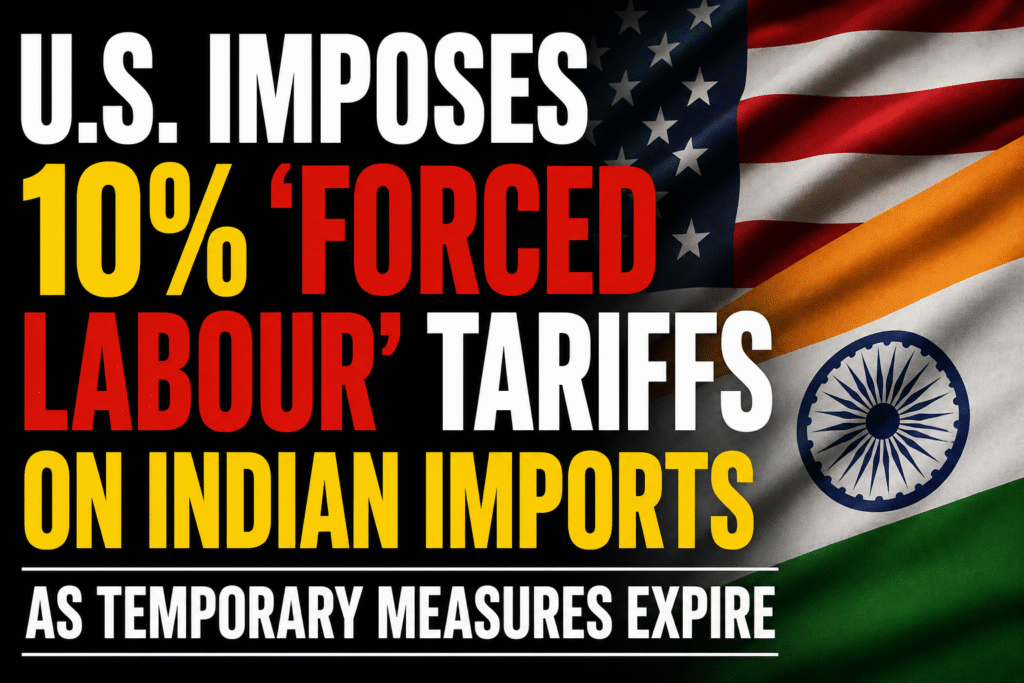
The United States has levied a new tariff of 10% on nearly all imports from India under the larger trade measure that targets nations which have failed to take adequate steps in preventing the movement of goods manufactured using forced labor into international supply chains. The new tariffs were implemented following the lapse of the existing temporary tariffs on imports from various countries.
Under the new U.S. policy announced by the Office of the U.S. Trade Representative (USTR), the policy affects 60 nations. It seeks to compel other trading partners to take up and enforce their ban on imports manufactured with forced labor. For instance, India is among a list of countries whose products will be taxed at 10% after making efforts in strengthening its policies for preventing forced-labor imports, unlike the 12.5% originally proposed.
The policy is likely to affect various types of products from India to the U.S. market, with the exception of several products such as products already subject to different tariffs, raw materials and other agriculture and energy products. According to U.S. officials, the new policy addresses both human rights and trade concerns relating to forced labor practices.
India has, in the past, objected to the U.S. investigation since it felt that the problem needed to be tackled through bilateral trade talks and not through tariffs unilaterally imposed. India has stated that it has tightened its own trade rules and made modifications to its foreign trade policy to ensure that there is no importation of products made from forced labor, a factor that helped bring about the reduction in the tariff rates
It is the opinion of the trade experts that the introduction of these tariffs can cause higher costs for the Indian exporters and create uncertainties during India-U.S. trade talks. Nevertheless, the U.S. continues to be one of India’s biggest trading partners and both countries are likely to engage in talks regarding trade and market access.
The most recent development demonstrates the U.S.’s insistence on applying trade policy to improve labor standards and restructure global supply chains. While the companies analyze the effects of the newly introduced tariffs, both business groups in each country will monitor the upcoming negotiations very carefully.



More Stories
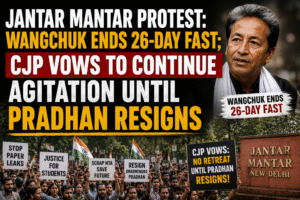
Jantar Mantar Protest: Wangchuk Ends 26-Day Fast; CJP Vows to Continue Agitation Until Pradhan Resigns
PM Vows Tougher Action Against Leaks as Protests Continue
Patna Student Protest Sparks Uproar in Bihar Assembly; Opposition Slams Police Lathi-Charge