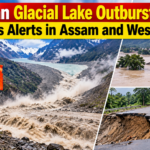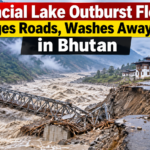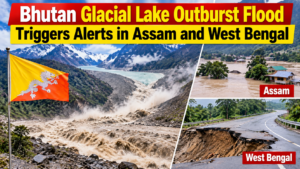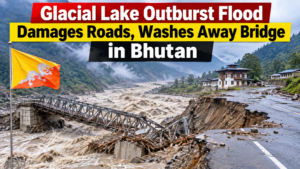


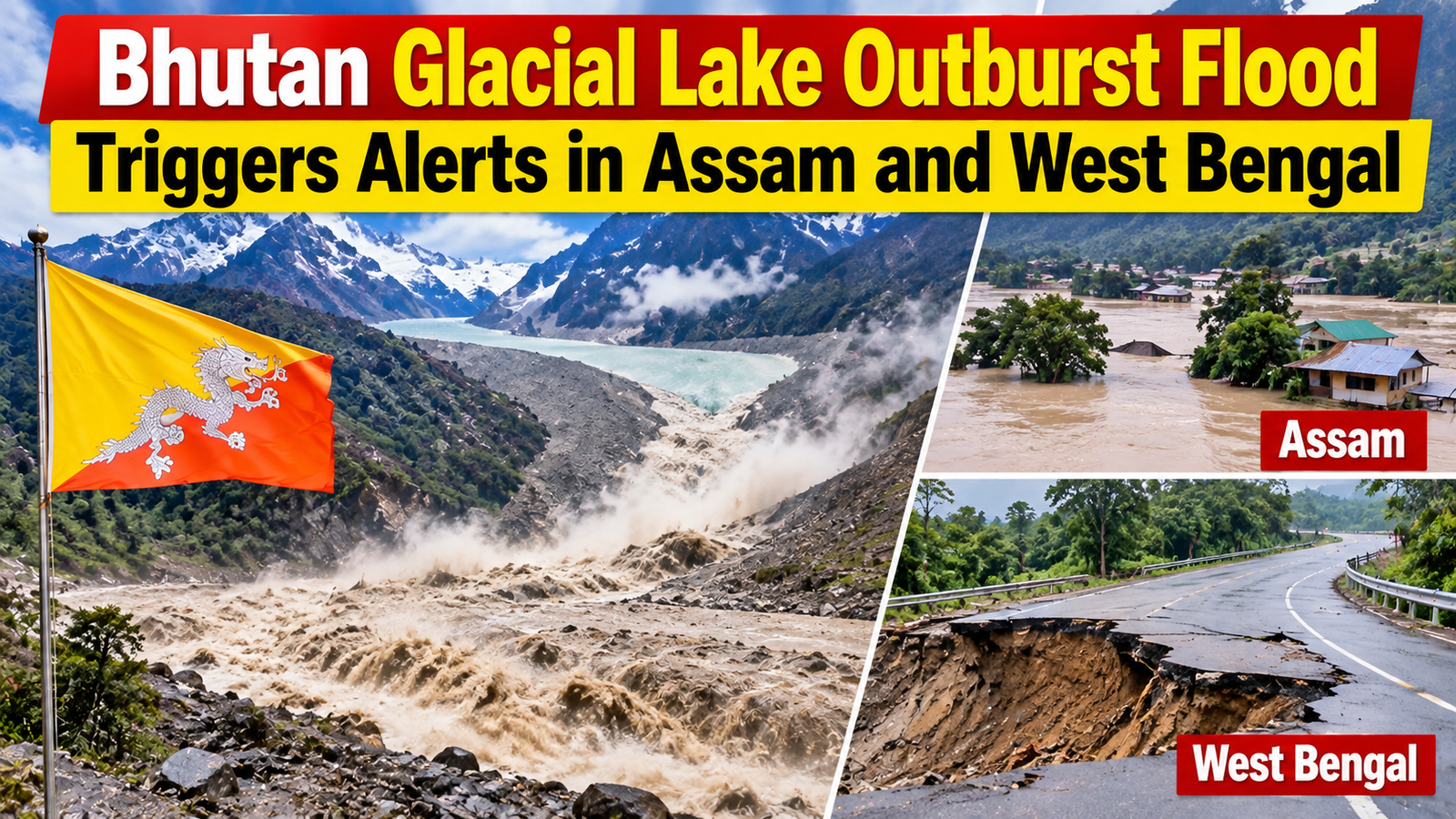
In Bhutan, a GLOF has washed away a bridge and destroyed roads in the affected area. A GLOF in Bhutan is likely to lead to physical destruction of assets and infrastructure, and contribute to human costs and economic losses to mountain communities living around glacial lakes.
A GLOF happens when water from a glacial lake suddenly flows over the natural dam that holds it back, which may be a wall of ice, stones or loose dirt. In a GLOF, a large amount of water is released in a flash, causing a dangerous flood in the river downstream.
The flood was triggered from Shintaphu Tsho, a glacial lake situated in Laya valley of northwestern Gasa district of Bhutan during 29 October, 2023. The inundated waters flowed down through many parts of Gasa district. Two major roads of Gasa district, a Bailey bridge in Punakha district were destroyed by the flood along with the widely known Gasa Tshachu hot spring area, which inundated several public amenities of the hot spring area. The road from Laya village to main road was blocked.
In Assam, officials intensified monitoring in sensitive zones in Dhubri and Kokrajhar districts. “The state government is closely monitoring the situation and its response teams are prepared to counter any downstream impact,” chief minister Himanta Biswa Sarma said. “All residents are advised to stay alert and follow the instructions issued by the government.”
Meanwhile, the incident has once again drawn attention towards the threat of glacial lake outburst floods in the Himalayan region. These are floods where the water stored in glacial lakes is suddenly released by the collapse of natural dams, forming devastating downstream flows.
River monitoring and potential secondary flood risk reports are still being monitored by the authorities in Bhutan and India. The recent disaster has also highlighted the significance of early-warning systems, disaster preparedness and collaboration with countries in the vicinity.