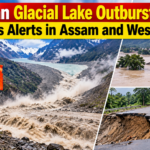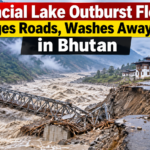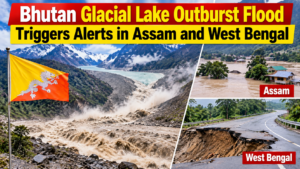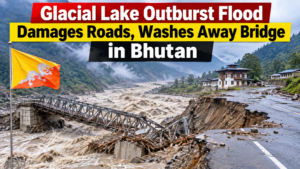


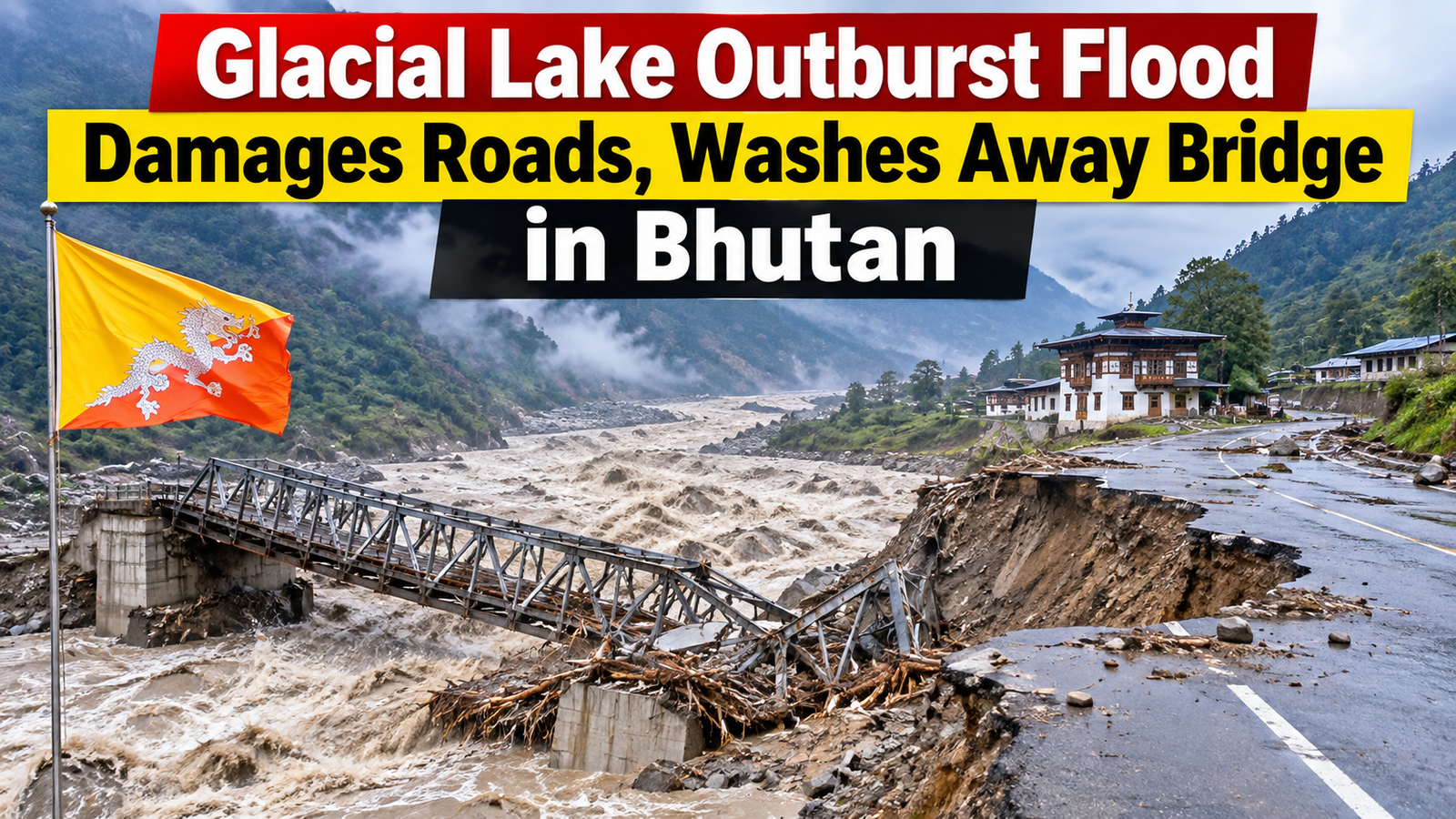
In Bhutan, a GLOF has washed away a bridge and destroyed roads in the affected area. A GLOF in Bhutan is likely to lead to physical destruction of assets and infrastructure, and contribute to human costs and economic losses to mountain communities living around glacial lakes.
A GLOF happens when water from a glacial lake suddenly flows over the natural dam that holds it back, which may be a wall of ice, stones or loose dirt. In a GLOF, a large amount of water is released in a flash, causing a dangerous flood in the river downstream.
The flood was triggered from Shintaphu Tsho, a glacial lake situated in Laya valley of northwestern Gasa district of Bhutan during 29 October, 2023. The inundated waters flowed down through many parts of Gasa district. Two major roads of Gasa district, a Bailey bridge in Punakha district were destroyed by the flood along with the widely known Gasa Tshachu hot spring area, which inundated several public amenities of the hot spring area. The road from Laya village to main road was blocked.
Any possible volcanic eruption, which authorities said was unlikely, could pose extreme risks of multiple and major eruptions with the breaking down of a natural dam built for the Gasa conservation project. Authorities evacuated residents and security personnel and moved them from vulnerable areas, including those near Gasa Tshachu and those at Taktsemakhang. So far, there have been no reported death or injuries since 30 October.
Following the event, officials also issued precautionary warnings in neighbouring Indian states, especially in West Bengal and Assam, over concerns that water levels might rise in the rivers below. The disaster has again highlighted the threat posed by large Himalayan glacial lakes and the urgency of improving early-warning systems and disaster management practices.