


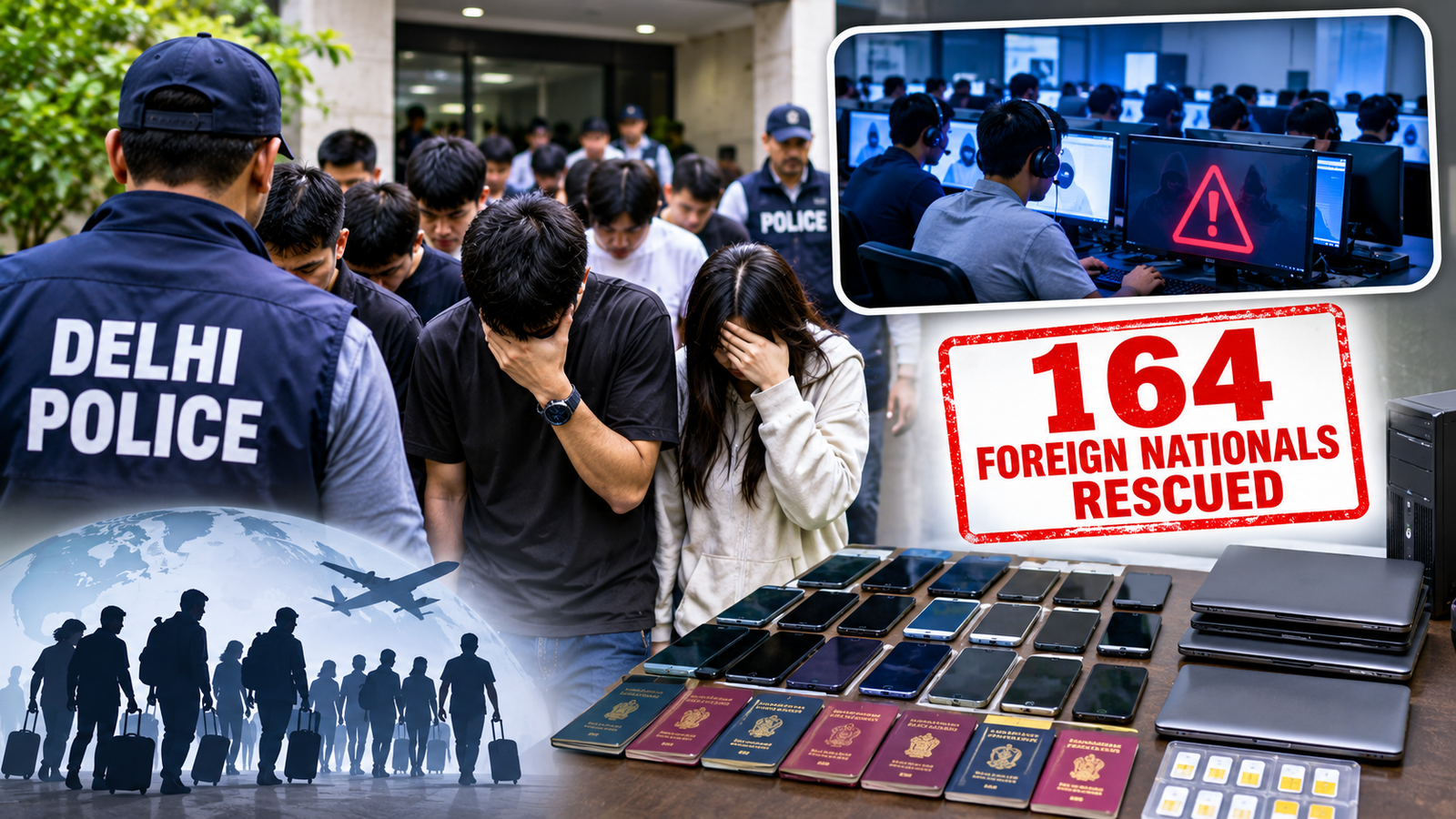
A network allegedly engaged in human trafficking and cyber scams, operating out of Delhi-NCR, has been busted in India, and 164 foreign nationals reportedly forced to work at online scam call centres have been rescued. The operation was carried out by the Delhi Police Crime Branch, which busted the human trafficking syndicate allegedly involved in recruiting foreign nationals and luring them to India by offering jobs before making them work for organised cybercrime activities.
The rescued foreign nationals include 92 Indonesians and 72 Malaysians. As per police probe, they had been brought to India on employment visas with promises of jobs in the IT sector and handsome salaries, but their passports were reportedly seized upon reaching the Indian shores. They were then confined to cyber-fraud call centres, and some were physically assaulted for refusing to work.
Based on the initial probe, the trafficking syndicate allegedly created fake profiles, mainly using women’s names on social media, in order to approach potential targets in Malaysia and Indonesia. They purportedly set up online romances so these “romantic partners” could be convinced to make investments in fraudulent, high-yield trading platforms and investment applications. The money raised from these platforms was then reportedly funnelled to members of the human trafficking and cyber scam syndicate.
Tan, a 25-year-old Malaysian, was taken into police custody in connection with the case. Also seized by police were 355 handphones, 168 desktop computers, 26 laptops, 53 SIM cards and 174 passports. Upon these electronic devices and financial records that were confiscated, the police would conduct further probe into the case.
While the handlers identified were two Indian nationals named Sunil Kumar and Sushil Bhati who are at large now, with several teams being deployed to track their location.
The rescued individuals would be accorded assistance by the authorities concerned for necessary legal processes and repatriation. Investigators would also coordinate with relevant authorities to determine whether there were any connections abroad and if other victims had been trafficked via similar methods, as human trafficking for cybercrime and job offer fraud.
The matter highlights the increasing cross-over between organised cybercrime and human trafficking, where fake jobs overseas are being advertised to lure and subsequently exploit people. The case remains under investigation as police try to map the full extent of the operation.