

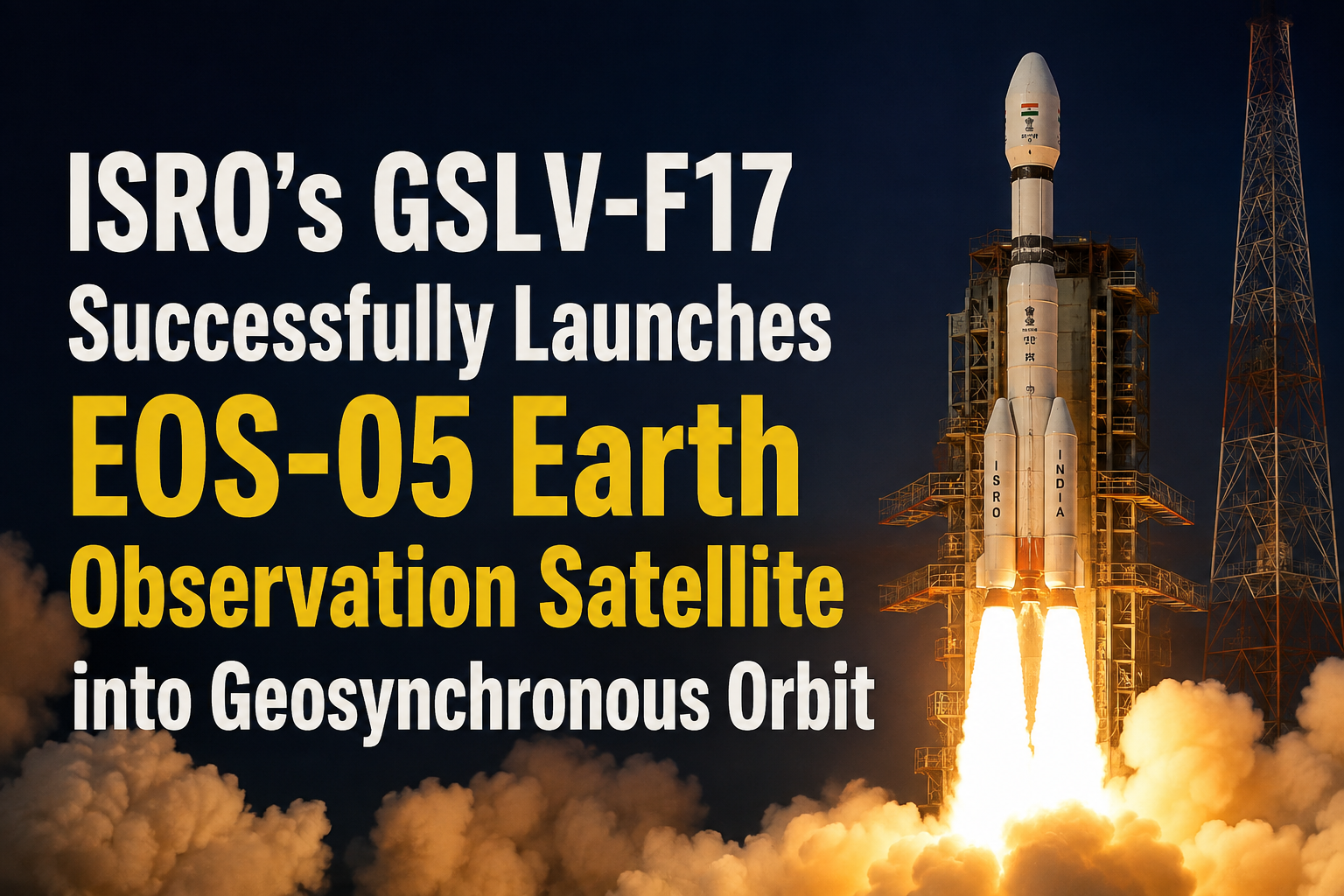
With the launch of EOS-05 earth observation satellite through GSLV-F17, ISRO has achieved another milestone. The EOS-05 earth observation satellite has been launched by GSLV-F17 successfully at 2:55 AM IST from the Second Launch Pad of Satish Dhawan Space Center, which is located in Sriharikota, Andhra Pradesh.
It can be confidently stated that this is the 19th successful launch of Geosynchronous Satellite Launch Vehicle (GSLV) of India. In other words, GSLV-F17 has successfully positioned the EOS-05 earth observation satellite weighing 2,367 kg in the orbit of Sub-Geosynchronous Transfer Orbit (Sub-GTO). The launch vehicle which is of 51.7 meters height has achieved its objective in just 19 minutes of time.
It would be no exaggeration on my part to term the launch of EOS-05 satellite as the great achievement of the Indian Space Program because it is the very first time that India has launched the imaging satellite in the geosynchronous orbit. It is so because EOS-05 being the geosynchronous satellite revolves around the earth at the distance of 36,000 km.
The satellite would help India improve its Earth observation systems by providing high-resolution imaging information that could have a variety of uses like agriculture, disaster management, weather and environmental studies, as well as strategic planning. Its capability to monitor a large area continuously may come in handy in situations where there are fast-moving events.
Moreover, the mission marks another significant success of the GSLV project. The launch vehicle had a locally developed cryogenic upper stage, and the satellite was placed into the required transfer orbit. After the launch, the EOS-05 will conduct orbit raising operations to put it into the required geosynchronous orbit.
As per the successful GSLV-F17/EOS-05 mission, ISRO has succeeded in expanding India’s capacity for Earth observation through satellites. This mission showcases the capability of the country to design and launch satellites for different applications that can help India’s development and environmental issues.