

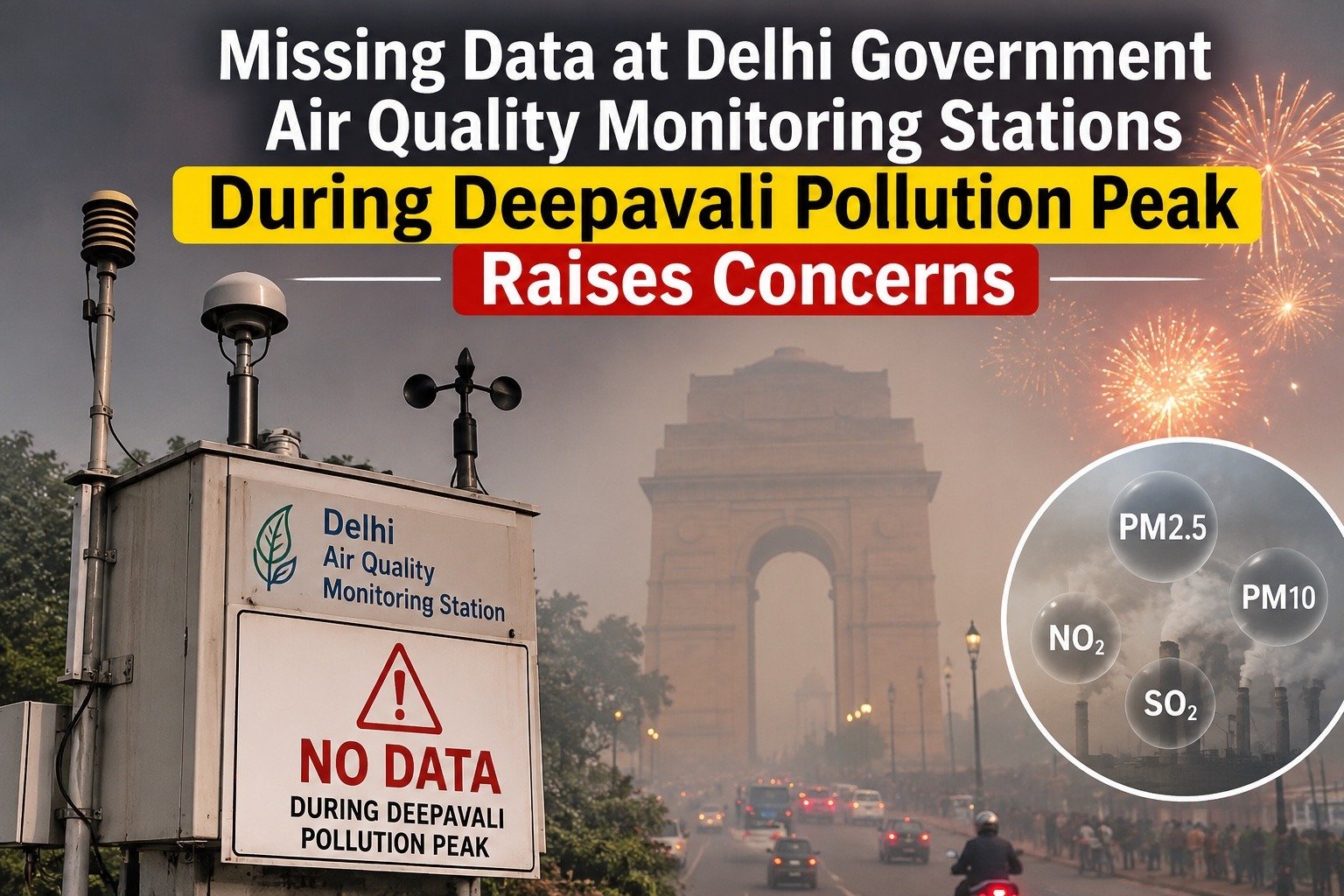
Air quality worsened in many parts of Delhi over the Deepavali period. While Delhi experienced a jump in pollution levels during the Deepavali period, a number of government-run air quality measuring stations did not record air quality information at that time. The lack of data in many stations raises questions about the completeness of pollution records and reinforces the need for these measuring stations to provide the public with information.
Air pollution data collection involves the monitoring of polluting gases and particles including: dust particles (PM2.5 and PM10), carbon monoxide, sulphur dioxide and nitrogen dioxide. These data inform the regulators of pollution concentrations and allow high pollution hotspots to be identified to implement pollution control measures. If data is not available during a high pollution event, it becomes difficult to see the true extent of pollution and to interpret the differences in concentrations around different places.
The emissions from firecracker processing, vehicle movement, construction activities and others, as well as the firecracker period, generally, increase the pollution level and it may vary with wind speed and change in temperature. The low speed of wind and the change in temperature could keep the pollutants suspended in the atmosphere, thus necessitating the accurate and constant monitoring.
Having accurate information about local air quality also helps residents and health practitioners identify risks for their communities, including children, older people and those with lung conditions. Missing monitoring data can make it harder to compare air quality levels to past years and determine whether action to reduce pollution has been successful.
Monitoring stations should be operational, equipment should be regularly maintained, and reports on the data provided to the public – this was the consensus of the experts and environment monitors we consulted. Responding quickly to any technical problems, with clear communication about gaps in the data, is essential so that people know what’s happening with pollution levels. Keeping measurements constant is important to help establish the trends in pollution, and find solutions.