

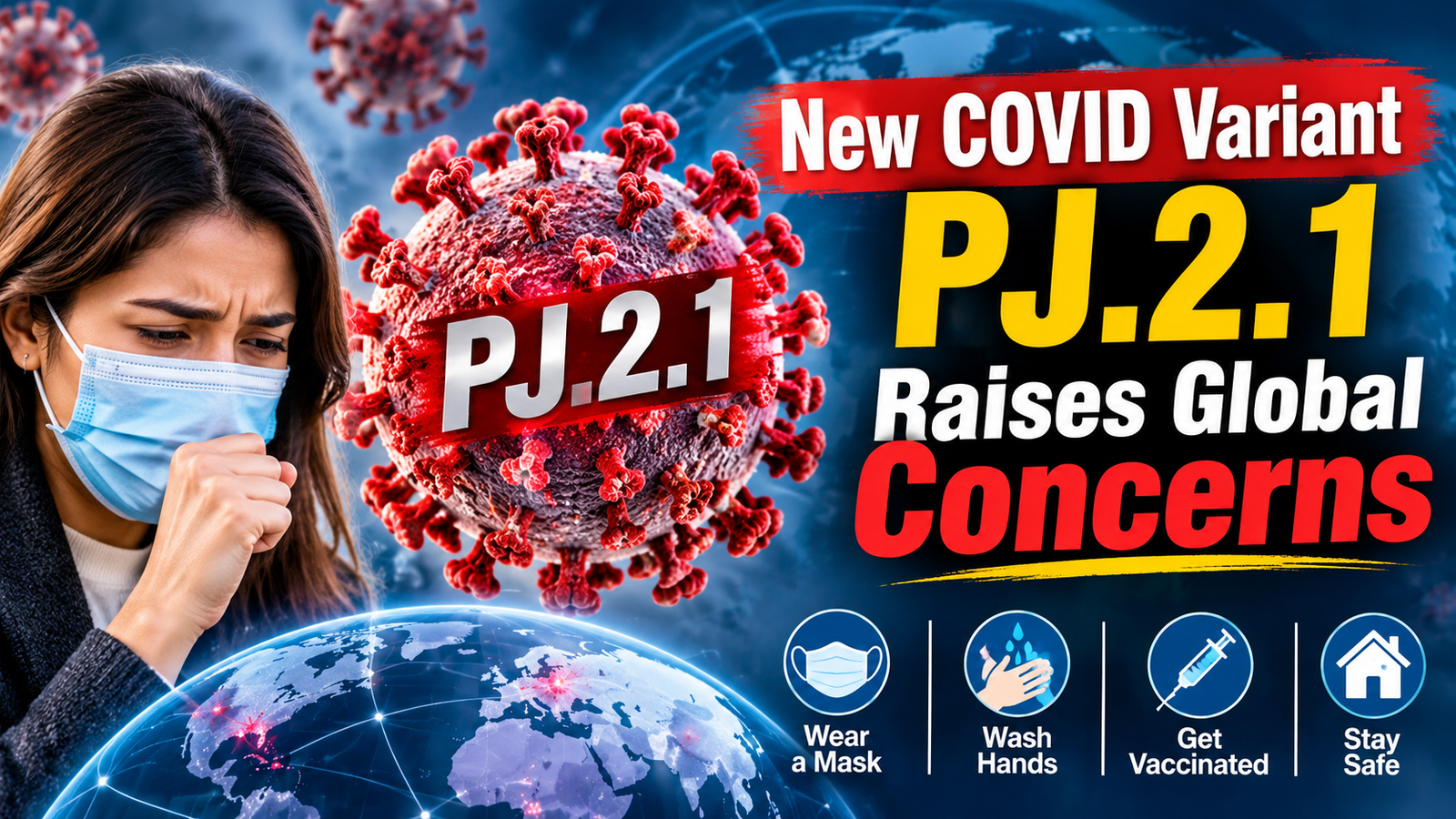
Health officials are watching the new covid strain PJ.2.1 that has caused infections to be announced in various countries as it reportedly spreads. The new Covid strain PJ.2.1, which causes infections to be announcAed in various countries, is raising concerns as to how the new strain is spread, its symptoms and how dangerous it is. Healthy Monitor is carefully tracking new strains of COVID-19.
PJ.2.1 is a type of SARS-CoV-2, which have a mutation in their spike proteins, responsible for entering the cell. Similar to other forms of COVID-19, this may result in a respiratory illness with a fever, cough, sore throat, runny nose, headache, exhaustion, joint aches and chills. Breathing problems or gastrointestinal issues may be encountered by some. However, nothing is presently concluded to be an indication that is specific to the PJ.2.1 subvariant.
Age, immunity, and other existing health issues can influence the severity of the illness. It is understood that older adults, immune compromised individuals, and those with long term health issues are at a higher risk of developing more serious illness. Despite concerns about its transmissibility, there is insufficient clinical evidence that leads to the conclusion that PJ.2.1 causes more severe illness than previous types.
Vaccination can still help to lower the risk of experiencing a severe infection. Individuals should adhere to the recommended advice on vaccination, wash hands regularly, ventilate indoor environments and wear a mask in busy indoor environments. Anyone with ongoing symptoms or who experiences shortness of breath should seek medical assistance.
Health officials and scientists will watch how the new variant behaves as it continues to evolve in genomic surveillance and clinical data. PJ.2.1 may have signs that it is more capable of disease spread, but there’s no need to jump to panic stations. Keeping informed, following public health guidance and taking basic precautions is enough.