


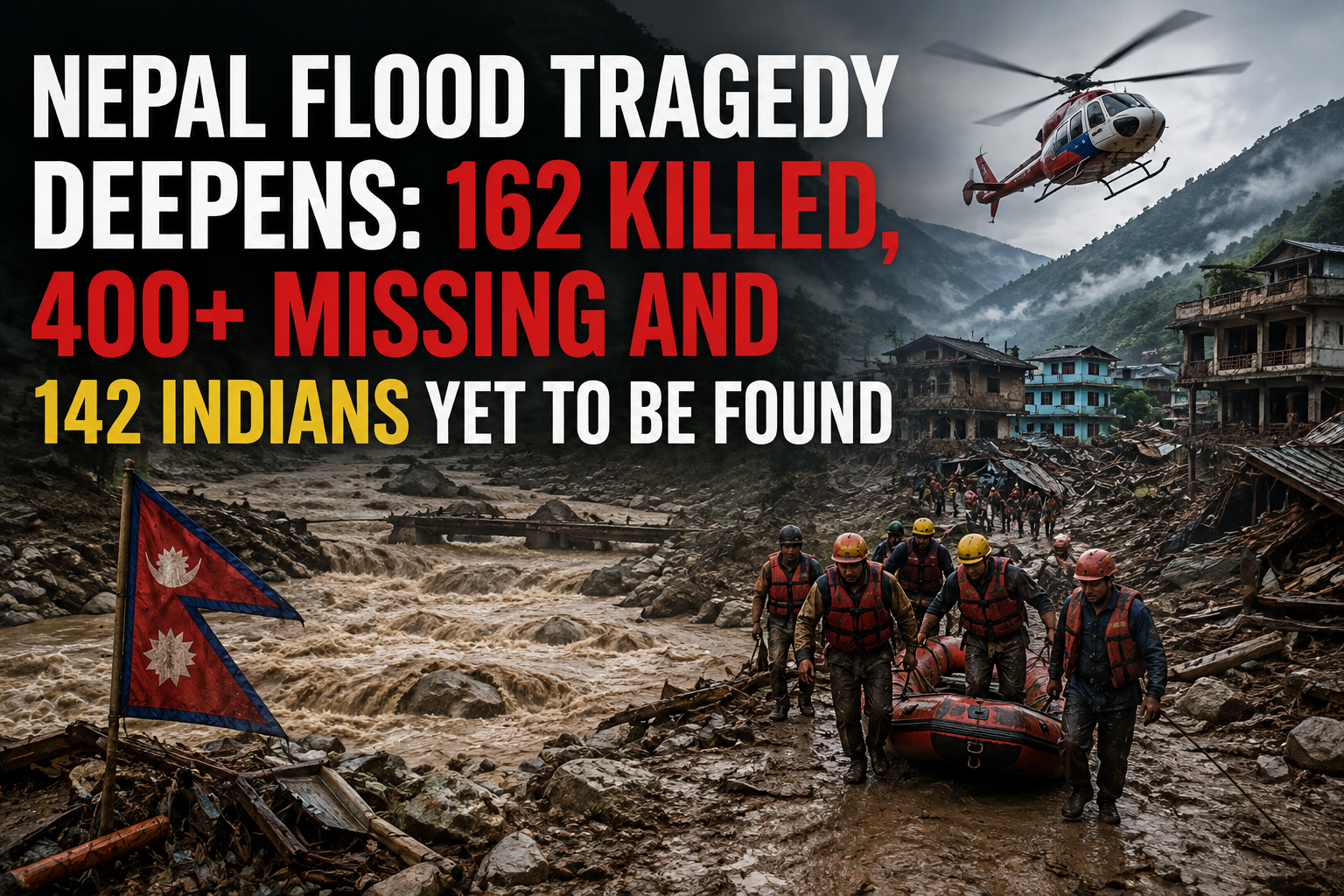
The catastrophic flash floods that have occurred in the mountainous regions of Nepal are some of the deadliest natural disasters that have recently occurred in Nepal, claiming over 162 lives with at least 400 people unaccounted for. At least 142 Indians form part of the unaccounted-for victims that are being searched for through debris and damaged settlements. The catastrophe has been worse to areas adjacent to the Nepal-Tibet border as a result of the flooding water that has ravaged lives, roads, bridges and other infrastructural facilities.
Flash floods hit the region through the Bhote Koshi and Trishuli rivers systems hitting the regions of Rasuwa, Dhading and Nuwakot among others. Communities were hit hard by the sudden floods that also washed away several roads and bridges, hampering rescue efforts. Helicopters and disaster management personnel have been used although poor climatic conditions in addition to the difficult Himalayan terrain have impeded access to some of the areas worst hit by the disaster. The catastrophic flash floods that have occurred in the mountainous regions of Nepal are some of the deadliest natural disasters that have recently occurred in Nepal, claiming over 162 lives with at least 400 people unaccounted for. At least 142 Indians form part of the unaccounted-for victims that are being searched for through debris and damaged settlements. The catastrophe has been worse to areas adjacent to the Nepal-Tibet border as a result of the flooding water that has ravaged lives, roads, bridges and other infrastructural facilities.
Flash floods hit the region through the Bhote Koshi and Trishuli rivers systems hitting the regions of Rasuwa, Dhading and Nuwakot among others. Communities were hit hard by the sudden floods that also washed away several roads and bridges, hampering rescue efforts. Helicopters and disaster management personnel have been used although poor climatic conditions in addition to the difficult Himalayan terrain have impeded access to some of the areas worst hit by the disaster.
The high number of missing Indians has raised further concern, especially given that many of the travellers in the area were reportedly pilgrims or on their way to places linked to the Kailash Mansarovar route. According to the Nepalese tourism officials, over 400 tourists from foreign countries, including 142 Indians, are still missing. Missing tourists from other nations, which include Australia, United Kingdom, United States and South Korea, were also reported.
Rescue teams are trying hard to save the lives of victims and rescue those who are believed to be trapped under the debris. The Nepalese government has deployed emergency personnel for search, rescue and medical aid to the affected individuals. Help has started pouring in even from outside Nepal as the UN and various countries have stepped in to help people affected by the disaster. India is ready to extend help to the affected communities and emergency hotlines have been opened up for Indian residents.
Research is also being conducted on what exactly led to this accident, and it is thought to have been caused by the dropping of a large amount of ice and rocks off the glacier which caused a large amount of water and debris flow. This is another example of how fragile the communities in the Himalayas are to the effects of climate change.
The number of people dead and missing in this disaster is anticipated to go up as more information comes in. In the meantime, the top priority for the authorities is the rescue and provision of help to those affected by this flood disaster.