


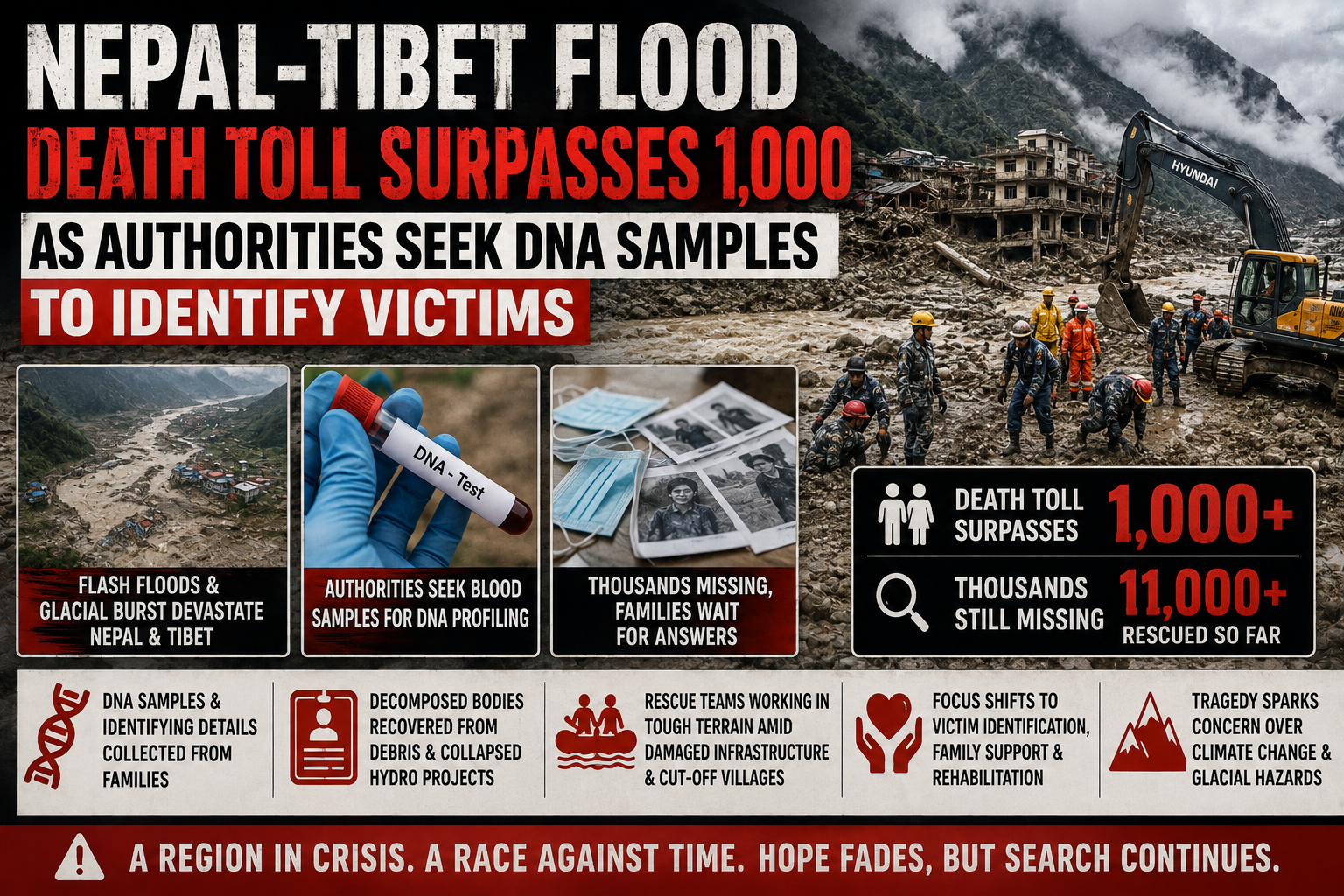
As of yet, more than 1,000 individuals have died owing to the devastating floods that occurred near the Nepal-Tibet border. At the moment, there are thousands of individuals missing, since rescuing operations are being done in the area following the natural disaster. It is the result of the breaking of the glacier, leading to the rush of ice, mud, and other debris.
The casualties in Nepal are more than 1,000, but more have been recorded in Tibet that borders Nepal. Foreign hikers and pilgrims, whose deaths occurred during their journey in the region, have become part of the total number of fatalities. The corpses of these people are recovered from under the debris and mud, particularly those hydropower sites that have been collapsed.
Another challenge faced by the authorities at present is the identification of the victims. Most of the corpses that have been recovered from the floodwater are decomposed. In addition, because of the lack of space in hospitals and morgues, burial has been temporarily made.
It is for this reason that Nepalese police and other agencies have requested blood samples from the families of missing persons for DNA profiling. Additionally, photographs as well as other identifying information are being collected from families of the missing persons. Families living in other countries have been told to collect their DNA samples in laboratories and provide them to Nepalese authorities.
The DNA technology would assist in the process of matching unidentified bodies with the families searching for their relatives. There have been instances where different families have claimed to be the owners of the same body.
On the other hand, rescue missions are currently concentrated in finding ways of accessing the cut-off villages and examining the damaged hydropower plants. Over 11,000 people have been rescued so far but tough terrains, infrastructure damage and tons of debris are making the work challenging.
However, hopes of rescuing survivors have diminished and authorities are increasingly turning their focus on victim identification, assisting families and rehabilitation efforts. This tragedy has also led to a discussion on the increasing dangers caused by extreme weather and glacial hazards in the fast-warming region of Himalayas.