


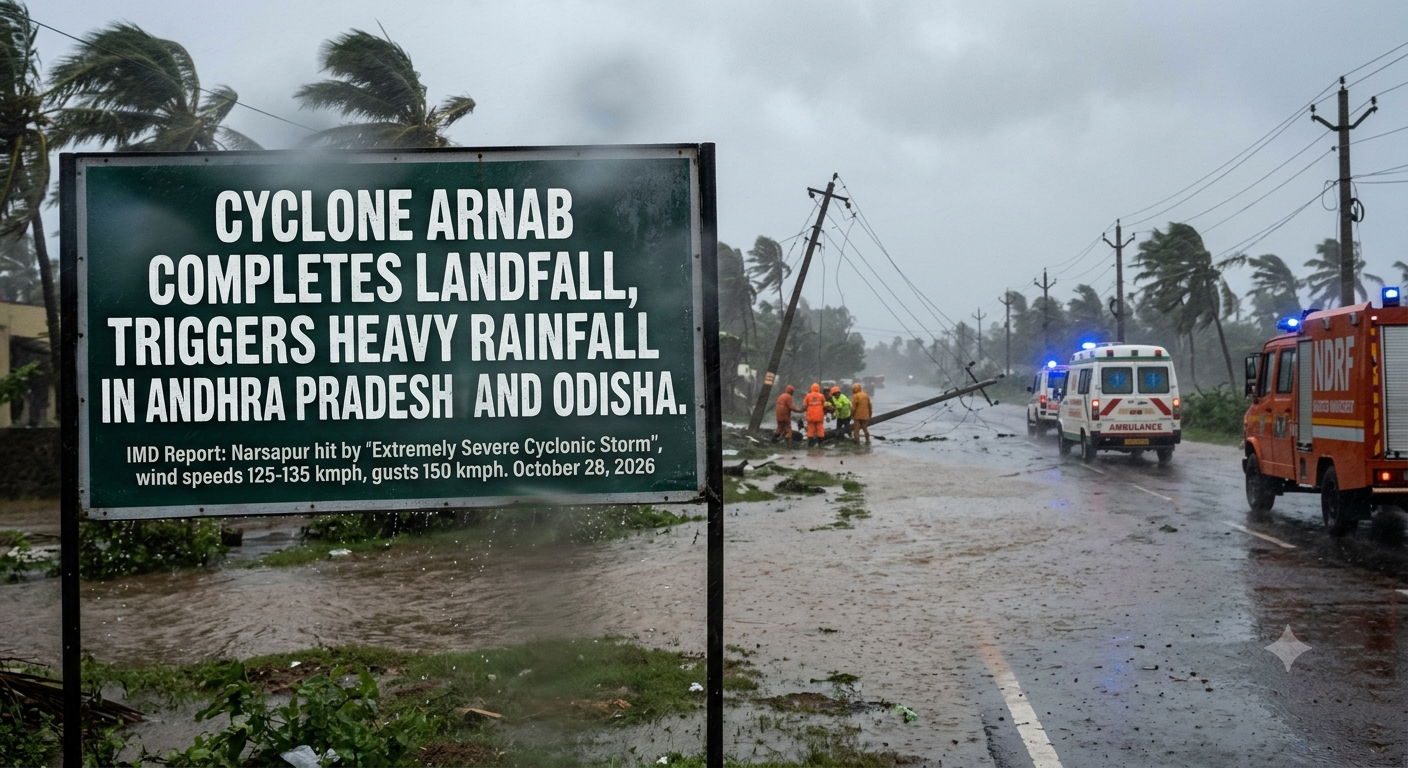
The extremely severe cyclonic storm named “Arnab” lashed the Indian coastal states of Andhra Pradesh and Yanam on Wednesday, October 28, 2026, causing rains and gales.” As per the reports released by the Indian Meteorological Department (IMD), “the extremely severe cyclonic storm lashed Narsapur, near Yanam, with wind speeds of 125-135 kmph and gusts at 150 kmph.
Some districts of the state of Andhra Pradesh, including Kakinada, Konaseema, West Godavari, and Visakhapatnam, have witnessed rains from heavy to extremely heavy with winds. These weather conditions caused trees and electricity poles to be uprooted, damage to roads and houses, and disruption in power supply, agriculture and other related issues. There was flooding in low-lying areas, which increased concern for transport facilities and the safety of people.
The neighbouring state of Odisha also received heavy rainfall in its southern districts like Ganjam, Gajapati, Koraput, Rayagada, and Malkangiri. The IMD had issued weather warnings for the area as the cyclone was proceeding towards the interior parts of the country.
Both states had taken preventive actions before the cyclone struck, and evacuations were carried out in vulnerable regions, including coastal and low-lying areas, as part of the preparation for the arrival of Cyclone Arnab. Emergency crews, disaster management units and medical staff have been mobilised to help the affected people. Schools and transport services have been disrupted as part of preventive measures.
Cyclone Arnab continues to weaken as it proceeds inland and is still posing a threat due to continued rainfall in the areas affected by it. People have been asked to keep an eye on weather reports and not use flooded roads or any damaged electric lines.