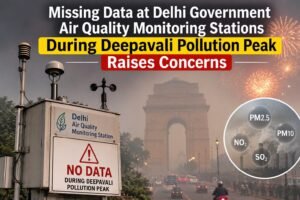


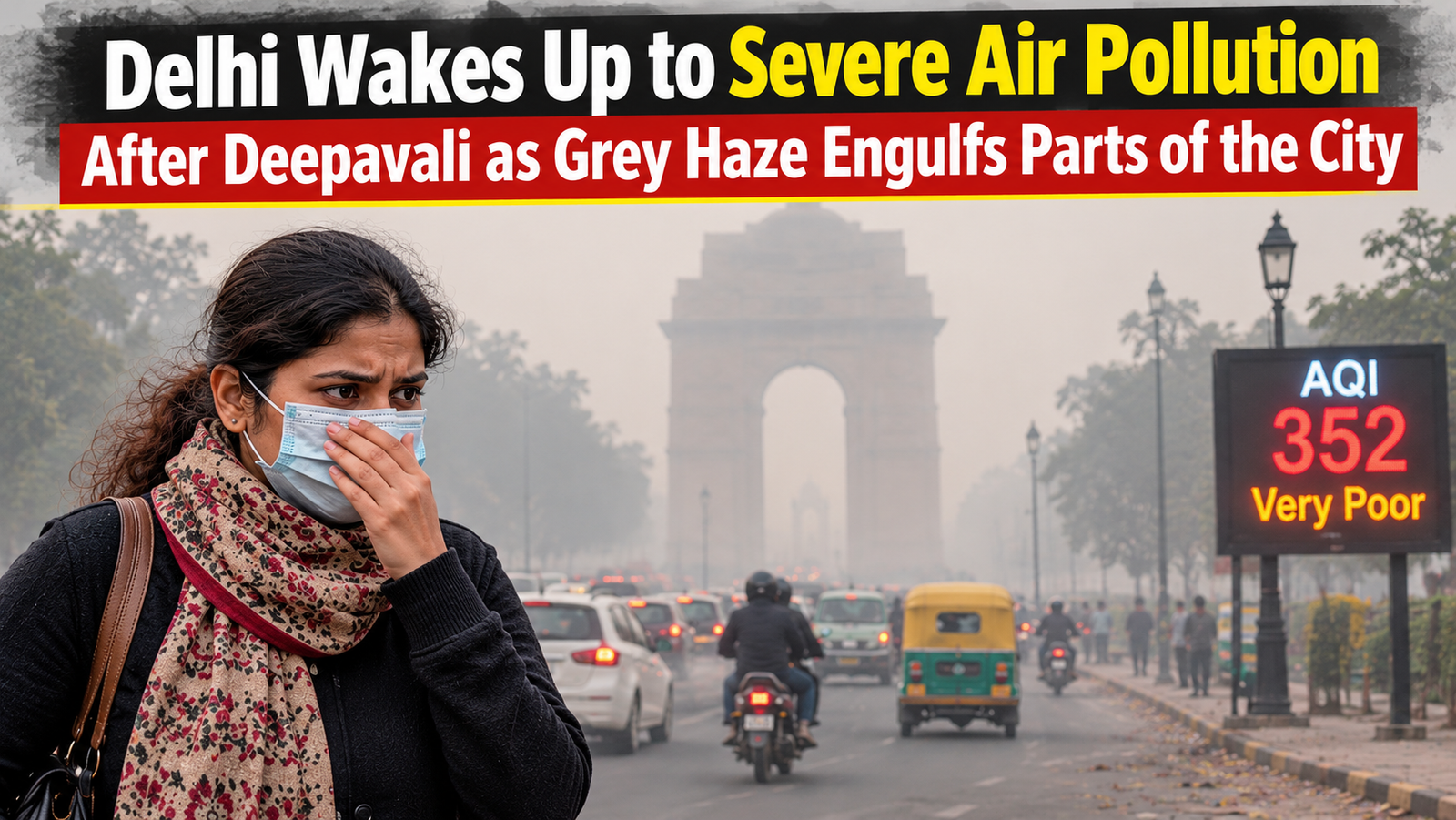
Post Deepavali, the pollution in Delhi had worsened dramatically with most areas of the national capital recording levels of poor air quality. People woke up to a thick blanket of grey mist with some areas finding their visibility falling and the sky darkening on the morning after Deepavali. The worsening pollution on the day after Deepavali left many questioning the city’s health crisis.
Toxic air led to bad air quality The spike in harmful emissions was primarily due to the synergistic effect of firecracker emissions, vehicular pollution and construction dust among other reasons. Firecrackers emitted particulate matter and toxic gases that contributed to the pollution already present in the city. The situation was compounded by low wind speed and other weather conditions which meant that pollution levels remained near the surface of the earth. This meant that in many parts of the city, residents woke up in the haze.
Children, older adults and people with respiratory or heart diseases will be most affected by the worsening pollution levels. For these individuals, breathing in large doses of pollution, notably PM2.5, can trigger breathing issues, sore throat, coughing and more lung problems. Health authorities generally recommend these individuals to stay indoors when air quality is poor and not to do any heavy exercising outside.
The post-Deepavali pollution crisis has once again highlighted the difficulties in managing Delhi’s air pollution. The authorities has taken steps such as crackdowns on firecrackers, dust control actions and air pollution monitoring, yet the persistent pollution spikes underscore the need for more stringent action and community engagement.
The capital would have to continue addressing emissions from other sources as well, in the coming days. With higher levels of awareness, responsible celebration and stronger pollution-control measures, the coming days are likely to see a greater improvement in Delhi’s air quality.