

Puja falls on the day following Diwali. Lord Krishna once raised the Govardhan Hill on his tiny finger to save the people of Vrindavan from an unending downpour. This Hindu festival is observed with prayers, rituals, the offering of food, and worship of nature.
As per the mythological story from the Hindu legends, in the olden times the residents of Vrindavan worshipped the God of rain, Lord Indra, for better rainfall and prosperity in the fields. However, Lord Krishna told them to bow down in front of Govardhan Hill, which offers grass to their cattle and water and other natural resources for the economy of the people living in the village. The residents of the village, then, offered prayer and abandoned worshipping Lord Indra.
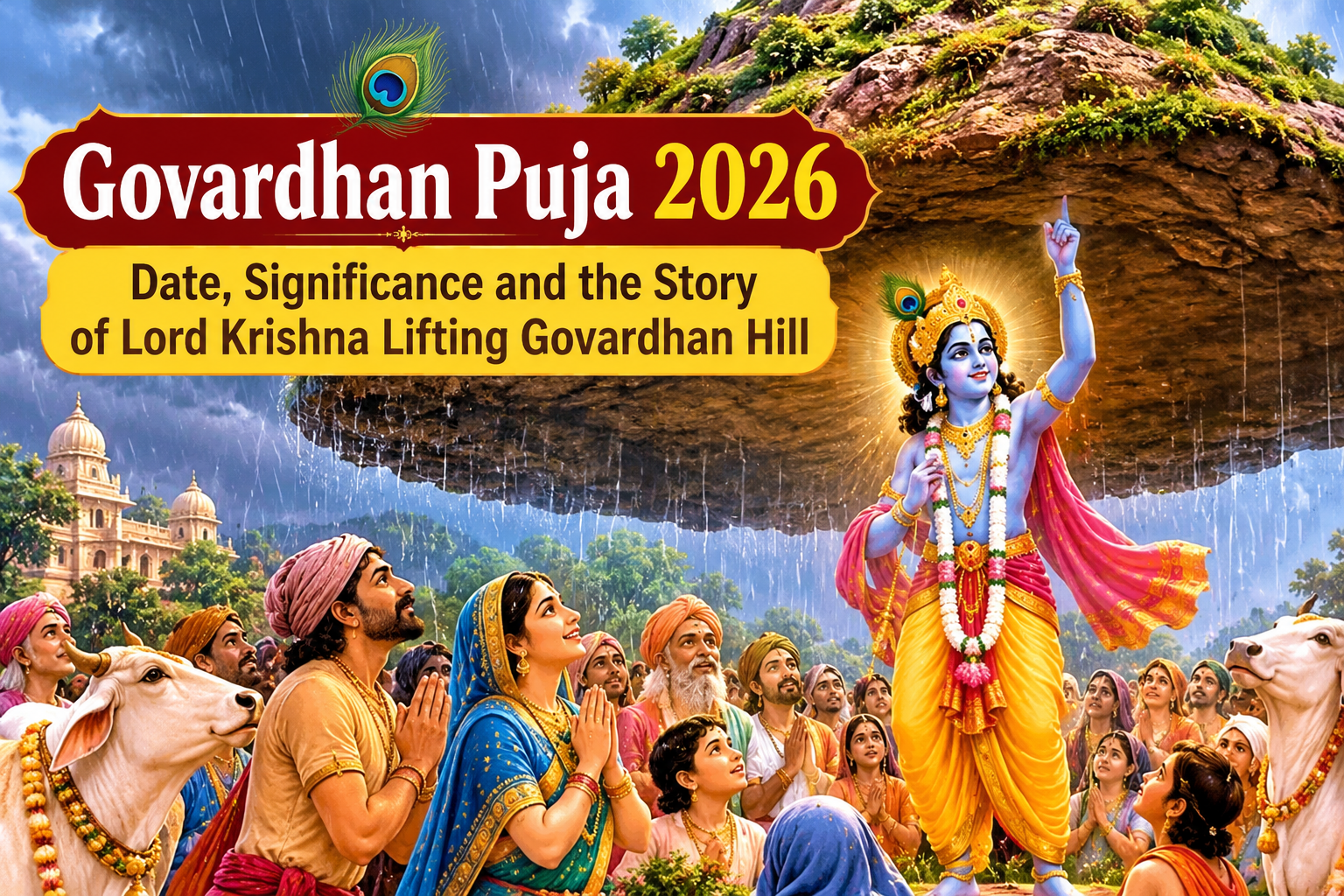
Lord Indra was furious with this. He rained heavily and threw thunderstorms over Vrindavan. When Lord Krishna found out that the villagers and cattle were at risk, he lifted the whole Govardhan Hill with his little finger and saved everyone underneath. Everyone was under the hill for 7 days, after which Lord Indra realised he was wrong and stopped raining. This miraculous event is a key Hindu religious story and is the reason the festival is celebrated.
On this day, devotees worship Lord Krishna and make little models of Govardhan Hill out of cow dung, decorated with flowers and other items. Temples and houses make Annakut (literally, mountain of food), which includes a large number of vegetarian food items and sweets offered to the Lord. In many parts of the country, cows are also dressed up and worshipped.
On the first day of the bright half of the month, Govardhan Puja is observed, which falls on Kartik Shukla Pratipada. Most people also walk the Govardhan Parikrama in the Mathura-Vrindavan region.
The festival may be viewed as an expression of devotion, humility, a gesture of thanks to nature, and charity for animals and natural resources. The festival is a further reminder of the Lord Krishna teachings of the community’s prosperity and acceptance of nature.