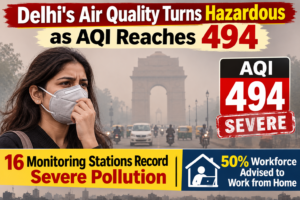
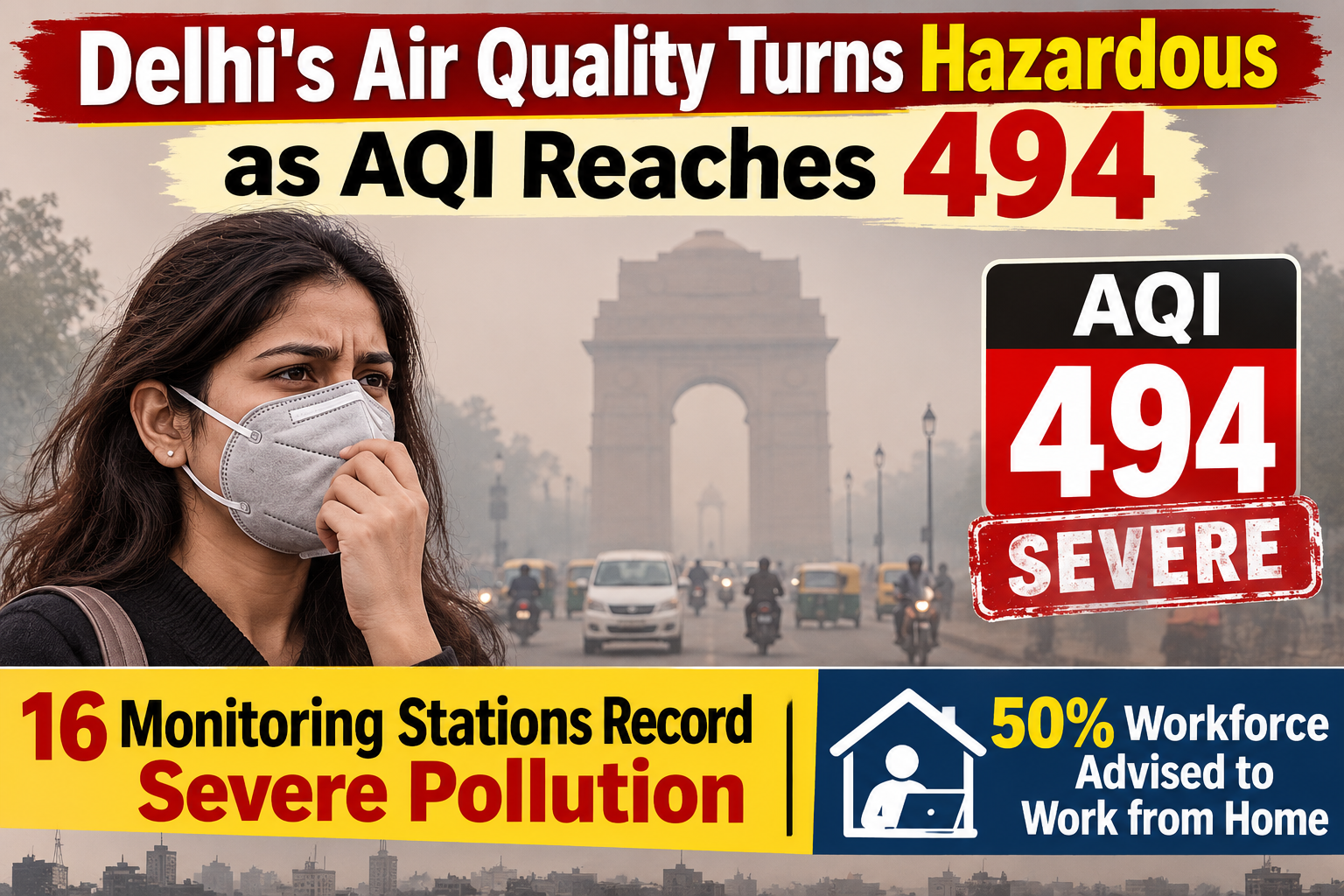
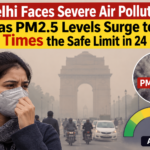
The national capital is reeling under ‘dangerous’ levels of air and the air quality index or AQI of Delhi rose to 494 today. Officials are worried about the worsening condition with 16 of the monitoring stations in the city recording ‘severe’ levels of air quality. The government has issued guidelines to the organisations to mitigate the worsening conditions, asking them to ensure 50 per cent of their staff work from home.
The hazardous air pollution levels have worsened the scenario on the ground in Delhi-NCR, thus putting them at the risk of death and high readings of hazardous pollutants. The residents and denizens are noticing large quantity of deadly particles – such as microscopic PM2.5 – which are a grave threat to health as they induce breathing problems, sore throats, chough and further aggravate existing heart and lung infections.
The reasons for increasing pollution and pollution:7 Pollution is increasing due to reasons like vehicles exhaust pollution, construction and industrial waste water, road dust, and variations in the season. Due to seasonal variations in winter, wind blows at a slow speed and variations in the temperature of air due to meteorological changes does not disperse the pollution.
On many members, working from home will reduce automotive traffic and time outdoors. Due to this pollution emergency, workplaces and offices may have to find alternate sites or work schedules to protect staff. Regulation is ramping up for pollution sources, such as monitoring pollution sources and sources of pollution, such as tourists, and restricting activities as necessary.
You should stay indoors as far as possible and avoid outdoor activity if the pollution levels are extremely high. When you need to go outdoors, wearing a close-fitting mask and keeping your windows closed during the high pollution hours of the city may also be helpful.
The episode highlights the collective efforts of government departments, companies and individuals. Long-term, systemic change in the form of cleaner travel, improved waste management and controls on emissions will be central to clearing the air of Delhi.



Delhi’s Air Quality Turns Hazardous as AQI Reaches 494, 16 Monitoring Stations Record Severe Pollution; 50% Workforce Advised to Work from Home
The national capital is reeling under ‘dangerous’ levels of air and the air quality index or AQI of Delhi rose to 494 today. Officials are worried about the worsening condition with 16 of the monitoring stations in the city recording ‘severe’ levels of air quality. The government has issued guidelines to the organisations to mitigate…

by
No comments on Delhi’s Air Quality Turns Hazardous as AQI Reaches 494, 16 Monitoring Stations Record Severe Pollution; 50% Workforce Advised to Work from Home
2 minutes
Read Time
About the Author

Previous Post
Next Post
Leave a Reply
Latest News




About the Author

thefirstcritic
The First Critic delivers the latest news and sharp insights across India, politics, business, entertainment, sports, technology, and more.
Search the Archives
Access over the years of investigative journalism and breaking reports