






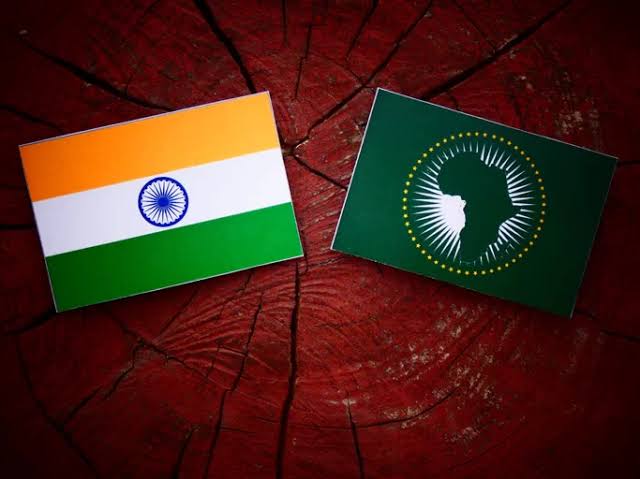
Collaboration
The relationship between India and Africa has gone through tremendous changes in the
recent years from merely being diplomatic in nature to being a comprehensive partnership
involving trade, development, technology, health, education, and capacity building. Though
high-level meetings have helped lay the groundwork for closer bilateral relations, the next
stage of partnership will depend upon making this commitment bear fruit in actual
collaboration between the two countries.
Both India and Africa have a rich tradition of cooperation based on respect, South-South
collaboration, and common dreams of development. Over the years, various mechanisms
like the India–Africa Forum Summit have helped enhance political dialogue and opened up
new opportunities for economic and strategic cooperation. But in light of the changing global
scenario and increasing complexity of the challenges before the world, both India and Africa
are moving beyond just summits and towards institutions.
Trade and investment are other important pillars of this relationship. India is one of
the biggest trading partners of the African continent. It imports various natural
resources and exports pharmaceutical products, machinery, cars, agricultural
produce, and IT services. More trade deals and investment from both sides will open
more economic windows of opportunity. Cooperation in manufacturing and
value-added industries will help create jobs and develop industries in Africa.
Healthcare has been added to the list of sectors where there have been significant
gains made by both parties. Indian pharmaceutical firms have played a very
significant role in providing low-cost medicines and vaccines to a large number of
African countries. Partnership in telemedicine, construction of hospitals, medical
education, and healthcare technology would not only provide better healthcare
access but will also develop robust healthcare facilities for the future.
People-to-people ties have continued to be shaped by educational cooperation
between both the continents. India has educated and trained thousands of Africans
through scholarships, technical and professional education projects. More
collaboration in higher education, vocational training, digital learning, and research
could prepare younger generations for future challenges in globalized world
economies. The other way through which there can be increased collaboration
between India and Africa is through technology and digital transformation. India can
collaborate with Africa in areas such as digital public infrastructure, fintech, digital
identity platforms, and the startup ecosystem due to the rapid development of digital
economy in Africa. Cooperation in artificial intelligence, cybersecurity, e-governance,
and digital financial inclusion may help to enhance the delivery of public services.Climate change and sustainable development also play an increasingly vital role in
this relationship. Both India and the various countries in Africa face issues in relation
to food security, water, energy sources and climate adaptation. Solar energy,
sustainable agriculture, green infrastructure, and environmental conservation are
examples of joint initiatives that will help to ensure sustainability both economically
and environmentally.
Infrastructure development is very crucial for facilitating economic growth. India has
had a hand in the development of road, railway, energy and IT infrastructures in
various African countries.
For cooperation to go beyond declarations made at the summit, both parties need to
concentrate on proper implementation, policy discussion, and institutional
cooperation. Interaction between governments, corporations, educational
institutions, startups, and non-governmental organizations could become helpful for
turning strategic decisions into actions. Proper monitoring of the projects and open
collaboration would help sustain the process.
Under ever-changing geopolitical situation, the India-Africa partnership becomes
increasingly important. Both regions seek to have a more inclusive world order, more
developed countries’ representation, and sustainable growth of their economies. It is
crucial for India and Africa to develop a partnership that is going to be able to resist
the changes by relying on innovation, economic growth, and sustainable
development.
Future of India–Africa relations should be based not only on signing agreements but
on the actual implementation of the initiatives. The successful implementation
would make the partnership much more robust and would provide benefits to
millions of people in the future decades.





More Stories
Japan’s Services Sector Sees Uptick in June Amid Inflationary
Indian State Government Finances: Balancing Budgets on a Fiscal
Childcare Programme to Be Launched Today by Health Minister JP Nadda