



Tightrope
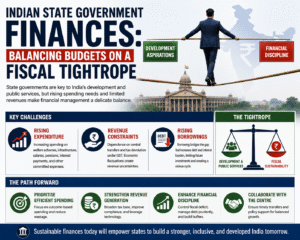
The Indian state governments have been playing an extremely important role in providing
development in the country and essential public services like health, education, infrastructure, and
welfare programs. It has become increasingly difficult to manage finances in the states because of the
increasing demands for expenditure and limited options of raising revenues—the tightrope of
finances.
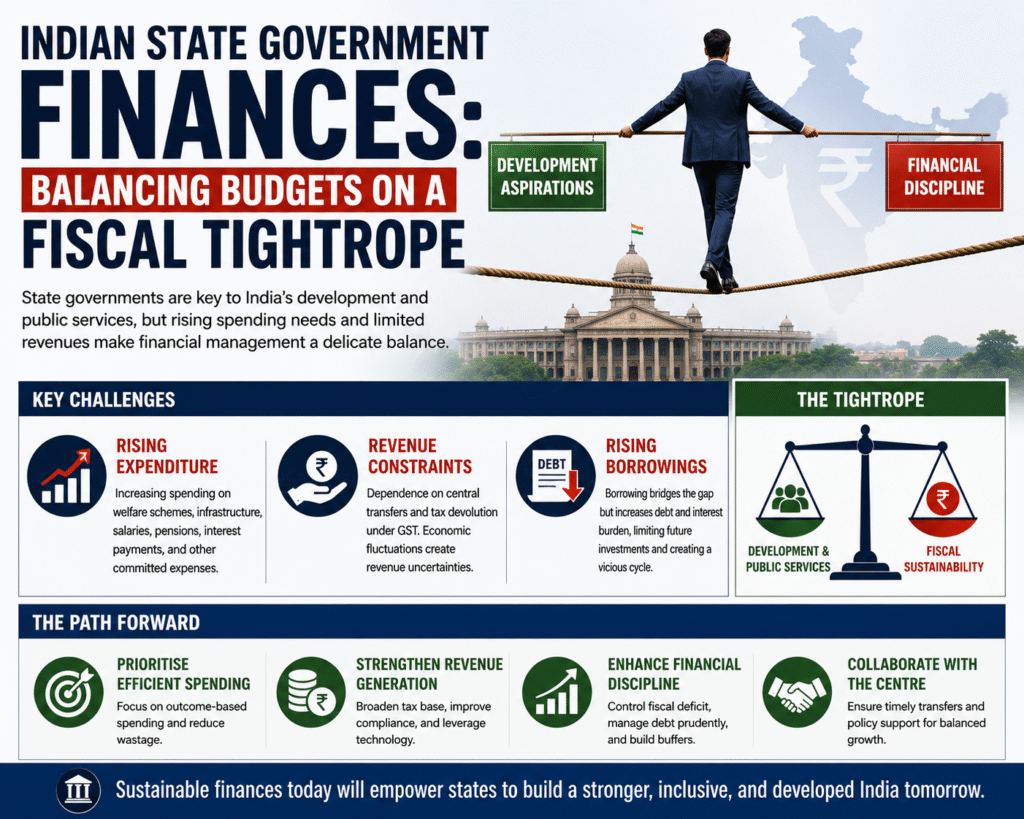
One of the main reasons for the problems in the finances of the states is that the expenditure
requirements keep increasing on a regular basis. The states have to implement various welfare
programs and develop infrastructure facilities as well as meet their administrative expenses including
the salaries, pensions, and interests.
As far as revenue is concerned, there are some structural limitations that the states have to face. The
adoption of GST has made them dependent on the central government’s assistance and the revenue
derived from the share in the collection of taxes. Moreover, the changes in the economic situation can
affect the revenue from the taxes, thus causing some uncertainties in the budget planning.
The main way to deal with the difference between the income and the expenditure is to borrow
money. Although borrowing can help develop certain projects, it makes the state incur debt and
increase its costs. It is a vicious circle when the growing debt makes the state poorer for other
investments.
Thus, the task of the state government is to balance the development aspirations with the financial
discipline. The state should make sufficient investments in the infrastructure and welfare programs.
In the future, better efficiency in raising revenue and spending of the budget and financial discipline
are to play an important role in development.



More Stories
IRDAI Clears Two Global Investors for Substantial Stakes in Indian Insurance
RBI’s Regulatory Changes Pose Serious Challenges for India’s Prop
Childcare Programme to Be Launched Today by Health Minister JP Nadda