




Second Half of the Year
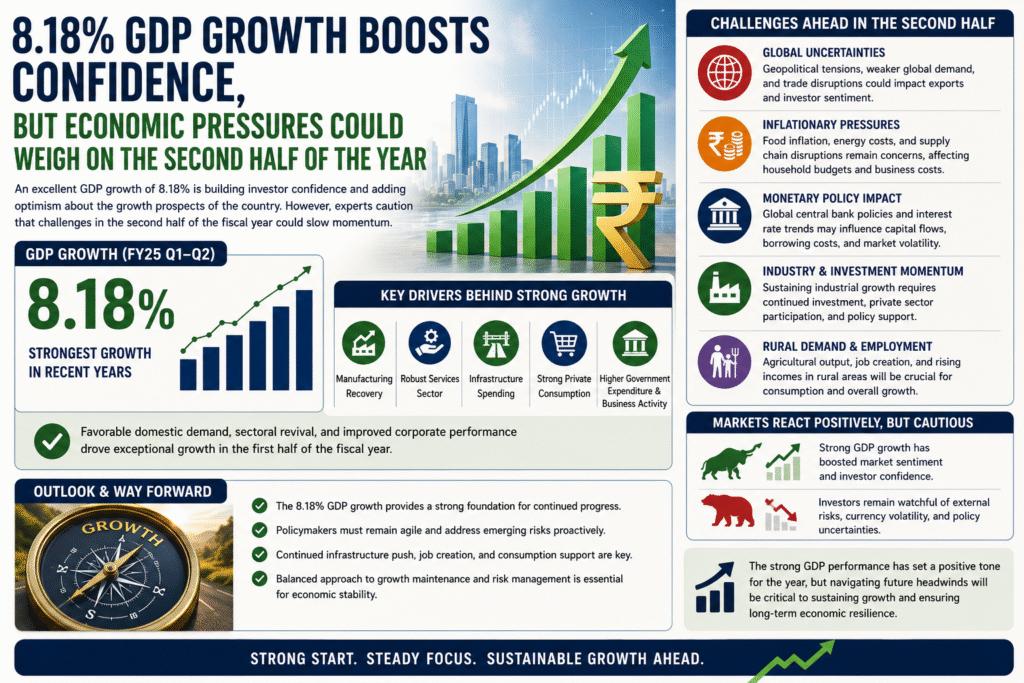
An excellent GDP growth of 8.18% is creating the base of a stable economy for the country
as it is building investor confidence and adding optimism about the growth prospects of the
country. Nonetheless, experts of economics and markets believe that there are many
challenges ahead, especially in the latter part of the fiscal year.
This impressive GDP growth is the result of the resilient performance of many important
sectors of the economy like manufacturing, services, infrastructure, and consumption. There
has been an increase in the government spending, business activities, and investments
resulting in the exceptional growth and putting the country as one of the fast-growing
countries in the world economically.
Experts believe that there were favorable economic factors in the first half of the fiscal year
including domestic demand, infrastructure spending, and revival of different sectors of the
economy. There has also been increased consumer spending and improved corporate
performances as well.
Although the optimistic numbers look good on the surface, there are certain issues with
sustainability of this trend in the near future. The global uncertainties, geopolitical issues,
inflationary pressure and volatility of commodity prices can hinder the economic activity.
Moreover, the export-oriented industries might face difficulties due to weaker global demand
and interruptions in the international markets.
Another important aspect that plays an important role is the inflation management. Even
though inflation rates have dropped in several regions, still food inflation, energy cost and
supply chain disruptions continue to pose as the main risks. In addition to that, world central
banks are also tracking the inflation rates. Monetary policies may influence investment flows
and borrowing costs.
The industrial and manufacturing industries are likely to play an important role in the
economic growth in the next year. The government has planned certain measures to boost
the domestic production. Still, it should be noted that investment momentum and private
sector involvement are crucial for maintaining the high growth rates.
In addition, consumer demand, especially from the rural population, will have a significant
effect on economic performance in the latter half of the year. Such considerations as
agricultural output, employment creation, and household incomes will play a role in
consumer spending trends and the overall economic situation.
Financial markets reacted favorably to this strong GDP performance, seeing it as an
indication of economic resilience. However, they also show caution due to possible risk
factors that could emerge from the state of the external economy, currency changes, and
policy uncertainties.
Economic experts agree that although the 8.18% GDP growth rate is a good base for further
growth, it is imperative for policymakers and businesses to stay alert and be ready to face
possible challenges. Well-chosen interventions, continuing infrastructure projects, and
measures aimed at stimulating consumption and creating jobs will be vital in order to keep
economic stability and growth trend.As the economy approaches the end of its first half of the year, the question of how to
combine growth maintenance and economic risk management will become increasingly
important. Although the impressive GDP performance was a factor that increased
confidence, facing future challenges will become critical to maintain this trend.




More Stories
Three-Quarters of New Human Infectious Diseases Have Animal
Prof. Arun Mohan Sherry Appointed as New Director of IIM Shillong
Gold Registers Biggest Gain in 10 Days in India; Check Updated