



Origins
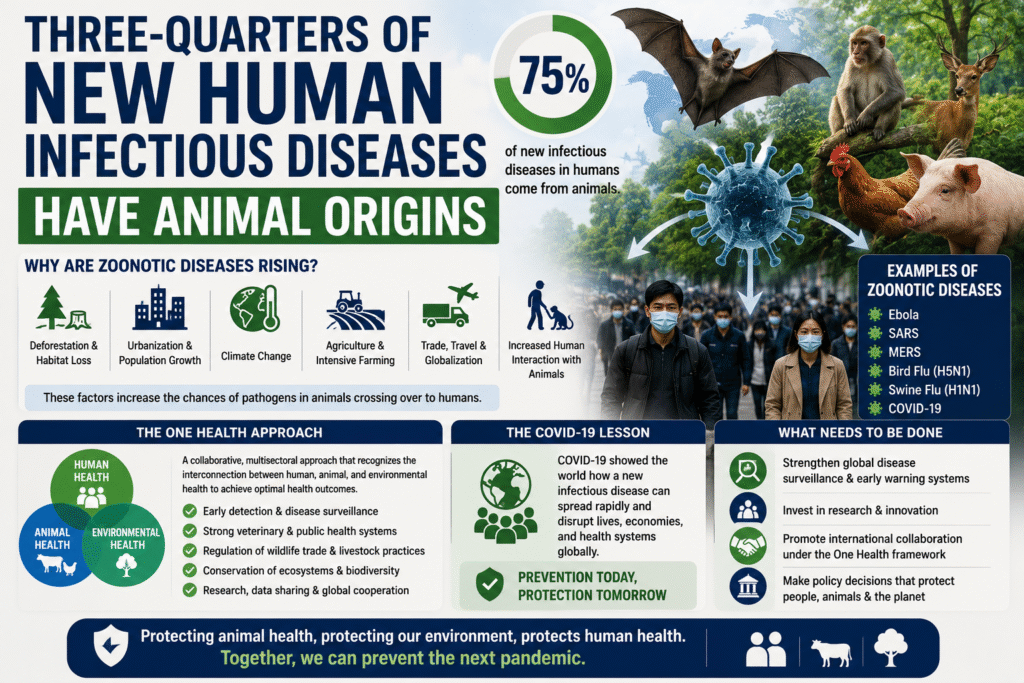
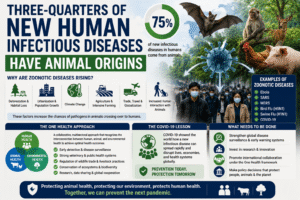
It has been estimated that about 75 percent of the new infectious diseases emerging in
humans come from animals. This is an alarming figure that indicates that understanding the
connection between human health, animal health, and environmental well-being becomes
imperative. The problem has been recognized by many organizations and health bodies
around the globe, and the danger posed by zoonotic diseases, which are those that affect
both animals and humans, has been highlighted.
During the past few decades, there have been many outbreaks that are attributed to
animal-human disease transfer. The examples of diseases like Ebola, SARS, MERS, bird flu,
swine flu, and COVID-19 prove how pathogens present in animals become infectious to
humans through cross-species transmission.
Several interrelated reasons have been cited by experts to explain the growing incidence of
zoonotic diseases. The causes include urbanization, deforestation, climate change,
agriculture, trade, and the increased presence of human beings within wildlife and other
natural habitats, which have led to increased interaction between humans and animals. With
the continuous destruction of ecosystems, there is a high probability of transmission of
pathogens from wildlife or domesticated animals to humans.
Climate change has been identified as another reason why there has been an increasing
incidence of infectious diseases. Climate changes such as temperature and rainfall changes,
among others, affect the behavior and habitats of disease carriers, leading to their spread to
new geographical locations. Experts say that without proper management of the
environment and public health, there is bound to be more zoonotic disease outbreaks in
future.
More and more emphasis is being placed on the so-called “One Health” approach to global
health issues, where the interconnection between the well-being of humans, animals, and
the environment is taken into consideration. The idea of One Health collaboration implies
that governments, healthcare workers, veterinarians, environmental specialists, and policy
makers cooperate with each other in order to recognize and tackle emerging health threats.
Improvement of disease surveillance systems, development of veterinary healthcare,
regulation of the wildlife trade business and protection of the ecosystems are some of the
main elements of such an approach.
The emergence of the COVID-19 pandemic has made people realize how dangerous it could
be for the global community when a new infectious disease appears. It has also emphasized
the necessity of increased international collaboration, scientific research and investment into
health-related initiatives.
Given the ever-increasing connections between countries of the world, there is a need to pay
close attention to the animal origin of infectious diseases.



More Stories
8.18% GDP Growth Boosts Confidence, but Economic Pressures Could Weigh on the
Prof. Arun Mohan Sherry Appointed as New Director of IIM Shillong
Menstrual Health Sector Emerges as a Key Focus Area for