






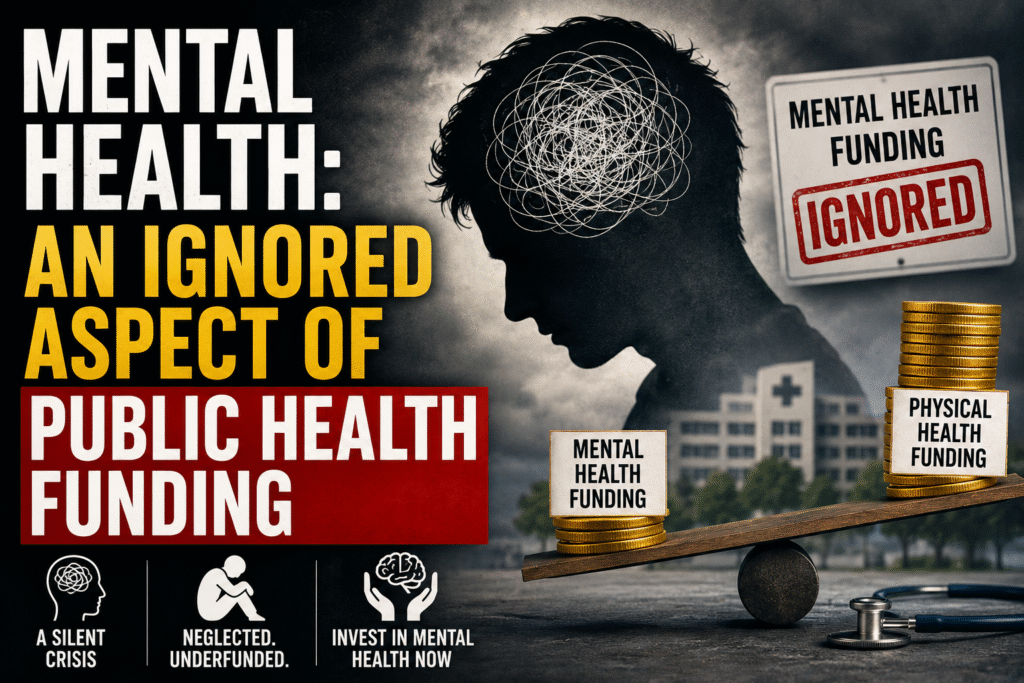
The importance of mental well-being is among the greatest public health problems of the
21st century. Despite increasing awareness regarding psychological health and its effects on
both the individuals and society, mental health receives very little attention and funding in
many countries. The government spends a significant amount of money in building up the
infrastructure and managing diseases related to physical health. The neglect of mental
health issues has been seen in many nations with regard to public health spending.
Many individuals who are suffering from different kinds of mental disorders such as
depression, anxiety, bipolar disorder, and schizophrenia are counted in millions worldwide.
According to global health studies, for every eight individuals in the world, one individual is
suffering from some kind of mental disorder at any time of their lives. Not only does mental
illness create an adverse effect on the psychological and emotional state of the individual but
also affects their productivity, relationships, education, and life.
One of the reasons that have made this problem existent is the continuous stigma that is
attached to mental illnesses. Many people are unable to reach out because of the fear of
being discriminated against and being judged as well as not being educated on the matter.
The stigma has been carried into policy making and, therefore, mental health issues do not
get enough attention compared to other areas of healthcare. There have been many cases
where many countries do not have sufficient numbers of mental health practitioners,
adequate facilities for healthcare, and treatment and counseling services.
Undoubtedly, the underfunding of mental health issues is a problem that creates long-term
repercussions. It is true that the existence of mental illnesses leads to increased cost of
healthcare, inefficiency in the workplace, unemployment, substance abuse, and ultimately
suicide. The economic cost associated with mental illness affects individuals as well as
entire nations.
A holistic and integrative approach is needed to deal with issues related to mental
health. It becomes imperative to adopt an integrated and holistic way of dealing with
problems that arise in connection with mental well-being. It is vital that the governments
increase financial investments in mental health care systems, develop the infrastructure of
the mental health services sector, raise awareness about the importance of mental
well-being and incorporate mental health care within the ambit of primary health care
system. Mental well-being must stop being treated as a secondary concern and be
integrated as an integral part of public health care systems.






More Stories
Childcare Programme to Be Launched Today by Health Minister JP Nadda
Healthy Bedtime Routine for Glowing Skin: Why Quality Sleep is the Best Beauty Secret
Common Skincare Myths That Keep Men Away from Healthy Skin